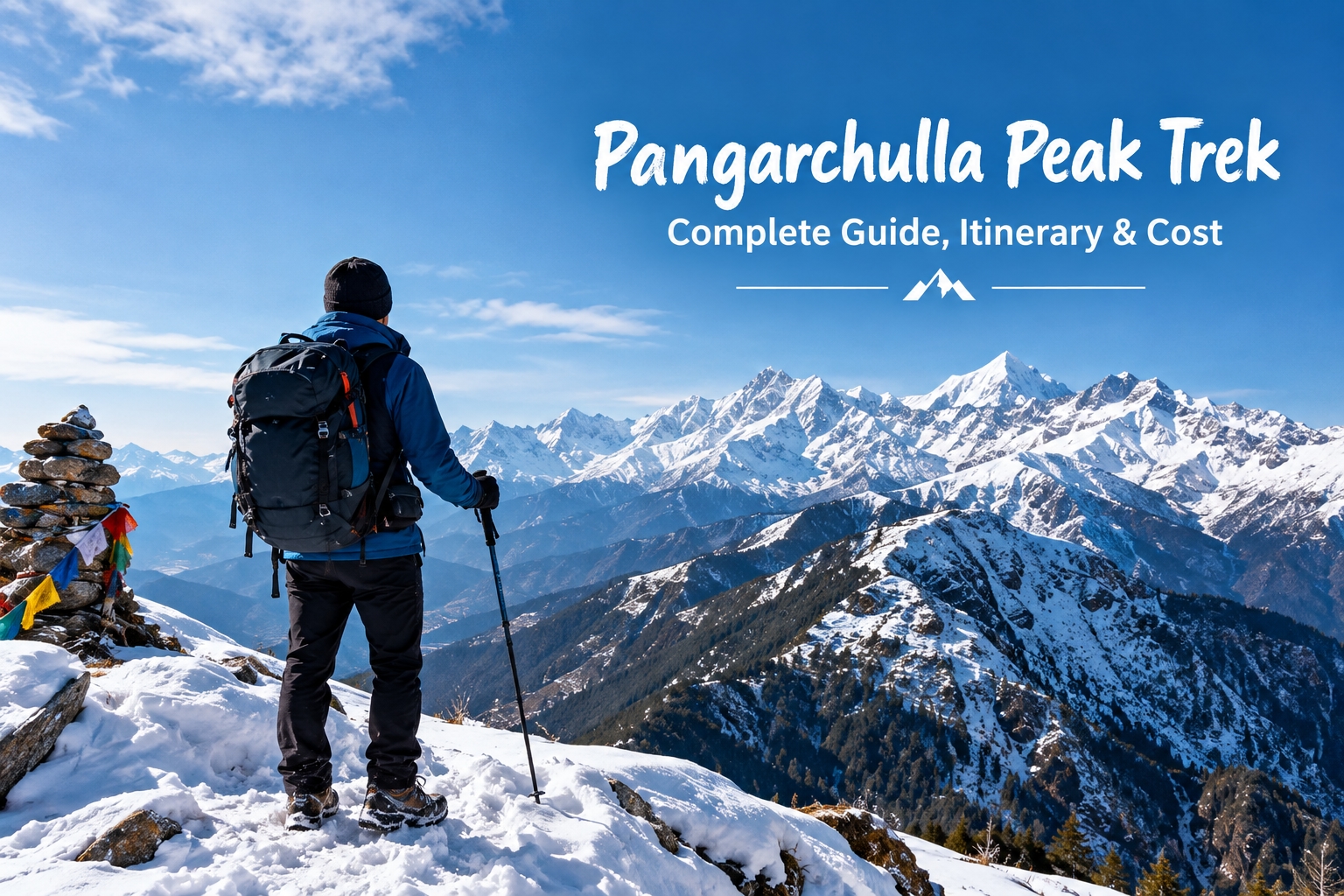
The Pangarchulla Peak Trek is a challenging trek in Uttarakhand that takes you through forests, open meadows, snow-covered trails, and high mountain terrain. The main attraction is the climb to Pangarchulla Peak, which offers wide views of the Himalayan ranges from a high point. Unlike easy weekend treks, this trek needs good fitness, proper preparation, and the ability to walk for several hours each day.
Pangarchulla is especially known for its winter snow and summit climb. The trail passes through the Kuari Pass region of the Garhwal Himalayas and gives trekkers a chance to experience both forest trails and high-altitude landscapes in one journey.
If You are planning this trek, knowing the route, difficulty, best time, approximate cost, and day-wise plan will help you prepare better.
Where Is Pangarchulla Peak?
Pangarchulla Peak is located in the Garhwal Himalayas of Uttarakhand. The trek is generally approached from the Joshimath region, with the trail passing through areas around Dhak, Khullara, and nearby high-altitude camps.
The peak rises to around 14,700 feet, making it a serious high-altitude trek. The route includes steep sections, rocky terrain, and snow depending on the season.
One of the interesting things about Pangarchulla is the change in landscape during the trek. You start with village roads and forest trails and gradually move into open mountain areas where the views become much wider.
Pangarchulla Peak Trek Difficulty
The Pangarchulla trek is considered moderate to difficult, mainly because of its high altitude, long walking days, steep sections, and summit climb.
The summit day is usually the toughest part of the journey. Trekkers have to start early and walk through changing terrain before reaching the summit. Snow can make the climb harder during winter and spring.
You do not need technical mountaineering skills for the normal trekking route, but good physical fitness is important. Regular walking, running, stair climbing, and long hikes before the trek can help prepare your body.
The difficulty can also change according to weather and snow conditions. A route that feels manageable on a clear day can become much harder when there is fresh snow or poor visibility.
Best Time for Pangarchulla Peak Trek
The best time for the Pangarchulla Trek depends on what kind of experience you want.
Winter and early spring can bring heavy snow to the higher sections. This makes the trail more challenging but also gives the trek its famous snowy appearance.
Spring is another good period because the weather can become more comfortable and the lower sections of the trail start changing as the season progresses.
Autumn is known for clearer mountain views and generally stable weather. The landscape can look very different from the snowy winter version, with open trails and clear views of the surrounding peaks.
Before planning your trek, always check the current weather and trail conditions because mountain conditions can change quickly.
Pangarchulla Peak Trek Itinerary
A typical Pangarchulla Peak Trek Itinerary takes around 5 to 6 days, depending on the starting point, route, weather, and trekking plan.
Day 1: Reach Joshimath
The trek usually begins with reaching Joshimath. It is an important town in the region and is commonly used as a base for several Himalayan treks.
Use this day to rest, organize your backpack, and prepare for the trail ahead. If you are travelling from a low-altitude city, spending some time here can also help you adjust before gaining more altitude.
Day 2: Joshimath to Dhak and Trek to Khullara
The journey continues towards Dhak, from where the trekking section begins. The trail passes through villages and forest areas before gradually gaining height.
As you move towards Khullara, the surroundings become quieter and the views start opening up. The day involves several hours of walking, so maintaining a steady pace is better than trying to move too quickly.
Day 3: Khullara to Pangarchulla Base Area
The trail becomes more open as you leave the lower forest sections behind. Depending on the season, you may encounter snow on the trail.
The route gradually takes you towards the higher camp or base area below Pangarchulla. This is an important day because you are gaining significant altitude and need to conserve energy for the summit climb.
Day 4: Summit Day and Return
Summit day is the main highlight of the trek.
The day usually starts very early because reaching the summit and returning safely requires several hours. The trail can become steep, particularly near the upper sections.
After reaching Pangarchulla Peak, you can see a wide Himalayan panorama on a clear day. The summit experience is rewarding, but it is important not to spend too much time at high altitude.
After taking some time at the summit, you begin the descent. Depending on the itinerary and conditions, you may return towards the lower camp.
Day 5: Descend Towards Dhak and Drive to Joshimath
The final trekking section takes you back through the forest and village trails towards Dhak.
After completing the trek, you return to Joshimath by road. This is usually a much easier day physically compared with the summit day, although your legs may still feel the previous day's effort.
Some itineraries may include an additional day depending on the route and travel arrangements.
Pangarchulla Trek Package Cost
The cost of a Pangarchulla Trek Package can vary depending on the duration, group size, season, inclusions, transportation, accommodation, meals, permits, equipment, and guide support.
Before booking, check exactly what the package includes. A cheaper package is not always comparable to a more expensive one if the services included are different.
A trekking package may include services such as:
Accommodation during the trek
Meals during trekking days
Trek leaders and local support staff
Camping equipment
Trek permits and forest charges
Safety and first-aid support
Transportation according to the package
Personal expenses, travel to the starting point, insurance, and some equipment may be separate.
Always ask for the complete cost and inclusions before confirming your trek.
What to Pack for Pangarchulla Trek
Packing correctly is important because temperatures can change sharply at high altitude.
Carry warm layers, a waterproof jacket, trekking shoes with good grip, gloves, woollen socks, a cap, sunglasses, sunscreen, a headlamp, a water bottle, and a basic personal medical kit.
Do not overpack. A heavy backpack can make steep sections much harder.
If you are trekking during the snowy season, proper winter clothing and suitable footwear become even more important.
Physical Preparation for Pangarchulla Peak
You should start preparing several weeks before the trek.
Walking regularly is one of the easiest ways to begin. Gradually increase your walking distance and include stairs or uphill walks in your routine.
Cardio exercises such as jogging, cycling, or brisk walking can improve endurance. Strength exercises for your legs and core can also help with long climbs and descents.
The goal is not to become an athlete. The goal is to make your body comfortable with several hours of continuous movement.
Safety Tips for the Trek
High-altitude trekking requires patience. Do not rush uphill just because other trekkers are moving faster.
Drink water regularly and eat properly throughout the day. Follow the instructions of your trek leader, especially during the summit climb.
Weather can change quickly in the mountains, so keep your rain and warm layers easily accessible. If you experience serious symptoms related to altitude, inform your trek leader immediately instead of trying to continue silently.
Also, avoid littering the trail. Carry your waste back and respect local villages, forests, wildlife and other trekkers.
Final Thoughts
The Pangarchulla Peak Trek is a demanding but rewarding Himalayan adventure. Its biggest attraction is the combination of forest trails, snow-covered terrain, high camps, and a proper summit climb.
It is not a trek that should be chosen only because of its views. The altitude and summit day require preparation and a sensible approach.
With proper fitness, suitable clothing, good planning, and enough respect for changing mountain conditions, Pangarchulla can offer a memorable high-altitude trekking experience in Uttarakhand.