
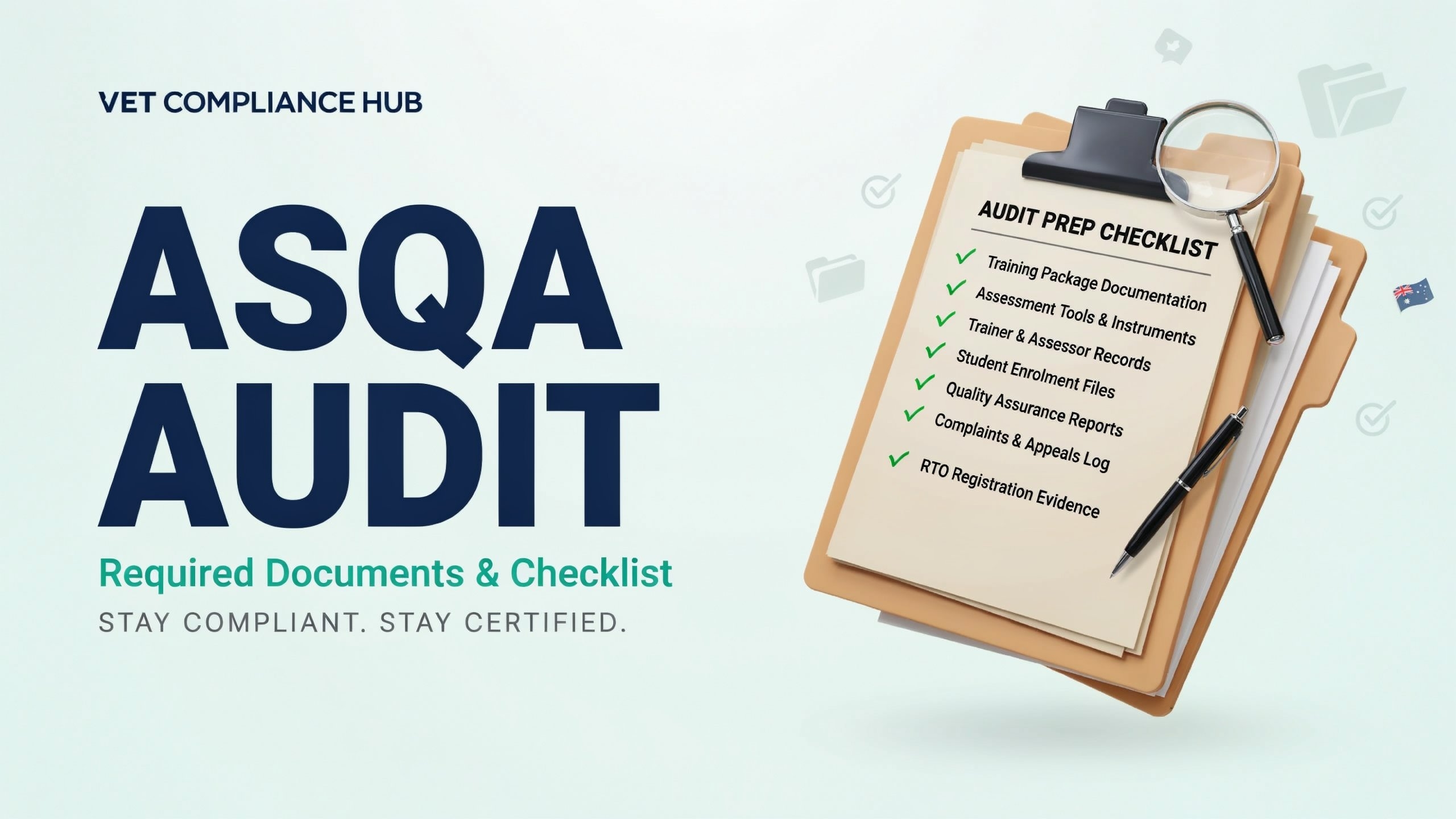
Preparing for an Australian Skills Quality Authority (ASQA) audit requires a structured, proactive approach to ensure full compliance with the Standards for Registered Training Organisations (RTOs). A successful audit depends on clear record-keeping, accurate data, and robust evidence demonstrating that governance, training delivery, assessment practice, and student support systems operate effectively.
Understanding the Audit Focus Areas
ASQA assessments evaluate how effectively an RTO manages quality across every stage of the student journey. Key areas of scrutiny include:
Marketing and Recruitment: Clear, accurate, and non-misleading information provided to prospective learners.
Enrolment and Support: Transparent entry requirements, credit transfer procedures, Recognition of Prior Learning (RPL), and student support arrangements.
Training and Assessment Strategy (TAS): Detailed strategies reflecting current industry needs, qualified trainers, and compliant assessment resources.
Completion and Certification: Proper verification before issuing qualifications or Statements of Attainment.
Governance and Quality Assurance: Systematic monitoring, validation, continuously gathered feedback, and risk mitigation.
Essential Documents Required for an Audit
Having these documents organized, accessible, and updated ensures a smooth audit process.
1. Governance and Operational Policies
Continuous Improvement Register: Records of identified issues, client feedback, continuous improvement actions, and outcomes.
Risk Management Plan: Documents identifying operational, financial, and compliance risks along with mitigation strategies.
Third-Party Agreements: Written agreements and monitoring records for any operational or training activities handled by external parties.
Financial Viability Documentation: Proof of sound financial management, appropriate insurance coverage, and fee protection arrangements.
2. Training and Assessment Documentation
Training and Assessment Strategies (TAS): Comprehensive plans for every qualification or unit on the scope of registration.
Assessment Tools and Rubrics: Mapping documentation, student tasks, assessor guides, and marking guides for all units delivered.
Validation Records: Documentation showing pre-assessment and post-assessment validation schedules, outcomes, and implemented changes.
Industry Engagement Evidence: Records of meaningful consultation with industry bodies, employers, or experts to inform course design and delivery methods.
3. Trainer and Assessor Files
Trainer Profiles: Updated records for all teaching personnel.
VET Qualifications and Transcripts: Verified copies of vocational qualifications and teaching/assessment credentials (such as TAE certificates).
Currency and Professional Development (PD) Logs: Records demonstrating ongoing vocational currency, industry experience, and professional development in VET practices.
Mapping of Competencies: Documented evidence mapping each trainer’s qualifications and skills to the specific units they teach or assess.
4. Student Records and Support Systems
Enrolment Records: Completed enrolment forms, language, literacy, and numeracy (LLN) assessment results, and entry requirement checks.
Student Files: Sample student work, completed assessment tasks, feedback forms, and assessor decision logs across various delivery modes and locations.
RPL and Credit Transfer Files: Documented evidence, assessment records, and official transcripts supporting RPL decisions or credit transfer grants.
Issuance Logs: Registers tracking all issued qualifications, Statements of Attainment, and unique student identifier (USI) verifications.
Pre-Audit Preparation Checklist
Use this practical checklist to guide internal preparations ahead of an upcoming performance assessment.
Phase 1: Internal Review and Gap Analysis
Conduct an internal review against the Standards for RTOs across all operational areas.
Review all current Training and Assessment Strategies (TAS) to ensure training hours, delivery modes, and resource requirements match actual practice.
Audit a representative sample of completed student assessment files for consistency and completeness.
Verify that all assessment tools are fully mapped to unit requirements and have undergone formal assessment validation.
Phase 2: Staff and Trainer Preparedness
Confirm that all trainer and assessor currency logs and PD records are up to date.
Brief trainers, assessors, and administrative staff on the audit process, expectations, and interview protocols.
Ensure administrative personnel can readily retrieve student records, enrolment data, and issuance logs.
Phase 3: Documentation and Evidence Gathering
Organize physical and digital records into clear, easily navigable folders aligned with the audit scope.
Check that all student feedback and industry consultation records have been analyzed and integrated into the Continuous Improvement Register.
Ensure all third-party agreements are active, up to date, and backed by regular monitoring reports.
Phase 4: Final Operational Check
Test online systems, learning management platforms (LMS), and digital student record repositories to ensure seamless access during the audit.
Prepare a clean space or secure virtual platform for auditors, complete with access credentials and supporting documentation.
Conduct a final walkthrough to confirm that physical training facilities, equipment, and safety gear meet the standards outlined in the TAS.
Best Practices for Audit Day
Provide Clear Access: Ensure auditors have straightforward access to necessary software, records, and key personnel.
Demonstrate Authentic Practice: Present evidence that reflects everyday operations rather than creating temporary, rushed records.
Maintain Open Communication: Assign a dedicated liaison officer to manage auditor requests, track provided evidence, and clarify any questions promptly.