
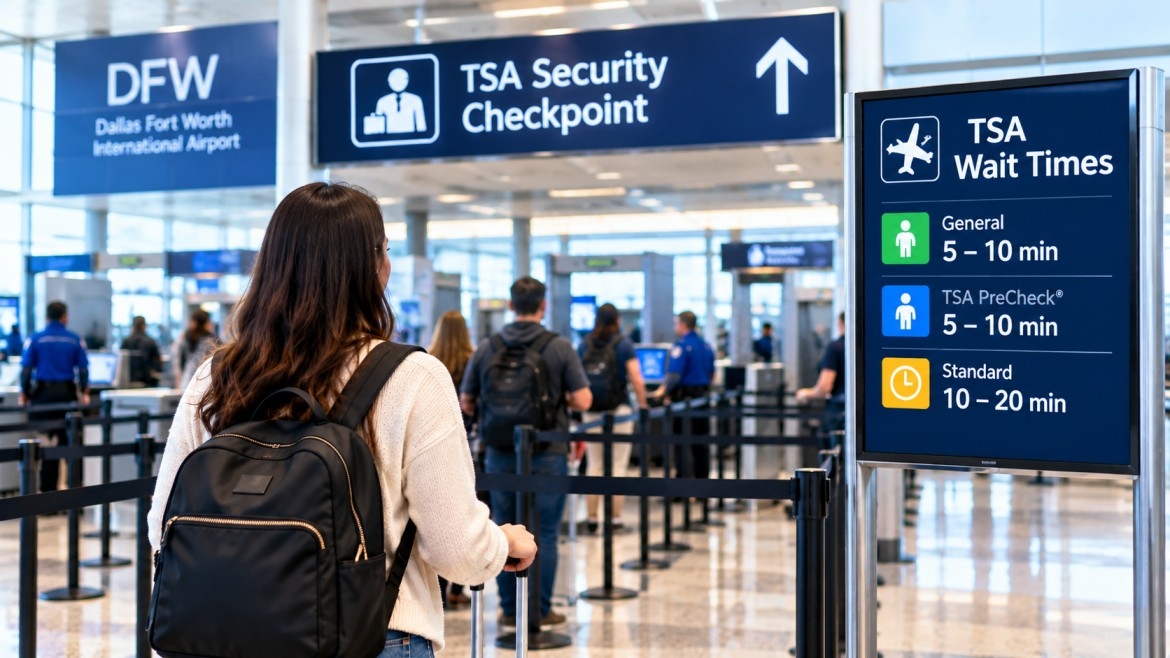
Checking DFW TSA wait times before leaving for the airport can help travelers plan their departure with greater confidence. Dallas Fort Worth International Airport handles passengers traveling for business, vacations, family visits, and international connections. Security conditions can change throughout the day as flight schedules, passenger arrivals, and checkpoint operations shift. As a result, the time needed to pass through security may differ from one visit to the next.
Understanding how estimates work is only one part of preparing for a flight. Travelers also need to consider airline check-in deadlines, baggage drop-off, identification requirements, terminal navigation, and the distance between security and the departure gate. Planning for these details can reduce unnecessary pressure on travel day. This article explains how security estimates should be interpreted, what affects queue lengths, how to prepare for screening, and how to plan a realistic airport arrival schedule.
What Are DFW TSA Wait Times?
TSA wait times describe the estimated time passengers may spend waiting at an airport security checkpoint. At DFW, travelers can use available checkpoint information to understand conditions and determine which security options may be suitable for their departure.
An estimate is a planning reference, not a guarantee. Passenger numbers can change while someone is traveling to the airport, and a queue that moves quickly at one moment may slow down when more people arrive. Additional inspections can also affect the time an individual passenger needs to complete screening.
It is important to understand what a displayed estimate represents. Some information may focus on the queue, while other systems may account for more of the checkpoint process. Travelers should review the context provided rather than assuming every estimate measures the same stages.
Several details can influence the actual experience:
The number of passengers waiting at the checkpoint.
The screening lanes currently operating.
The time required for individual baggage inspections.
The availability of an appropriate screening lane.
Changes in checkpoint operations or passenger demand.
A short estimate does not mean the entire airport departure process will be quick. Travelers still need sufficient time for airline procedures, screening, and reaching the correct gate.
What Causes DFW Security Wait Times to Change?
DFW security wait times are influenced by a combination of passenger demand, checkpoint capacity, and screening requirements. These factors can interact differently depending on the travel date and departure schedule.
Passenger volume and flight schedules
When several flights depart within overlapping time windows, more passengers may reach security around the same time. This can increase queue lengths even when the airport has multiple checkpoints available.
Public holidays, school breaks, vacation periods, and major events may also affect airport demand. However, busy travel dates do not automatically produce identical conditions at every checkpoint.
Travelers should avoid assuming that a particular day or hour will always have the shortest line. Reviewing available information close to departure provides a more useful basis for planning.
Checkpoint staffing and operations
Security processing depends on the screening lanes and procedures operating at a particular time. Temporary closures, equipment problems, staffing changes, and other operational adjustments may affect passenger movement.
A checkpoint's operating hours also matter. A traveler who chooses a different checkpoint based on an estimate should first confirm that it is open and appropriate for the planned route.
Passenger preparation
Unorganized baggage, items requiring additional inspection, and identification issues can create delays for individual passengers. These situations may also affect the movement of people through the screening area.
Preparing documents and packing carefully can reduce avoidable complications. However, even well-prepared travelers may need additional screening, so preparation should not be treated as a guarantee of faster passage.
Unexpected disruptions
Security conditions may change with little notice because of operational issues or sudden changes in passenger volume. An estimate checked before leaving home may therefore differ from the conditions encountered on arrival.
The practical response is to allow a buffer rather than building a departure schedule around the assumption that the queue will remain unchanged.
When Should Travelers Arrive at DFW Airport?
The right arrival time depends on the airline's instructions, destination, baggage arrangements, and individual travel needs. Domestic and international departures may involve different check-in and documentation procedures, so travelers should confirm the requirements for their specific itinerary.
Airport arrival time should not be confused with the time spent in the security line. Reaching the terminal is only the beginning of the departure process.
A realistic schedule should account for:
Driving or other transportation to the airport.
Parking, drop-off, or shuttle arrangements.
Airline check-in and baggage drop-off.
The expected security process and a buffer for delays.
Walking from the checkpoint to the departure gate.
Travelers checking luggage should confirm when the airline stops accepting bags. International passengers should also review any additional documentation or check-in requirements that apply to their destination.
People unfamiliar with DFW may need more time to locate their terminal, understand airport signage, and reach the correct checkpoint. Families traveling with children and passengers who require mobility assistance may also benefit from additional planning.
The airline's recommended arrival window and published deadlines should take priority over a low wait-time estimate. Arriving too late can create problems even when security itself is moving efficiently.
Where Can Travelers Check Current DFW TSA Wait Times?
The official DFW Airport website and airport app are useful starting points for available checkpoint wait-time information. DFW publishes information about security checkpoints and their operating hours, and its airport services can help travelers review flight details and plan their movement through the airport.
Information availability may vary by checkpoint and operating conditions. Travelers should refresh available estimates rather than assuming that a figure checked earlier remains accurate. If a checkpoint is marked closed or information is unavailable, they should not interpret that as proof that another checkpoint will be faster.
TSA resources serve a different purpose. They provide guidance on acceptable identification, carry-on restrictions, prohibited items, and screening requirements. Airline communications provide another important source of information about check-in deadlines, flight changes, and gate assignments.
A general travel-information reference such as Airport to Air may offer additional context for departure planning, but operational details should be verified through official airport, TSA, and airline channels.
Third-party estimates should not automatically be treated as official TSA data. Travelers should also remember that no estimate can guarantee the precise amount of time an individual will spend in a security queue.
For a more dependable plan, check the available information before leaving home and review it again if conditions or flight details change.
How to Prepare for Security Screening at DFW
Good preparation helps travelers avoid preventable delays, although it cannot eliminate queues or unexpected inspections.
Keep identification and boarding information accessible
Before departure, confirm which identification documents are accepted for the journey. Adult passengers should review the current TSA identification requirements rather than assuming that an expired or temporary document will be accepted.
Keep the boarding pass accessible, whether it is stored digitally or in another permitted format. International travelers should also confirm that their passport and other required travel documents are ready.
Organize carry-on baggage
Review current restrictions before packing liquids, gels, aerosols, electronics, and other items that may require special handling.
The general TSA liquids rule limits many carry-on liquid containers to 3.4 ounces (100 milliliters) or less, subject to applicable exceptions. Medical necessities and certain infant supplies may be handled differently under TSA rules.
Pack belongings so that items are easy to identify and access if an officer requests additional inspection. Avoid carrying prohibited items, and check uncertain items before leaving for the airport.
Follow instructions at the checkpoint
Screening procedures may vary according to the equipment and processes in use. Instructions about electronics, footwear, bags, and personal belongings should therefore be followed as given at the checkpoint.
Do not assume that procedures will be identical to those experienced on a previous trip. Remaining attentive to signs and security officers' directions helps prevent confusion.
Review departure updates
Check flight status, terminal information, and available checkpoint estimates before setting out. If the schedule changes, adjust the plan where possible while respecting airline check-in and boarding deadlines.
How Terminal Navigation Affects Security Planning
DFW's size makes terminal navigation an important part of departure planning. Travelers must reach the correct terminal, locate an appropriate checkpoint, and leave enough time to walk to the departure gate.
Parking location, drop-off arrangements, traffic within the airport area, and unfamiliar routes can all affect the schedule. Confirm the terminal shown in the airline's latest itinerary because gate and terminal assignments can change.
Passengers connecting between flights should review the airport's available terminal transportation options. DFW's Skylink system connects terminals within the secure area, but the most suitable route depends on the passenger's location and itinerary.
A terminal transfer does not automatically require another TSA screening. Whether additional screening is necessary depends on the route, whether the passenger remains within the secure area, and the circumstances of the journey.
Travelers should also distinguish between arriving at the terminal and reaching the gate. A manageable security queue can still be followed by a substantial walk, so the full route should be considered when planning arrival time.
What to Do When Security Lines Are Longer Than Expected
Unexpected delays can occur even when travelers have prepared carefully. If the queue is longer than anticipated, focus on verified information and practical next steps.
Check flight status: Confirm the departure time and gate using the airline's latest information.
Follow airport signage: Use official directions to locate the appropriate checkpoint and terminal facilities.
Ask airport personnel for help: Staff can provide guidance when the correct route or checkpoint is unclear.
Keep documents ready: Avoid unnecessary delays caused by searching through bags for identification or boarding information.
Contact the airline if needed: If the delay threatens check-in or boarding, contact airline staff as soon as practical.
Travelers enrolled in TSA PreCheck or another applicable expedited screening program should confirm eligibility and check whether the relevant lane is available. Enrollment does not guarantee access to a particular lane at every moment or promise a specific wait time.
Passengers should not assume that boarding deadlines will change because security lines are longer than expected. Airlines determine their own check-in and boarding procedures, so prompt communication is important when a delay may affect a flight.
DFW TSA Wait Times FAQs
How can I check DFW TSA wait times before leaving home?
Review the official DFW Airport website or airport app for available checkpoint estimates and operating hours. Check again close to departure because conditions can change while traveling to the airport.
What affects DFW security wait times?
Passenger volume, flight departure patterns, checkpoint operations, staffing changes, and additional screening can affect queue lengths. Conditions may differ between checkpoints and travel periods.
How early should I arrive at DFW Airport?
Follow the airline's recommended arrival time and check-in deadlines. Allow time for transportation, baggage drop-off, security, terminal navigation, and unexpected delays.
Are TSA wait-time estimates guaranteed to be accurate?
No. Estimates provide an indication of available conditions but cannot guarantee how long an individual passenger will wait. Use them alongside a reasonable time buffer.
Can DFW security lines become longer suddenly?
Yes. Passenger arrivals, operational changes, equipment issues, and additional inspections can affect queues. Checking available information again before departure can help travelers adjust their plans.
Final Thoughts
Preparing for a departure from Dallas Fort Worth International Airport involves more than checking a security estimate. Travelers should confirm airline deadlines, review current screening requirements, organize their baggage, and allow enough time for terminal navigation. Since security conditions can change, using official information and maintaining a reasonable buffer provides a more dependable approach to planning the journey.





