
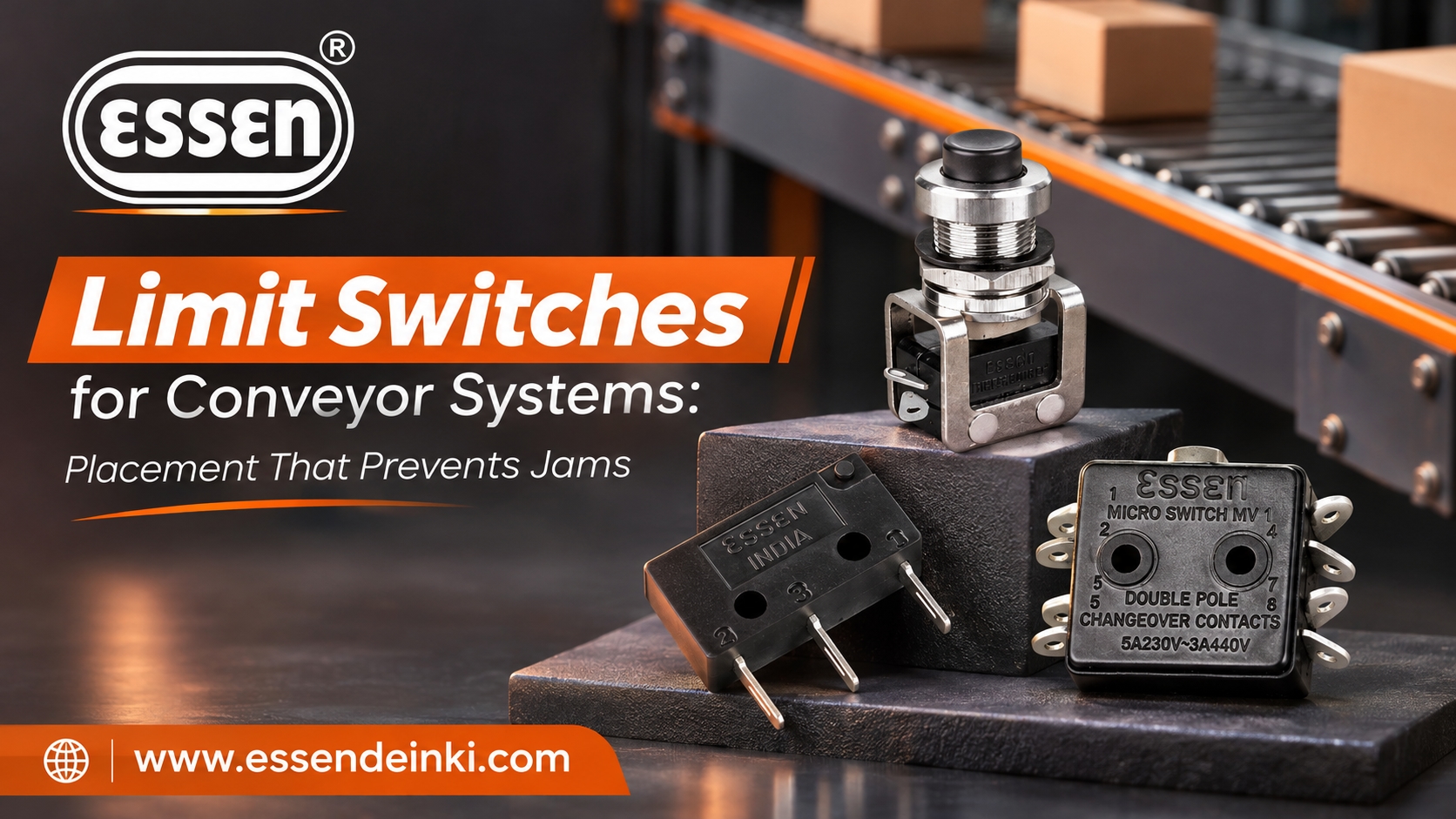
Conveyor systems depend on dozens of small components working in sync, and few are as overlooked as the limit switch. These simple electromechanical devices detect when an object reaches a specific position and trigger a response, such as stopping a motor, signaling a controller, or activating an alarm. Placed correctly, they keep material flowing smoothly. Placed poorly, they lead to jams, damaged product, and unplanned maintenance calls.
Limit switches prevent jams when they're positioned at loading zones, transfer points, and discharge areas where material changes direction or speed. Poor placement, such as switches set too far from contact points or exposed to dust and vibration, causes missed detections, equipment damage, and costly downtime. This guide covers why placement matters, where to position limit switches on a typical conveyor line, the mistakes that cause the most trouble, and the best practices that keep your system running without interruption.
Why Does Limit Switch Placement Matter in Conveyor Systems?
A limit switch only works if it triggers at the right moment. Placed well, it detects incoming objects, confirms a part has reached its destination, and signals when a section is clear. Placed poorly, it fires too late to prevent a collision or fails to trigger at all.
Poor placement sets off a chain reaction. A missed detection at a transfer point can cause material to pile up, strain the motor, misalign belts, and force a full shutdown. It's also a safety risk: limit switches often double as emergency stop triggers, so a misplaced one can delay a shutdown when a worker or equipment is in danger.
Strategic positioning solves both problems. It reduces wear and unplanned downtime while making the system safer and more predictable.
Where Should You Install Limit Switches on a Conveyor Line?
Every conveyor system has a handful of zones where limit switches do the heaviest lifting. Getting these right is the foundation of a jam-free operation.
Loading zone: Detect incoming material before it reaches critical downstream points, giving the system time to slow or halt the line if material arrives too fast or misaligned.
Transfer points: Confirm that each handoff between conveyor sections happens cleanly. These spots are the most jam-prone because timing and alignment must both be right.
Discharge area: Monitor outgoing material at the end of the line to prevent overflow when the receiving area is full or blocked.
Emergency stop locations: Place switches tied to emergency stops where they're easy to reach and can halt motion before a jam causes equipment damage or a safety incident.
Together, these zones form a layered detection system — each limit switch catching a different stage of the material's journey through the line.
What Are the Most Common Limit Switch Placement Mistakes?
Even experienced teams run into the same handful of placement errors:
Placing limit switches too far from the detection point. Delayed response lets material build up and cause the very jam you're trying to prevent.
Ignoring the environment. Dust, debris, and vibration degrade accuracy over time, especially if the switch isn't rated for the conditions.
Overlooking material variation. A switch calibrated for one size or shape may miss irregular items.
Blocking maintenance access. Hard-to-reach switches get skipped during inspections, and neglected switches fail.
Each of these mistakes is preventable with a bit of planning before installation — which brings us to the practices that actually work.
How Can You Optimize Limit Switch Placement for Maximum Reliability?
Getting placement right isn't guesswork. It comes down to a few repeatable steps:
Audit the system first. Walk the line and find where jams happen or material flow is uneven. These are your priority zones.
Test before installing. Mount switches temporarily, run the line normally, then lock in the final position.
Account for material and speed. Heavier loads, faster belts, and odd shapes change trigger timing, so skip the standard template.
Inspect regularly. Check for wear, debris, and misalignment as part of your routine maintenance.
Following this process turns limit switch placement into a controlled, repeatable part of conveyor design rather than a one-time decision made during initial installation.
Keeping Your Conveyor Line Jam-Free
Limit switches are small components, but their placement has an outsized effect on how reliably a conveyor system runs. Positioning them at loading zones, transfer points, discharge areas, and emergency stop locations — while avoiding common mistakes like delayed response distance or poor environmental protection — keeps material moving and equipment protected.
The payoff is consistent: fewer jams, less downtime, and a safer floor for the people working around the line. If you're sourcing components for an upgrade or a new installation, Essen Deinki's limit switches are worth a look, offering durable, precision-engineered options built for industrial automation and conveyor applications.