
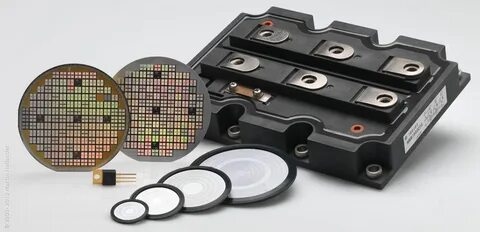
Choosing appropriate semiconductor products for power conversion and control applications requires a systematic approach that balances electrical performance, thermal behavior, cost, and long-term availability. Engineers must match device characteristics to the specific demands of the circuit while leaving adequate margin for real-world operating variations.
Power applications place unique stresses on semiconductor devices. High currents, elevated voltages, rapid switching, and thermal cycling all contribute to the potential for degradation or failure if the wrong device is selected. A structured selection process reduces this risk and improves both efficiency and reliability.
Defining Application Requirements
The first step is to establish clear electrical and environmental requirements:
· Input and output voltage ranges
· Continuous and peak current levels
· Switching frequency and duty cycle
· Ambient temperature and cooling method
· Expected lifetime and reliability targets
· Regulatory and safety constraints
These requirements guide the choice of device technology and package. For example, a high-frequency switch-mode power supply may favor low-loss MOSFETs or fast-recovery diodes, while a high-power motor drive may require robust IGBTs with high short-circuit withstand capability.
Matching Device Characteristics to Circuit Needs
Once requirements are defined, engineers compare candidate devices against key parameters. Voltage ratings should exceed the maximum expected voltage by a suitable margin—typically 20–50 % depending on the application and transient environment. Current ratings must accommodate both continuous operation and short-duration overloads.
Switching losses become increasingly important at higher frequencies. Devices with lower gate charge, faster recovery times, or softer switching characteristics can significantly improve efficiency. Conduction losses, determined by on-state resistance or forward voltage drop, dominate at lower frequencies and higher currents.
Thermal performance is equally critical. The combination of power dissipation and thermal resistance determines junction temperature. Selecting a package with adequate heat-sinking capability, or moving to a module format for higher power levels, helps keep temperatures within safe limits.
Considering Package and Assembly Constraints
Package selection influences both electrical performance and manufacturing cost. Surface-mount devices enable automated assembly and compact designs but may limit power dissipation. Through-hole packages and power modules offer better thermal paths and higher current capability at the expense of board space and assembly complexity.
Designers must also consider creepage and clearance distances required by safety standards, especially in high-voltage applications. Package outlines that facilitate compliance simplify certification and reduce the need for additional insulating barriers.
Evaluating Reliability and Qualification Data
Datasheet reliability data—such as mean time between failures (MTBF) estimates, temperature cycling results, and high-temperature reverse bias performance—provide insight into expected field life. For critical applications, additional qualification testing or review of the manufacturer’s process controls may be warranted.
Long-term availability is another practical consideration. Preferring devices that are part of a stable product family with published longevity roadmaps reduces the risk of redesigns later in the product lifecycle.
When deeper insight into the manufacturer’s production capabilities and quality systems is needed, examining company information and manufacturing details can support a more informed decision.
Balancing Performance, Cost, and Risk
In many projects, the optimal device is not the one with the highest performance specifications, but the one that meets all requirements at the lowest total cost of ownership. This calculation includes unit price, efficiency-related energy savings, thermal management costs, assembly yield, and expected warranty expense.
Risk assessment should also factor in supply chain stability and the availability of second sources. Dual-sourcing strategies or the selection of devices with multiple package-compatible alternatives can mitigate single-supplier risk.
Practical Selection Workflow
1. Document electrical, thermal, and environmental requirements.
2. Identify candidate device families using parametric search tools.
3. Compare key parameters and apply appropriate derating.
4. Review package options and assembly implications.
5. Validate thermal performance through calculation or simulation.
6. Confirm availability, lead times, and long-term support.
7. Prototype and test under realistic operating conditions.
8. Finalize the selection and document the rationale.
Following a disciplined process improves the likelihood of selecting semiconductor products that deliver the required performance while meeting cost and reliability targets. As power electronics continue to advance, staying current with new device technologies and selection methodologies remains an essential skill for design engineers.
FAQ
Q1: What is the first step in selecting semiconductor products for power applications?
A: Clearly define the electrical, thermal, and environmental requirements of the application.
Q2: Why is voltage derating important?
A: Operating with adequate voltage margin improves reliability and protects against transient overvoltages that could otherwise damage the device.
Q3: How do switching frequency and conduction losses interact?
A: At higher frequencies, switching losses tend to dominate; at lower frequencies and higher currents, conduction losses become more significant.
Q4: What package considerations affect device selection?
A: Thermal performance, assembly method, board space, and compliance with creepage/clearance requirements all influence package choice.
Q5: How can engineers reduce the risk of future obsolescence?
A: Prefer devices from stable product families with published longevity information and consider dual-sourcing where practical.