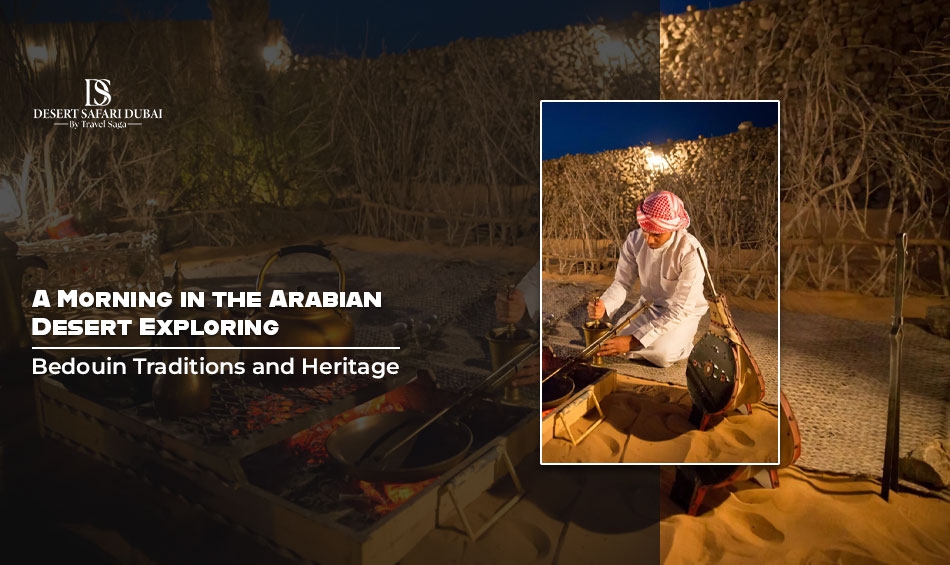
Dubai is widely known for its impressive skyline, modern attractions and luxurious lifestyle, but its identity extends far beyond the city. The surrounding Arabian Desert holds a different story, one shaped by generations of people who learned to live with the natural environment. Long before modern roads and buildings transformed the region, Bedouin communities travelled across the desert, raised animals, prepared traditional meals, and developed customs that became an important part of Emirati heritage.
A Bedouin Culture Safari-Morning provides an interesting way to understand this traditional lifestyle while exploring the beauty of the Arabian Desert. From watching camels move across the sand to discovering falconry, traditional village life and Emirati breakfast, a morning in the desert introduces visitors to customs that have been preserved through generations. It is an opportunity to experience a quieter side of Dubai while learning how culture, hospitality and nature have always been connected in this region.
How Did Bedouin Communities Traditionally Live in the Arabian Desert?
Bedouin communities developed a lifestyle that allowed them to adapt to the challenging conditions of the Arabian Desert. Their daily routines were influenced by the availability of water, changing temperatures, animal movement and seasonal conditions.
Many families traditionally moved between different locations depending on grazing opportunities and other natural resources. Camels played an essential role in transportation, while falcons and Saluki dogs were associated with traditional hunting practices.
Hospitality was another important part of Bedouin culture. Welcoming guests, sharing food and offering refreshments were considered meaningful expressions of generosity and respect.
Some important elements of traditional Bedouin life include:
Camel transportation: Camels helped people travel across long desert distances.
Traditional shelter: Tents provided practical living spaces that could be adapted to changing conditions.
Falconry: Trained falcons were used for hunting and became an important part of Arabian heritage.
Food preparation: Traditional meals relied on locally available ingredients and established cooking practices.
Oral storytelling: Stories helped preserve cultural knowledge, family traditions and community values.
Understanding these customs makes a desert visit more meaningful because the landscape becomes more than a scenic attraction.
What Can You Discover During a Bedouin Culture Safari-Morning?
A morning in the Arabian Desert can introduce visitors to several aspects of traditional Emirati life. The Bedouin Culture Safari-Morning experience brings together cultural activities, nature exploration and traditional hospitality in an approximately five-hour outing.
1. Explore the Desert in a Vintage Land Rover
The Arabian Desert looks particularly beautiful during the early hours, when soft sunlight creates changing colours across the dunes. Travelling through this landscape in a vintage Land Rover offers a different perspective from a conventional desert drive.
The approximately 60-minute nature drive focuses on the surrounding environment rather than high-speed adventure. Visitors can observe the landscape, learn about desert wildlife and appreciate the natural characteristics of the protected reserve.
The vintage vehicle also reflects an earlier period of desert exploration, adding a traditional character to the journey.
2. Experience the Traditional Camel Caravan
Camels have been closely connected with Arabian life for centuries. Their ability to travel through dry environments made them valuable companions for communities living across the desert.
A traditional camel caravan allows visitors to experience this historic connection at a relaxed pace. An approximately 15-minute camel journey provides an opportunity to appreciate the surroundings, observe the desert from a different height and understand why these animals were so important to earlier generations.
Camels also remain an important symbol of Emirati identity and cultural heritage.
3. Discover the Atmosphere of a Bedouin Village
Traditional Bedouin villages offer insight into how desert communities organised their everyday lives. Their surroundings were shaped by practical needs, local resources and customs developed over generations.
A traditional village setting can introduce visitors to Bedouin-style tents, cooking areas and cultural practices. These elements help explain how families prepared meals, welcomed guests and managed daily activities in a challenging environment.
Storytelling is another interesting part of this cultural setting. Traditionally, stories were shared between generations to preserve memories, experiences and knowledge about desert life.
4. Understand the Importance of Falconry and Saluki Dogs
Falconry is one of the most recognisable elements of Arabian heritage. Historically, falcons helped desert communities hunt for food, and their training required patience, skill and a close understanding of bird behaviour.
Saluki dogs also played an important role in traditional hunting. Known for their speed and agility, they were valued companions in desert environments.
Learning about both animals provides a better understanding of how Bedouin communities depended on their surroundings and developed relationships with the animals around them.
5. Enjoy Traditional Emirati Breakfast
Food is an important part of cultural identity, and traditional Emirati breakfast offers a taste of local flavours and hospitality.
A selection of traditional dishes may include:
Balaleet: A sweet preparation of vermicelli traditionally served with eggs.
Bajela: A traditional fava bean dish.
Chami cheese: A traditional dairy preparation.
Ragag bread: Thin traditional Emirati bread.
Chabab: Emirati-style pancakes.
Desert truffles: Naturally occurring desert delicacies.
Luqaimat: Small fried dumplings traditionally served with sweet syrup.
Seasonal fruits: Fresh fruit served alongside other breakfast dishes.
Arabic coffee, chai, camel milk, Vimto and water can accompany the meal.
Traditional breakfast is more than a collection of dishes. It reflects the importance of sharing food and welcoming visitors, values that remain central to Emirati hospitality.
Also Read - Heritage Desert Safari Dubai: Best Bedouin & Cultural Experiences
Why Is the Dubai Desert Conservation Reserve Important?
The natural surroundings of the Arabian Desert are an important part of the region's identity. The Dubai Desert Conservation Reserve provides a protected environment where visitors can learn about desert ecosystems and observe native wildlife.
The reserve supports several species adapted to the desert climate, including:
Arabian oryx
Arabian gazelles
Desert foxes
Various reptiles
Native and migratory bird species
These animals have developed different ways of surviving in an environment where water and vegetation can be limited.
Exploring protected desert landscapes also highlights the importance of responsible tourism. Visitors should avoid feeding wildlife, disturbing animals, littering or damaging natural vegetation.
Conservation is especially important in desert environments because even small disturbances can affect the delicate balance of the ecosystem.
When Is the Best Time to Explore the Arabian Desert?
The cooler months from November to March are generally comfortable for spending time outdoors in Dubai. During this period, morning temperatures are often more pleasant for camel journeys, nature exploration and walking around traditional village settings.
Early mornings are also a good time to observe the desert as the landscape changes with the rising sun. The softer light creates excellent conditions for photography and makes the surroundings particularly appealing.
During warmer months, starting outdoor activities early is especially helpful because temperatures increase as the day progresses.
Visitors should always follow local weather guidance and prepare appropriately for outdoor conditions.
Who Can Enjoy a Cultural Morning in the Desert?
A cultural desert experience can appeal to different types of travellers because it combines nature, heritage and traditional food rather than concentrating entirely on adventure.
Families with children: Younger visitors can learn about camels, falcons, desert wildlife and traditional food through an engaging outdoor experience. Children aged 5–11 fall within the applicable child participation category, while children under five require a private vehicle arrangement.
Couples: Couples interested in photography, cultural experiences and peaceful surroundings may enjoy exploring the desert together.
History and culture enthusiasts: Travellers interested in traditional Emirati customs, Bedouin lifestyles, falconry and local hospitality can discover several aspects of Arabian heritage in one morning.
Nature lovers: The conservation reserve and its wildlife offer an opportunity to appreciate the natural environment beyond Dubai's urban attractions.
Practical Tips Before Visiting the Arabian Desert
A little preparation can make a morning desert outing more comfortable.
Wear lightweight and comfortable clothing.
Choose footwear suitable for walking on sandy surfaces.
Carry sunglasses and sunscreen.
Bring a camera or smartphone to capture the scenery.
Use a hat or scarf for additional sun protection.
Carry a light jacket during the cooler winter months.
Keep personal belongings to a minimum.
Carry valid identification when travelling.
Inform the organisers about dietary requirements or food allergies in advance.
Visitors should also respect local customs and avoid photographing other people without permission. Drones are not permitted during this particular experience.
Important Things to Know About Desert Activities
Although cultural desert exploration is generally suitable for many visitors, some activities require additional consideration.
The camel caravan lasts approximately 15 minutes, and safety procedures should always be followed.
A maximum of two guests can ride on one camel.
Children under five require a private vehicle arrangement.
Guests who are more than six months pregnant are advised to avoid activities such as the camel ride and nature drive.
Visitors with medical conditions or mobility concerns should check their suitability before participating.
Air-conditioned vehicles are used for the guided nature experience.
Responsible wildlife viewing is essential throughout the visit.
Dietary preferences such as vegetarian, vegan and gluten-free meals can be accommodated when communicated in advance.
Conclusion
The Arabian Desert offers much more than beautiful sand dunes and outdoor adventures. Its landscapes hold stories of traditional communities, ancient travel practices, local food and a strong connection with nature. Exploring a Bedouin village, learning about falconry, travelling with a camel caravan and enjoying traditional Emirati breakfast can help visitors understand a side of the UAE that is often overlooked. For anyone interested in discovering this cultural heritage, The Desert Safari in Dubai provides an opportunity to experience the traditions and natural beauty associated with the region. Choosing a meaningful Dubai desert safari can turn an ordinary morning into a memorable introduction to Arabian culture and hospitality.
Frequently Asked Questions
1. What is a Bedouin Culture Safari-Morning?
A Bedouin Culture Safari-Morning is a cultural experience that introduces visitors to traditional Arabian desert life through camel caravans, Bedouin village exploration, falconry, Saluki dogs, storytelling and Emirati breakfast.
2. How long does a morning Bedouin cultural experience take?
The complete experience takes approximately five hours, including transfers, cultural activities, the camel caravan, breakfast and the vintage Land Rover nature drive.
3. Does a cultural desert experience include dune bashing?
This particular cultural experience focuses on heritage, nature and traditional activities rather than conventional high-speed dune bashing.
4. Is camel riding part of the experience?
Yes. An approximately 15-minute camel caravan is included, providing an opportunity to experience a traditional form of desert transportation.
5. What traditional food can visitors try?
Visitors can enjoy traditional Emirati dishes such as Balaleet, Bajela, Chami cheese, Ragag bread, Chabab, desert truffles and Luqaimat, accompanied by beverages such as Arabic coffee and chai.
6. What wildlife can be seen in the Dubai desert?
The Dubai Desert Conservation Reserve is home to wildlife such as Arabian oryx, gazelles, desert foxes, reptiles and various bird species. Wildlife sightings depend on natural conditions.
7. Is a morning cultural desert experience suitable for families?
Yes. Families can discover traditional desert life together. Children aged 5–11 fall within the applicable child category, while children under five require a private vehicle arrangement.
8. What should visitors wear during a morning desert experience?
Comfortable, lightweight clothing and suitable footwear are recommended. Sunglasses, sunscreen and a hat or scarf are also useful. During winter, carrying a light jacket can make early mornings more comfortable.