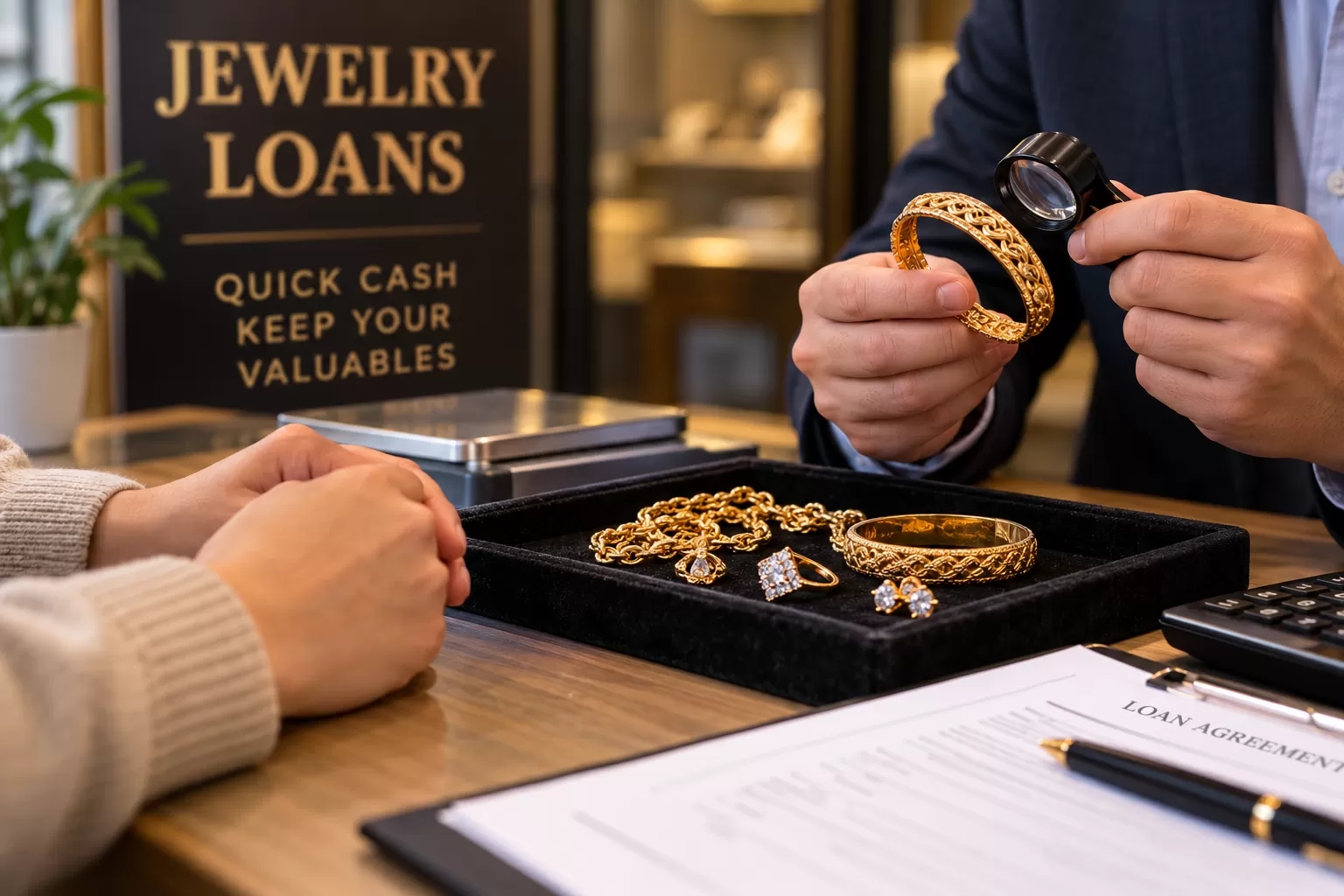
An unexpected expense can put pressure on your finances, especially when savings are limited. Gold jewelry sitting in a drawer may offer a temporary solution without requiring you to sell something valuable.
A loan on jewellery allows you to borrow money using gold, diamonds, or other valuable pieces as security. You retain ownership while the lender holds your items until repayment. Before making that commitment, however, it helps to understand how valuations, charges, and repayment terms work.
Why People Borrow Against Their Jewelry
Jewelry-backed lending appeals to people who need access to money for a limited period. Someone might need to cover an urgent car repair, a medical bill, or a temporary gap between payments.
Unlike selling, pawning provides an opportunity to recover the same items after settling the debt. This matters particularly for inherited jewelry, engagement rings, and pieces connected to family memories.
The arrangement still carries risks. If repayment becomes difficult, the lender may eventually sell the pledged jewelry to recover the outstanding amount.
How Lenders Determine Your Jewelry's Value
The amount available depends on the lender's assessment rather than the original purchase price. A ring purchased for $2,000 will not necessarily support a loan anywhere near that amount.
Gold Purity and Weight
Gold content is a major factor in determining value. For example, 18-karat gold contains 75% pure gold, while 9-karat gold contains 37.5%.
Lenders generally examine hallmarks, test metal purity, and assess the item's weight. They also consider current gold prices and the amount they could realistically recover through resale.
People researching gold buyers Melbourne may notice that purchase offers differ between businesses. These differences can reflect testing methods, resale costs, profit margins, and whether the business values jewelry primarily for its metal content.
Gemstones, Design, and Condition
Diamonds and other gemstones may contribute to a piece's value, although not every lender accepts them. Some focus mainly on precious metals and offer little additional value for stones.
Designer jewelry, antique settings, and documented craftsmanship may attract different assessments. Original receipts, certificates, and independent valuations can provide useful supporting information, but they do not guarantee a higher offer.
The Real Cost of Borrowing Against Gold
A loan on jewellery may seem straightforward because the lender already holds valuable security. However, the amount borrowed represents only part of the financial obligation.
Pawnbrokers typically charge interest or other lending fees. Before accepting an offer, request a written explanation of the repayment amount, loan period, and any extension charges.
Consider a hypothetical $1,000 loan with a $40 monthly charge. Repaying after two months would cost $1,080, assuming no additional fees. Extending the arrangement could increase the total further.
Small monthly charges can become expensive relative to the amount borrowed. Compare the total dollar cost rather than focusing only on the advertised rate.
What Happens During the Loan Period?
In Victoria, pawnbrokers must provide a pawn ticket showing important transaction details, including the loan amount, charges, and agreed period.
Keep this document somewhere secure and record the repayment deadline. Consumer Affairs Victoria also explains that pledged goods can be redeemed after the minimum storage period and before their sale, even if the original loan period has expired.
If the loan expires, the pawnbroker must offer unredeemed goods for sale as soon as practicable. Relying on additional time without written confirmation is therefore risky.
Before pledging sentimental jewelry, establish a realistic repayment plan based on income and essential expenses.
Borrowing or Selling: Which Makes More Sense?
A loan on jewellery generally suits someone facing a temporary shortage who expects to repay the amount comfortably. Selling may be more appropriate when the jewelry is no longer wanted or repayment would create further financial strain.
For instance, selling a broken gold chain might eliminate the need to pay borrowing charges. On the other hand, pawning a family heirloom may be preferable if its sentimental importance outweighs the cost of borrowing.
Neither option should be rushed. Obtain more than one assessment and ask whether the quoted amount represents a purchase price or a secured loan offer.
Making a Decision Without Regret
Before signing anything, verify the pawnbroker's registration, inspect the written terms, and calculate the full repayment amount. Photograph your jewelry and retain any documentation describing its condition.
Comparing offers from lenders and gold buyers Melbourne can also clarify the difference between borrowing against an asset and selling it permanently.
The right decision depends on more than the cash available immediately. Choose an arrangement that fits your repayment capacity, protects valuable belongings where possible, and avoids turning a short-term expense into a longer financial problem.