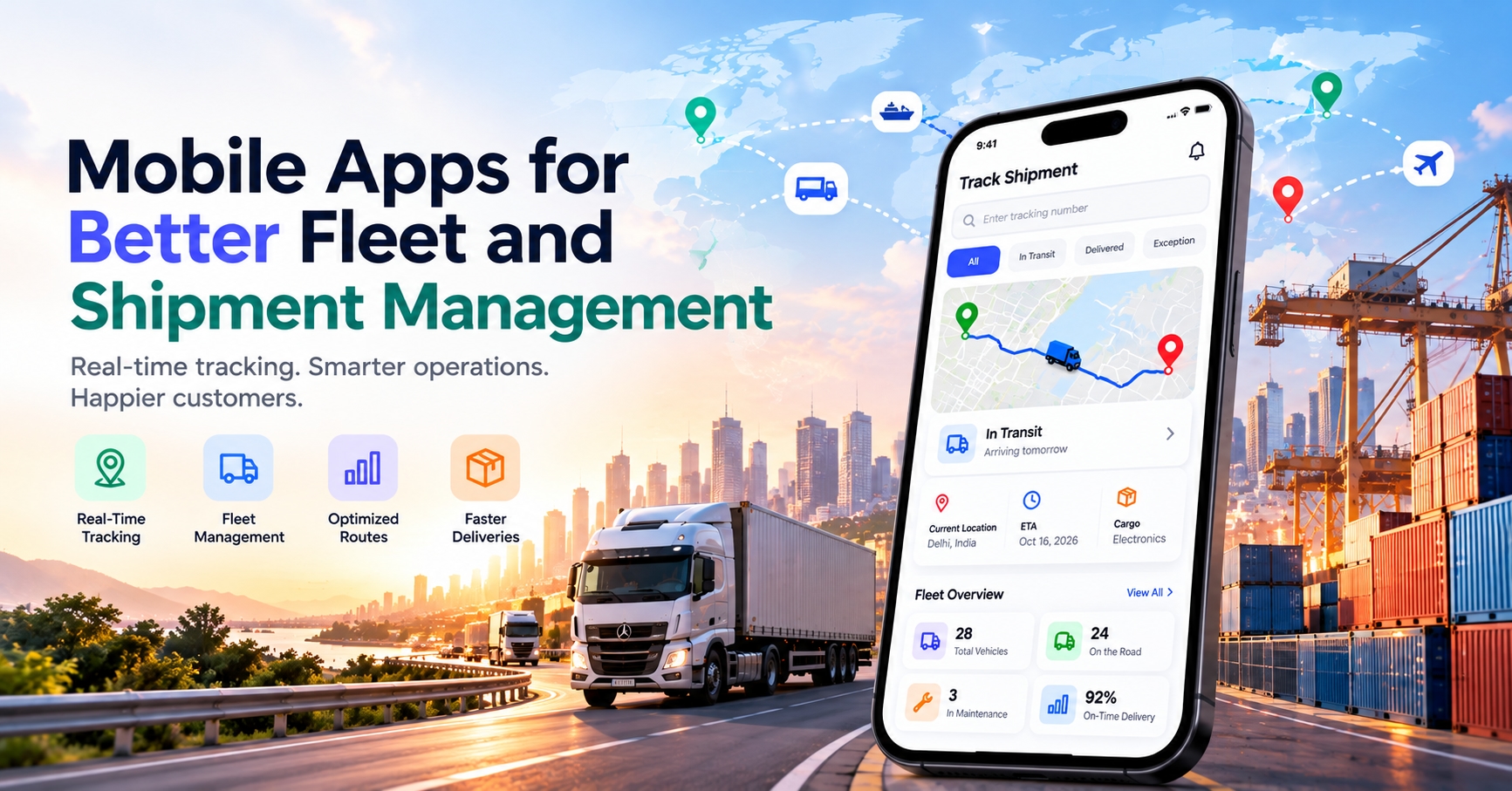
Transportation and logistics companies manage multiple operations, including shipment tracking, fleet management, delivery scheduling, and customer communication. Handling these activities manually can lead to delays, communication gaps, and higher operating costs. A mobile app helps businesses manage daily logistics activities, share real-time updates, and coordinate drivers, dispatchers, and customers through a single platform. With effective logistics app development, companies can improve delivery visibility, simplify workflows, and provide better customer service.
As supply chains become more complex, mobile applications are becoming an important tool for businesses that want to manage transportation operations efficiently. From small delivery businesses to large logistics providers, the right mobile solution can support faster decision-making and more organized operations.
1. Real-Time Shipment Tracking and Visibility
Customers expect to know where their shipments are and when deliveries will arrive. Without real-time tracking, logistics teams often spend valuable time answering status inquiries and coordinating updates manually.
A logistics mobile app can use GPS technology and shipment status updates to provide better visibility throughout the delivery process.
Key benefits include:
Live location tracking: Monitor vehicle locations and shipment progress.
Delivery notifications: Inform customers about dispatch, transit, delays, and successful delivery.
Estimated arrival times: Help customers plan for incoming shipments.
Improved transparency: Give customers and logistics managers access to relevant delivery information.
Real-time tracking also helps dispatchers identify route delays and respond to unexpected transportation issues more quickly.
2. Better Fleet and Driver Management
Managing multiple vehicles and drivers can become complicated as a logistics business expands. A mobile application can centralize important fleet information and help managers coordinate transportation activities.
With suitable fleet management features, businesses can:
Assign deliveries to available drivers.
Monitor vehicle locations and trip progress.
Share routes and delivery instructions.
Record fuel usage, mileage, and vehicle maintenance details.
Track driver availability and delivery performance.
These capabilities help logistics managers make informed decisions about vehicle allocation and delivery scheduling. However, results depend on accurate data, appropriate integrations, and consistent use of the application by drivers and operations teams.
3. Faster Delivery Scheduling and Route Planning
Inefficient routes and poorly coordinated schedules can increase fuel expenses, extend delivery times, and reduce the number of deliveries completed each day.
A mobile app can help dispatchers organize delivery requests, assign stops, and share route information with drivers. More advanced solutions can incorporate traffic conditions, delivery windows, vehicle capacity, and route optimization algorithms.
Benefits of better route planning include:
Reduced unnecessary travel.
More organized delivery schedules.
Improved vehicle utilization.
Fewer missed delivery windows.
Better coordination between drivers and dispatch teams.
For businesses operating across multiple locations, these features can make daily transportation planning more consistent and easier to manage.
4. Improved Communication Between Drivers and Dispatchers
Communication problems can affect delivery accuracy and delay responses to unexpected situations. Drivers may need updated instructions, customers may request delivery changes, and dispatchers may need to report road closures or scheduling adjustments.
A logistics mobile app provides a shared communication channel for these activities.
Useful features include:
In-app messaging and call options.
Automated delivery status updates.
Digital proof of delivery.
Alerts for delays or failed delivery attempts.
Electronic document sharing.
For example, if a driver cannot complete a delivery because the recipient is unavailable, the driver can update the shipment status and share the reason with the operations team. This reduces the need for repeated phone calls and helps staff determine the next action.
5. Reduced Paperwork and Operational Costs
Traditional logistics operations may rely on printed delivery receipts, handwritten records, spreadsheets, and manual data entry. These processes can increase administrative workloads and create opportunities for errors.
Through custom logistics app development, companies can digitize routine tasks and adapt application features to their existing business processes.
A logistics application may support:
Electronic invoices and delivery receipts.
Digital signatures and proof of delivery.
Automated shipment records.
Expense and fuel tracking.
Centralized delivery documentation.
Reducing paperwork can save administrative time and make shipment records easier to retrieve. Businesses should also consider software maintenance, integration, training, and infrastructure expenses when evaluating the overall cost savings.
6. Better Customer Experience and Service Quality
Reliable communication and accurate delivery information play an important role in customer satisfaction. A mobile app can give customers more control over their shipments while reducing their dependence on customer support teams.
Customer-facing features may include:
Shipment booking and order management.
Real-time tracking.
Delivery status notifications.
Estimated delivery dates.
Digital invoices and delivery confirmation.
Support requests and feedback options.
When customers can access shipment information independently, they can make better arrangements for receiving goods. Consistent updates also help businesses build trust and handle delivery problems more professionally.
7. How Logistics Software Development Supports Business Growth
As shipment volumes increase, businesses need systems that can handle more deliveries, users, vehicles, and operational data. logistics software development helps companies connect mobile applications with backend systems such as warehouse management software, transportation management systems, inventory platforms, and billing tools.
A well-planned solution should consider:
Scalability: Support increasing shipment volumes and additional locations.
Integration: Exchange data with existing business applications.
Security: Protect customer information, location data, and business records.
Reporting: Track delivery times, fleet utilization, operating costs, and service performance.
Reliability: Maintain essential workflows during connectivity problems where technically feasible.
Businesses with specialized workflows may benefit from custom software development for logistics, particularly when standard applications cannot support their pricing models, delivery processes, compliance requirements, or integration needs.
8. Essential Features to Include in a Logistics Mobile App
The right features depend on the business model, user requirements, and operational challenges. Before development begins, companies should identify which functions will provide the greatest practical value.
Important features to consider include:
User authentication and role-based access.
GPS tracking and route planning.
Shipment booking and status management.
Driver and fleet management.
Push notifications and in-app communication.
Digital proof of delivery.
Payment and invoice management, where applicable.
Analytics dashboards and operational reports.
Offline data capture with secure synchronization, where needed.
Businesses should prioritize essential features first and introduce advanced capabilities after evaluating user feedback and operational performance.
Conclusion
A mobile app can help transportation and logistics companies improve shipment visibility, coordinate drivers, simplify documentation, and deliver a better customer experience. Its effectiveness depends on choosing the right features, integrating existing systems, protecting sensitive information, and ensuring that employees can use the solution effectively.
Investing in logistics app development can help businesses establish more organized transportation workflows and prepare for changing delivery requirements. By identifying operational challenges and selecting an appropriate development approach, companies can build a mobile solution that supports efficiency, accountability, and long-term business growth.