
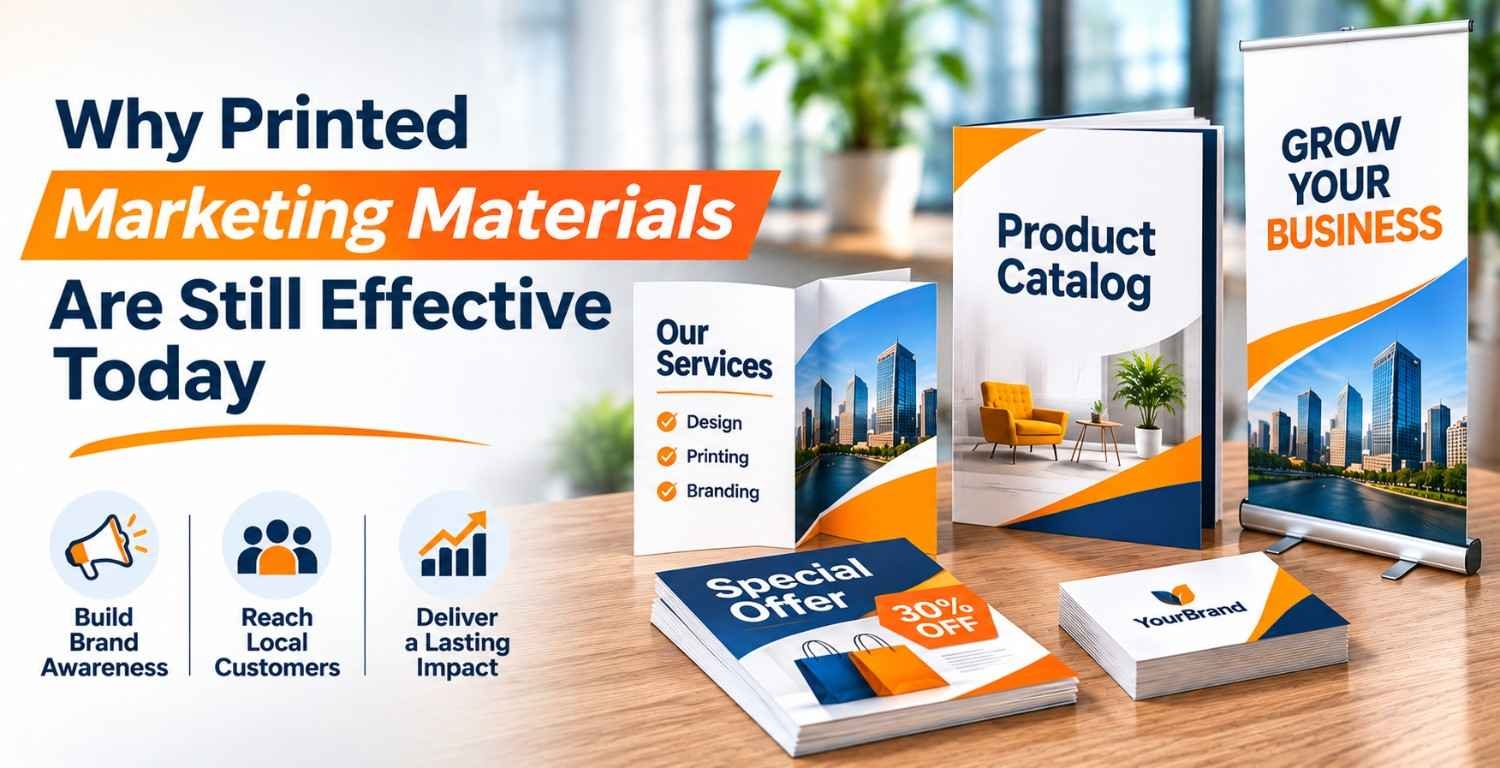
Digital marketing has changed the way businesses connect with customers, but traditional marketing methods have not lost their importance. From social media advertisements and email campaigns to search engine marketing, companies now have many ways to promote their products and services. However, printed marketing materials continue to offer something valuable: a physical connection with customers. A well-designed brochure, business card, flyer, or promotional item can leave a lasting impression that people may remember long after seeing it. For businesses looking to build brand awareness, attract customers, and strengthen their market presence, print marketing remains a practical and effective strategy.
1. Printed Materials Create a Lasting Impression
One of the biggest advantages of print marketing is that customers can physically interact with promotional materials. Unlike digital advertisements that disappear when someone scrolls past them, printed products can be kept, displayed, shared, or revisited whenever needed.
For example, a customer may receive a brochure during a business meeting and keep it on their desk for future reference. Similarly, a promotional postcard or business card can remind someone about your company even after the initial interaction.
Printed materials can create stronger impressions through:
Physical interaction: Customers can hold, read, and keep printed advertisements.
Visual presentation: Professional layouts, attractive colors, and quality paper can make promotional materials memorable.
Repeated exposure: Materials such as calendars, magnets, and posters can keep your brand visible over time.
Personal connection: Handing someone a printed brochure or business card creates a more direct interaction.
This makes print marketing particularly useful for businesses that want to build familiarity and maintain customer relationships.
2. Builds Trust and Professional Credibility
Customers often judge a business by the quality of its presentation. Professional printed materials can communicate reliability, attention to detail, and a well-established brand identity.
Imagine attending a business meeting where one company provides a professionally designed proposal with branded stationery, while another hands over unorganized documents. The first company may create a stronger impression simply because its presentation looks more professional.
Business stationery plays an important role in maintaining this image. Items such as letterheads, envelopes, business cards, and presentation folders help create a consistent appearance across official communication.
For companies that regularly send quotations, invoices, proposals, and business correspondence, Letterhead printing in Los Angeles can help maintain a professional brand image. Customized letterheads featuring a company logo, contact details, and brand colors make everyday documents look more organized and recognizable.
Professional business stationery can help with:
Establishing a consistent corporate identity.
Making official communication look more professional.
Improving brand recognition among customers and business partners.
Creating a consistent appearance across printed documents.
Even small details, such as using branded letterheads for quotations and proposals, can contribute to how customers perceive your company.
3. Helps Businesses Reach Local Customers
Local marketing is important for businesses that depend on customers within a particular city or neighborhood. While online advertisements can reach a broad audience, printed promotional materials provide opportunities to connect with people in specific physical locations.
Flyers, postcards, brochures, posters, and banners can be distributed or displayed in places where potential customers regularly visit.
For example, a restaurant can distribute promotional flyers in nearby residential areas, while a retail store can display posters announcing seasonal discounts.
Some effective local print marketing ideas include:
Flyer distribution: Promote new services, special offers, and upcoming events.
Storefront posters: Display product announcements and promotional messages.
Direct mail postcards: Send offers and business announcements to selected households.
Brochures: Introduce your company and explain your services to potential customers.
Event materials: Distribute printed advertisements at exhibitions, trade shows, and community gatherings.
The success of local print advertising depends on reaching the right audience. Instead of distributing materials everywhere, businesses should identify locations where their potential customers are most likely to spend time.
4. Keeps Your Brand Visible With Everyday Promotional Products
Promotional products are another reason printed marketing continues to be effective. Unlike traditional advertisements that customers may see only once, useful branded products can keep a company's name visible for months or even years.
Items such as calendars, notebooks, pens, shopping bags, and refrigerator magnets can become part of customers' everyday routines.
Magnets are particularly useful because they can be placed on refrigerators, office boards, filing cabinets, and other metal surfaces. This gives businesses an opportunity to maintain repeated brand exposure without requiring customers to actively search for their advertisements.
Magnet Printing in Los Angeles can help businesses create customized promotional magnets for advertising campaigns, customer giveaways, retail promotions, real estate marketing, and local business branding.
Some creative ways to use promotional magnets include:
Business contact magnets: Display your company name, phone number, and website.
Calendar magnets: Give customers a useful reminder that keeps your brand visible.
Refrigerator magnets: Create attractive designs featuring your logo and business information.
Promotional offer magnets: Highlight discounts, special services, and seasonal deals.
For businesses such as restaurants, real estate agencies, repair services, and local retailers, magnets can serve as practical promotional products that customers may use regularly.
5. Printed Marketing Materials Support Brand Recognition
Brand recognition develops when customers repeatedly encounter familiar visual elements associated with a business. These may include your logo, brand colors, typography, product images, and marketing messages.
Printed materials provide additional opportunities to communicate these elements consistently.
For example, a company can use matching designs across its business cards, brochures, product catalogs, packaging, promotional banners, and stationery. When customers see the same branding across different materials, they gradually become more familiar with the business.
To improve brand recognition through print marketing:
Use the same logo and brand colors across all materials.
Maintain consistent fonts and design layouts.
Include clear business information and contact details.
Choose high-quality photographs and graphics.
Keep promotional messages simple and recognizable.
Consistency is especially important for startups and small businesses that are still developing their market presence. A recognizable visual identity can help them appear more professional and memorable.
6. Offers Less Digital Distraction
People spend a significant amount of time using smartphones, computers, and other digital devices. As a result, they are constantly exposed to advertisements, promotional emails, notifications, and social media content.
This competition for attention can make it difficult for businesses to ensure their digital advertisements are noticed.
Printed marketing materials offer a different experience. Customers can read a brochure, examine a product catalog, or review a promotional postcard without dealing with pop-ups, notifications, or competing advertisements.
Print marketing also gives customers the flexibility to engage with information at their own pace.
For instance, someone considering a home renovation may keep a contractor's brochure and review the services when planning their project. Similarly, a product catalog can help buyers compare different options before contacting a supplier.
This makes printed advertising useful for products and services that require more consideration before purchasing.
7. Works Well Alongside Digital Marketing
Print marketing does not need to compete with digital advertising. In fact, combining both approaches can create a more effective promotional strategy.
Businesses can use printed materials to introduce their brand and direct customers toward online platforms where they can find additional information.
Here are some practical ways to connect print and digital marketing:
Add QR codes to brochures, flyers, and business cards.
Include website URLs and social media handles on promotional materials.
Use unique discount codes to encourage online purchases.
Direct customers to product pages through printed catalogs.
Include links to customer reviews and online booking pages.
For example, a printed flyer advertising a new product can include a QR code that takes customers directly to its online product page. This makes it easier for interested people to explore the product and complete a purchase.
Combining offline and online promotion also gives businesses opportunities to measure campaign performance through website visits, coupon redemptions, and customer inquiries.
8. Provides Flexible Marketing Options for Different Budgets
Another advantage of printed marketing is the variety of products and printing options available. Businesses can select materials based on their marketing objectives, target audience, and available budget.
A small business may begin with business cards and promotional flyers, while a larger company may invest in catalogs, presentation folders, banners, and branded packaging.
Before placing a printing order, consider the following:
Identify the main purpose of your promotional campaign.
Select printing products that suit your target audience.
Compare paper quality, sizes, and finishing options.
Choose quantities based on actual distribution requirements.
Review artwork and digital proofs before approving bulk printing.
Planning your printing requirements carefully can help control costs while maintaining professional quality.
Printed marketing materials continue to be effective because they offer businesses a tangible way to communicate, promote their products, and build lasting customer relationships. From professional stationery and promotional magnets to brochures, flyers, and product catalogs, each printed item creates another opportunity for customers to recognize and remember your brand. When combined with digital marketing, print advertising can strengthen brand visibility, improve customer engagement, and support business growth. Rather than treating traditional and digital marketing as separate strategies, businesses can use both together to create a more consistent and memorable customer experience.





