
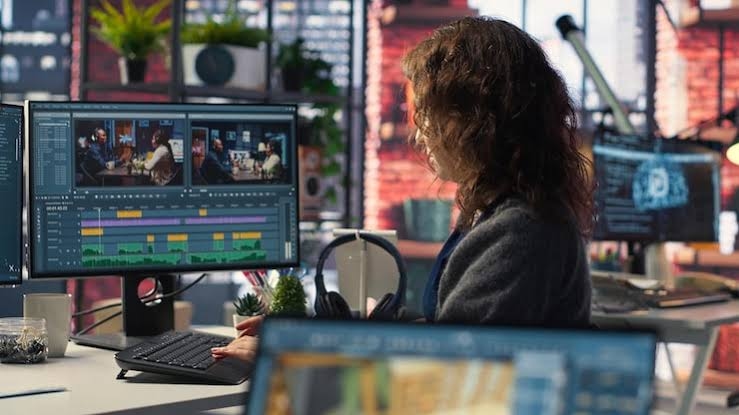
In today's digital world, video has become one of the most effective ways to communicate information, entertain audiences, promote products, and share ideas. From YouTube videos and Instagram Reels to online advertisements, educational content, and corporate presentations, video is an important part of modern communication. As businesses and creators continue to use video content to reach their audiences, the demand for people who can edit videos professionally has created exciting career opportunities.
Video editing is the process of transforming raw footage into a complete and engaging video. It involves arranging clips, adding transitions, improving audio, adjusting colors, including text and graphics, and creating a smooth visual experience. Good editing helps communicate a message clearly and keeps viewers interested.
Learning video editing can be a smart career choice for students, beginners, working professionals, and creative individuals who want to develop practical digital skills. It offers opportunities to work with businesses, advertising agencies, production companies, social media creators, and online education platforms. It can also provide a foundation for freelance work or starting a creative business.
For people interested in developing these skills, enrolling in a Video Editing Course can provide structured learning, practical experience, and a better understanding of professional editing techniques. In this blog, we will explore why video editing is a valuable skill, what you can learn, the career opportunities available, and how to choose the right training program.
1. The Growing Importance of Video Content
Video content has become a major part of digital communication. Businesses use promotional videos to introduce products, educators create video lessons, and content creators publish videos to entertain and inform their audiences.
Social media platforms have also made video content accessible to people across different industries. Short-form videos, tutorials, product demonstrations, interviews, podcasts, and documentaries are commonly used to communicate ideas.
This growing use of video creates opportunities for skilled editors who can turn raw footage into polished content.
For example, a local business may need a promotional video for its website, while a YouTube creator may require regular editing support for weekly uploads. An educational organization might need clear and engaging lessons for online learners. Each project requires different editing techniques and creative decisions.
However, opportunities vary depending on experience, portfolio quality, location, and industry requirements. Learning video editing can help you prepare for these opportunities, but building practical skills and demonstrating your work are equally important.
2. Why Video Editing Is a Smart Career Choice
A. Opportunities Across Multiple Industries
One of the biggest advantages of learning video editing is its usefulness across different industries. Video editors are not limited to working in film production or television.
They may work with:
Digital marketing agencies
Advertising and media companies
YouTube creators and influencers
Educational institutions
E-commerce businesses
Corporate communication teams
Event management companies
Wedding photography and videography businesses
Independent filmmakers
Online learning platforms
Each industry has different requirements. Marketing companies may focus on advertisements and social media campaigns, while educational organizations need informative videos that explain concepts clearly.
This variety allows learners to explore different career paths and identify the type of work that matches their interests.
B. Opportunities for Freelancing
Video editing can also be suitable for people interested in freelance work. Freelancers provide editing services to clients on a project basis instead of working exclusively for one organization.
For example, a freelancer might edit a YouTube video for one client, create short promotional clips for another, and prepare a product advertisement for a small business.
Freelancing offers flexibility, but it also requires responsibility. You need to communicate with clients, understand project requirements, meet deadlines, manage revisions, and maintain professional standards.
Beginners can start by creating sample projects and developing a portfolio before approaching potential clients. As their skills and experience improve, they can explore larger projects and build long-term client relationships.
C. A Combination of Creativity and Technical Skills
Video editing combines artistic thinking with technical knowledge. Editors must understand how to arrange footage, choose suitable transitions, maintain consistent audio, and create a logical sequence.
At the same time, they need creativity to determine how a story should be presented.
For instance, a travel video may require smooth transitions, suitable music, and attractive color adjustments. A business advertisement may need quick cuts, readable text, and a clear message about the product.
This combination makes video editing interesting for people who enjoy storytelling, technology, design, and visual communication.
D. Potential for Long-Term Skill Development
Video editing is a skill that can develop throughout your career. After learning the fundamentals, you can explore advanced techniques such as motion graphics, visual effects, color grading, sound design, and advanced storytelling.
You can also specialize in a particular type of content, such as advertisements, short-form videos, documentaries, corporate videos, or educational content.
As your experience grows, you may move toward roles such as senior video editor, post-production specialist, motion graphics designer, or video production lead. These paths depend on your abilities, professional experience, and the requirements of the industry.
3. What Will You Learn in a Video Editing Course?
A structured Video Editing Course helps learners understand the complete editing process, from importing raw footage to exporting a finished video.
Although course content varies by institute, a practical training program may cover the following areas.
A. Understanding Video Editing Fundamentals
Beginners first need to understand how video projects are organized and edited. This includes importing media files, arranging clips, working with timelines, trimming footage, splitting clips, and combining different shots.
You will also learn how to remove unnecessary sections and create a logical sequence.
These fundamentals are essential because professional editing begins with organizing footage and understanding the purpose of the final video.
B. Learning Video Editing Software
Editing software provides the tools needed to create professional videos. Depending on the training program, learners may work with applications such as Adobe Premiere Pro, DaVinci Resolve, or other suitable editing tools.
You may learn how to:
Import and organize video files
Use timelines and editing panels
Trim and arrange clips
Add transitions and effects
Insert titles and captions
Adjust audio levels
Apply basic color correction
Export videos in suitable formats
Learning software is important, but professional editing also requires good judgment. Knowing when to use an effect and when to keep a scene simple is often just as important as knowing which tool to select.
C. Audio Editing and Background Music
Audio has a significant influence on the quality of a video. Poor sound can make even visually attractive footage difficult to watch.
A video editing program may teach you how to balance dialogue, reduce distracting background noise, add music, and adjust audio levels.
You should also understand that music and sound effects must be appropriately licensed or otherwise permitted for your intended use.
D. Color Correction and Color Grading
Color correction helps make footage look balanced and consistent. It can involve adjusting exposure, contrast, white balance, and other visual settings.
Color grading goes further by creating a particular visual mood or style.
For example, a product advertisement may use bright, clean colors, while a cinematic scene may use a more dramatic look. Learning these techniques can improve the visual quality of your projects.
E. Text, Titles, and Motion Graphics
Titles, captions, logos, and animated graphics can make videos more informative and visually appealing.
These elements are useful for promotional content, educational videos, interviews, and social media posts.
A good editor ensures that text is readable, animations are appropriate, and graphics support the message rather than distracting viewers.
F. Exporting and Delivering Final Videos
The final stage involves exporting the video with suitable settings. You need to understand resolution, frame rate, file formats, aspect ratios, and compression.
For example, a vertical video designed for short-form social media content may require a different aspect ratio from a widescreen YouTube video or a presentation.
Learning these details helps ensure that videos look appropriate on their intended platforms.
4. Why Choose Video Editing Training in Lucknow?
Lucknow has educational institutions, local businesses, marketing agencies, event service providers, and content creators that may require video-related services. For learners in the city, developing practical editing skills can be a useful step toward exploring opportunities in these areas.
Choosing Video Editing Training in Lucknow can be beneficial for students and beginners who prefer a structured learning environment and access to guidance.
When evaluating a training program, consider the following factors:
Practical learning: Look for a course that allows you to edit real footage rather than only watch demonstrations.
Software training: Check whether the program teaches tools relevant to the kind of work you want to pursue.
Trainer guidance: Feedback can help you identify editing mistakes and improve your creative decisions.
Project work: Practice projects help you understand how to complete an assignment from beginning to end.
Portfolio development: A collection of completed projects can demonstrate your abilities to prospective employers or clients.
Course structure: Review the syllabus, duration, practice requirements, and support available to learners.
These factors are more useful than choosing a course based only on its name or promotional claims.
5. How to Choose the Best Video Editing Course in Lucknow
Finding the Best Video Editing Course in Lucknow requires comparing your learning needs with what different training programs actually offer.
A suitable course should help you build practical abilities, understand editing workflows, and prepare projects that demonstrate your progress.
Before enrolling, consider these important questions.
Check the Course Syllabus
Review the topics covered in the program. A useful beginner-level syllabus should include editing fundamentals, timeline management, transitions, audio, text, color correction, and exporting.
If you are interested in advanced work, check whether the course also includes motion graphics, visual effects, or specialized editing techniques.
Ask About Practical Assignments
Practice is essential for learning video editing. Look for opportunities to work on different types of projects, such as short promotional videos, interviews, educational clips, or social media content.
Working on different formats helps you understand how editing decisions change according to the audience and purpose.
Review the Training Environment
Ask which software is taught and whether you will have sufficient access to computers and editing tools during practical sessions.
It is also useful to understand how trainers evaluate projects and provide feedback.
Compare Fees and Learning Support
Course fees are only one part of the decision. Compare the syllabus, practical facilities, teaching approach, duration, and additional learning support.
Avoid choosing a program solely because it promises quick results or guaranteed employment. A course can provide guidance, but career progress also depends on consistent practice and individual effort.
Evaluate Portfolio Opportunities
A strong portfolio can help you communicate your abilities more effectively than a certificate alone.
Check whether the course encourages you to complete projects that you can present to potential employers or clients, subject to any permissions relating to the footage and other materials used.
6. Career Opportunities After Learning Video Editing
Video editing skills can support several career paths. The right option depends on your interests, skill level, experience, and preferred working environment.
Video Editor
A video editor organizes footage, removes unnecessary sections, adds suitable transitions, adjusts audio, and prepares final videos. Editors may work on advertisements, interviews, educational content, entertainment projects, or corporate videos.
Social Media Video Editor
Social media editors create videos for platforms such as Instagram, YouTube, and other digital channels. Their work may include short-form videos, product promotions, captions, and engaging opening sequences.
YouTube Video Editor
YouTube editors work with creators to prepare tutorials, vlogs, reviews, interviews, and other types of content. Depending on the project, they may also add subtitles, background music, graphics, and visual effects.
Freelance Video Editor
Freelancers work independently and provide editing services to clients. This path requires both editing ability and business skills, including communication, project planning, pricing, and time management.
Advertising Video Editor
Advertising editors help create promotional videos for products, services, and brands. They need to understand the campaign's objective and present its message clearly within the available time.
Assistant Editor or Post-Production Assistant
Some learners may begin in supporting roles that involve organizing footage, managing files, preparing project materials, or assisting senior editors. These positions can provide useful experience with professional production workflows.
Career opportunities and salaries differ according to location, employer, portfolio, and experience. Beginners should focus on developing a reliable foundation rather than expecting immediate access to advanced positions.
7. Can Beginners Learn Video Editing?
Yes. Beginners can start learning video editing without previous professional experience. The most important requirements are a willingness to learn, access to suitable equipment, and regular practice.
You can begin with simple projects, such as editing a short introduction video, combining travel clips, or creating a basic product presentation.
As your confidence improves, move toward projects that require more advanced techniques.
A simple learning plan can help:
Start with the basics: Understand timelines, trimming, clip arrangement, and exporting.
Learn one editing tool: Become comfortable with its essential features before moving to advanced software.
Practice regularly: Edit short videos and experiment with different approaches.
Study storytelling: Learn how pacing, shot selection, and sound influence the viewer's experience.
Build a portfolio: Save your best projects and organize them by content type.
Request feedback: Use constructive suggestions to improve your next edit.
Consistency matters more than trying to learn every tool at once. The time needed to become proficient depends on your practice schedule, the complexity of the work, and the skills you want to develop.
8. The Role of AI in Modern Video Editing
Artificial intelligence is changing parts of the video editing process. Some tools can automatically generate captions, identify scenes, remove backgrounds, improve audio, or help editors organize footage.
These features can reduce time spent on repetitive tasks, but they do not eliminate the need for creative judgment.
Editors still need to understand storytelling, pacing, audience expectations, visual consistency, and the purpose of each project.
For example, an automatic editing tool may generate captions, but a human editor should review them for accuracy. Similarly, AI may suggest a sequence of clips, but the editor must decide whether that sequence communicates the intended message.
Learning the fundamentals of editing alongside relevant AI-assisted tools can help beginners adapt to changing workflows.
9. Why Practical Experience Matters More Than Software Knowledge Alone
Knowing how to use editing software is an important starting point, but professional-quality work requires more than technical familiarity.
Editors must understand the purpose of a video, identify the most useful footage, maintain a suitable pace, and deliver a result that meets the client's requirements.
Imagine editing a promotional video for a local business. The editor needs to highlight the product, communicate its main benefits, use clear text, maintain good audio, and include a suitable call to action.
Completing projects like this helps learners apply technical knowledge to practical situations.
It also teaches important professional habits, including organizing files, maintaining backups, responding to feedback, and delivering work on time.
For this reason, learners should prioritize training that combines demonstrations, guided assignments, independent practice, and constructive feedback.
10. Learn Video Editing Skills with Barrownz Learning Academy
Barrownz Learning Academy, Lucknow, focuses on career-oriented training designed to help students and professionals develop practical skills. For learners interested in video editing, researching local training options can be a useful first step toward building a foundation in digital content creation.
Before selecting a program, learners should review the available syllabus, software coverage, practical assignments, trainer support, and portfolio opportunities.
A suitable learning environment should help beginners understand editing concepts, practice with relevant tools, and gradually develop the confidence to complete their own projects.
Barrownz Learning Academy can be considered as part of your search for skill-development opportunities in Lucknow. Contact the academy directly to confirm current video editing course availability, course fees, duration, syllabus, and practical training facilities before enrolling.
Remember that professional growth requires more than attending classes. Regular practice, a willingness to accept feedback, and a portfolio of original work can help you demonstrate your skills as you explore career opportunities.
Conclusion
Learning video editing can be a smart career choice for people who enjoy creativity, visual storytelling, and digital technology. As video continues to be used for marketing, education, entertainment, and business communication, editing skills can be useful across a variety of industries.
A structured Video Editing Course can help beginners understand essential techniques, learn editing software, and practice creating complete videos. With experience, learners can explore opportunities in social media, advertising, YouTube content, corporate communication, freelance services, and post-production.
However, success does not depend on a certificate alone. Consistent practice, creative thinking, technical knowledge, communication, and a strong portfolio all contribute to professional development.
If you are considering Video Editing Training in Lucknow, compare course content, practical facilities, and learning support before making a decision. By choosing a suitable program and continuing to improve your skills, you can build a foundation for a rewarding journey in video editing and digital content creation.
Frequently Asked Questions (FAQs)
1. Why is learning video editing a good career choice?
Learning video editing can be a good career choice because video content is widely used in digital marketing, education, entertainment, and business communication. It can lead to opportunities in employment, freelancing, and independent content creation, depending on your skills and experience.
2. What is taught in a Video Editing Course?
A Video Editing Course may cover timeline editing, trimming clips, transitions, audio editing, color correction, titles, motion graphics, and video exporting. Some programs also introduce advanced techniques and practical projects.
3. Who can join a Video Editing Course in Lucknow?
Students, beginners, working professionals, aspiring content creators, and people interested in creative digital work can explore a Video Editing Course in Lucknow. Previous experience may not be necessary for a beginner-level program.
4. How long does it take to learn video editing?
The learning time depends on the course structure, practice schedule, and level of proficiency you want to achieve. Basic editing may be learned relatively quickly, while advanced techniques and professional workflows require continued practice and experience.
5. How do I choose the Best Video Editing Course in Lucknow?
Compare the syllabus, software training, practical assignments, trainer guidance, course fees, and portfolio-building opportunities. Choose a program that matches your goals and gives you sufficient time to practice.
6. Are there career opportunities after video editing training?
Yes. Depending on your abilities and experience, you may explore roles such as video editor, social media video editor, YouTube editor, advertising editor, freelance editor, or post-production assistant.
7. Can I earn money as a freelance video editor?
Yes, freelance video editing is a possible career path. Earnings depend on your skills, portfolio, project complexity, client base, and ability to manage deadlines. Beginners should focus on developing quality work and building trust with clients.
8. Is video editing difficult for beginners?
Video editing may seem challenging at first, but beginners can learn it step by step. Starting with simple projects and practicing regularly makes it easier to understand the software and develop editing skills.
9. Does Barrownz Learning Academy offer video editing training in Lucknow?
Barrownz Learning Academy is a career-oriented training institute in Lucknow. Contact the academy directly to confirm whether a video editing program is currently available and to ask about its syllabus, fees, duration, and practical training options.
10. What should I include in a video editing portfolio?
Include your strongest original projects, such as short-form videos, promotional clips, interviews, tutorials, or other relevant work. Organize your projects clearly and ensure that you have the necessary permissions to use any third-party footage, music






