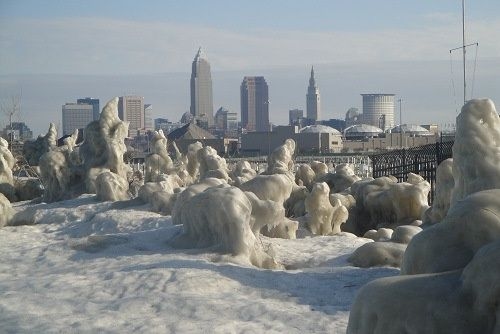
Winter weather in Northeast Ohio can create difficult conditions for residential roofing systems. Snow accumulation followed by warmer daytime temperatures and freezing nights can create the perfect environment for ice dams to form.
For Cleveland homeowners, ice dams are more than an inconvenience. When water becomes trapped behind ice along the edge of a roof, it may work underneath shingles and eventually reach the roof decking, insulation, ceilings, or walls.
Homeowners dealing with recurring ice dams in Cleveland OH should have the complete roofing and attic system inspected to determine why the problem keeps developing.
What Is an Ice Dam?
An ice dam is a ridge of ice that forms near the edge of a roof.
The problem often begins when snow on an upper section of the roof melts.
That water travels toward the colder roof edge.
When it reaches an area where the temperature is below freezing, the water freezes again.
As this process continues, a larger ridge of ice can form.
Newly melted water may then collect behind the ice instead of draining normally from the roof.
Why Cleveland Homes Develop Ice Dams
Cleveland's winter climate creates favorable conditions for ice-dam formation.
Several factors may contribute:
Heavy snow accumulation
Temperature changes
Heat escaping into the attic
Uneven roof temperatures
Poor attic ventilation
Insufficient insulation
Air leaks from the living space
Clogged or frozen gutters
Ice dams are often a sign that several parts of the home are interacting rather than simply a problem with the shingles.
Heat Loss Can Warm the Roof
Heat escaping from the living space can enter the attic.
If the attic becomes too warm, the underside of the roof deck may also warm.
Snow sitting on the warmer section of the roof can begin melting even when outside temperatures remain below freezing.
The water then travels toward the colder eaves.
Once it reaches the roof edge, it can refreeze.
This difference in roof temperature is one of the major conditions associated with recurring ice dams.
Attic Insulation Matters
Insulation helps reduce heat transfer between the living space and attic.
When attic insulation is inadequate, uneven, or damaged, more heat may escape upward.
Common insulation issues can include:
Thin insulation
Missing sections
Compressed insulation
Gaps around attic access points
Insulation disturbed by previous work
Improving insulation may be part of a larger strategy for reducing recurring winter roof problems.
Ventilation Also Plays a Role
Attic ventilation helps regulate temperature and moisture.
A balanced ventilation system typically uses both intake and exhaust ventilation.
Possible components include:
Soffit vents
Ridge vents
Box vents
Other approved ventilation systems
If airflow is restricted, attic conditions may contribute to uneven roof temperatures.
Ventilation should be evaluated together with insulation and air sealing rather than treated as an isolated component.
Air Leaks Can Send Warm Air Into the Attic
Warm indoor air can enter the attic through small openings.
Common air-leak locations may include:
Attic access doors
Plumbing penetrations
Electrical openings
Recessed lighting areas
Bathroom fan openings
Gaps around framing
Reducing unwanted heat movement into the attic may help create more consistent roof temperatures.
How Ice Dams Can Damage a Roof
Roofing systems are designed to shed water downward.
An ice dam interferes with that process.
Water trapped behind the ice may move underneath roofing materials.
Possible damage can include:
Wet roof decking
Damaged underlayment
Water intrusion
Rotting wood
Wet insulation
Interior ceiling stains
Damaged drywall
Peeling paint
Repeated ice-dam problems can become more expensive if the underlying cause is never addressed.
Watch for Large Icicles
Icicles do not automatically mean a home has an ice dam.
However, heavy icicle formation along the roof edge may indicate that snow is repeatedly melting and refreezing.
Homeowners should pay attention when large icicles appear together with:
Thick ice along gutters
Water stains indoors
Ice extending underneath shingles
Repeated freezing near roof edges
These conditions may justify a closer inspection.
Frozen Gutters Can Make the Problem Worse
Gutters that are full of ice may prevent melting snow from draining properly.
Leaves and debris left inside gutters before winter can also restrict drainage.
Homeowners should keep gutters and downspouts clear before freezing weather arrives.
However, gutter cleaning alone does not necessarily prevent ice dams if attic heat loss is the underlying problem.
Ice Dams Around Roof Valleys
Roof valleys may collect more snow than open roof sections.
Because valleys handle significant amounts of water, ice buildup in these areas can create additional problems.
Homeowners should pay attention to valleys where snow and ice repeatedly accumulate.
Water trapped in a valley may find weaknesses around shingles, flashing, or underlayment.
Ice Dams Near Chimneys
Chimneys can also create complicated winter roof conditions.
Heat, flashing, snow accumulation, and roof geometry can all affect how water moves around the chimney.
If water enters near this area, homeowners may notice stains around fireplaces, ceilings, or attic framing.
The actual source should be inspected instead of simply covering the area with additional sealant.
Do Not Break Ice Off the Roof With Force
Homeowners should be cautious about trying to remove ice dams themselves.
Using axes, hammers, shovels, or other hard tools can damage shingles, gutters, and flashing.
Working on an icy roof is also dangerous.
Professional ice-dam removal methods may be safer and less likely to damage the roofing system.
Steam Removal May Be an Option
Professional steam equipment may be used to remove ice dams in certain situations.
Steam allows ice to be removed without aggressively chopping at roofing materials.
The appropriate method depends on:
Roof conditions
Ice thickness
Roof pitch
Accessibility
Weather
Removing the ice addresses the immediate problem, but recurring ice dams may still require attic or roofing improvements.
Signs Water Has Entered the Home
Homeowners should inspect interior areas during and after major winter weather events.
Warning signs may include:
Brown ceiling stains
Damp drywall
Peeling paint
Wet insulation
Water around windows
Moisture near exterior walls
Dark attic decking
Water intrusion should be investigated quickly.
Prevention Should Address the Cause
Long-term ice-dam prevention is usually more effective when the underlying conditions are identified.
Depending on the home, improvements may involve:
Attic insulation
Air sealing
Ventilation
Gutter maintenance
Roof repairs
Ice and water protection during future roof replacement
Every property is different, which is why a complete inspection is useful.
Ice and Water Protection
During roof replacement, waterproofing materials may be installed in vulnerable areas near roof edges, valleys, and other locations.
These materials provide an additional layer of protection underneath the shingles.
They do not necessarily prevent an ice dam from forming, but they may help protect the roof deck from water intrusion when properly installed.
Prepare Before Cleveland Winter Arrives
The best time to address ice-dam concerns is often before heavy snow arrives.
Homeowners can prepare by checking:
Attic insulation
Ventilation
Gutters
Flashing
Shingles
Roof valleys
Previous leak locations
Existing problems are generally easier to correct before the roof is covered with snow and ice.
Protecting Cleveland Homes From Ice Dams
Ice dams can develop quickly when Cleveland experiences snow followed by repeated freezing and thawing.
Removing the visible ice may solve the immediate problem, but homeowners experiencing ice dams every winter should investigate why they continue forming.
A complete evaluation of the roof, attic insulation, ventilation, air leakage, gutters, and waterproofing can help identify weaknesses and reduce the likelihood of repeated winter water damage.
Exact-match anchor used: ice dams in Cleveland OH