A manufacturing machine can be installed, connected to utilities and positioned on its foundation, yet still fail to start when production is scheduled to begin. For project managers, this creates an immediate challenge: determining whether the problem lies in the equipment, installation work, utility connections or control systems.
The difficulty is that installation completion does not automatically mean operational readiness. A machine may still have unresolved electrical faults, insufficient utility supply, unverified instruments or safety interlocks preventing operation. These issues often become visible only when commissioning checks begin.
Understanding the causes of industrial equipment start-up problems helps manufacturing teams identify faults systematically, coordinate corrective work and avoid unnecessary delays during the transition from installation to production.
Electrical Problems Can Prevent Equipment Start-up
Electrical supply is one of the first areas to investigate when installed equipment fails to start. However, power reaching the control panel does not necessarily mean that every component is ready to operate.
Possible causes include:
Incorrect or incomplete electrical connections.
Tripped protective devices or unresolved drive faults.
Missing control power or communication signals.
Incorrect motor protection or drive configuration.
Supply conditions outside the equipment manufacturer's requirements.
For example, a newly installed conveyor may display an active control panel but fail to run because its motor drive is reporting a fault. Repeatedly resetting the drive without investigating the fault may conceal the underlying problem.
What should the commissioning team check?
A qualified electrical engineer should verify the supply conditions, protective devices, motor connections and control signals against approved drawings and OEM instructions. Drive fault codes and relevant test records should also be reviewed.
Electrical testing must follow appropriate isolation and safety procedures. Protective devices should never be bypassed simply to force a machine to start.
Utilities May Not Meet Equipment Requirements
Industrial equipment often depends on compressed air, cooling water, steam, hydraulic pressure or other utilities. Even when these services are available throughout the factory, the conditions at the equipment connection point may be inadequate.
Consider a pneumatic packaging machine that requires a specified air pressure to operate its actuators. The factory compressor may be running normally, but simultaneous demand from other machines could reduce the pressure available at the packaging line.
Similar problems can occur when cooling-water flow is insufficient, hydraulic pressure is unstable or a required utility connection remains isolated.
How can these problems be identified?
The commissioning team should:
Compare measured utility conditions with the equipment's specified requirements.
Check isolation valves, regulators, filters and connection arrangements.
Verify pressure, flow and temperature at the point of use.
Assess utility performance under the intended operating conditions.
Investigate whether other equipment is affecting the available supply.
The distinction is important: confirming that a utility system has been installed does not establish that it can support the equipment during operation.
Mechanical Installation May Be Incomplete
Equipment can appear physically complete while important mechanical checks remain unresolved. Incorrect alignment, inadequate lubrication or foundation-related issues can prevent safe start-up or damage machinery during initial operation.
Common concerns include:
Shaft and coupling misalignment.
Incorrect levelling or unresolved soft foot.
Incomplete foundation grouting or insufficient curing where required.
Missing lubrication or unverified oil circulation.
Foreign material in equipment or connected piping.
Incorrectly handled shipping restraints or temporary supports.
These issues are particularly relevant to rotating machinery, pumps, compressors and production equipment with precision alignment requirements.
What should be verified before start-up?
Review installation inspection records, alignment measurements, foundation acceptance and lubrication requirements. Check connected pipework for unintended mechanical loads and confirm that all required installation checks have been completed.
The equipment manufacturer's instructions should determine the applicable tolerances and acceptance criteria. Mechanical completion should be supported by recorded measurements and inspection evidence rather than a general declaration that installation is finished.
Sensors and Instrumentation May Not Be Ready
Industrial equipment frequently relies on sensors and instruments to confirm pressure, temperature, flow, position and other operating conditions. If the control system receives an incorrect signal or cannot confirm a required condition, it may prevent start-up.
Potential causes include incorrect wiring, incomplete calibration, faulty sensors, incorrect signal scaling and communication failures.
For example, a process vessel may be mechanically complete but remain unavailable because its level transmitter is reporting an implausible value. The control system may interpret this as an unsafe operating condition and prevent the sequence from starting.
Speak With An Expert : https://www.imarcengineering.com/contact?service=installation-supervision-and-equipment-commissioning
How should the issue be investigated?
The commissioning engineer should verify instrument identification, wiring, calibration status and signal behaviour against approved documentation.
Where applicable, loop checks should confirm that signals travel correctly from field instruments through the control system to the displayed value or associated control element. ISA's guidance on industrial automation testing covers loop checks, calibration and site integration testing as part of commissioning practice.
Resolving these issues before start-up reduces the likelihood of unnecessary troubleshooting during production trials.
PLC Logic or Safety Interlocks May Be Blocking Start-up
A programmable logic controller (PLC) manages operating sequences and checks whether specified conditions have been satisfied. When a required permissive is missing, the equipment may refuse to start even though its mechanical and electrical installation appears complete.
Possible causes include:
An emergency-stop circuit that has not been reset using the approved procedure.
A guard or access-door switch reporting an incorrect state.
A missing upstream or downstream readiness signal.
An unresolved drive fault or communication error.
A pressure, temperature or level condition outside the permitted range.
An incomplete automatic sequence.
The machine may therefore be responding correctly to a condition that has not yet been resolved.
What should engineers do?
Review the alarm history, PLC status, permissive conditions and relevant control-system drawings. Identify which condition is preventing startup, trace it to its source and verify the corrective action.
Safety interlocks must not be bypassed to achieve a quick startup. Testing and modifications should be performed by authorised personnel under approved procedures.
Multiple Machines May Not Work Together
In a production line containing equipment from several manufacturers, individual machines may pass their checks while the complete system remains unable to operate.
For example, a filling machine may be ready, but the production sequence cannot begin because the downstream packaging machine is not communicating its readiness status. A conveyor may also fail to coordinate with another machine because of an incorrect interface signal or incompatible operating sequence.
Such problems frequently require coordination between OEMs, automation integrators and the project team.
How can integration problems be prevented?
Before commissioning, establish a clear interface responsibility matrix covering equipment connections, signals, communication protocols and operating sequences.
The commissioning team should verify individual equipment functionality before progressing to integrated system testing. ISA's guidance on factory acceptance testing, site acceptance testing and site integration testing provides a relevant framework for planning these activities.
A shared test plan helps identify interface problems early and establishes who is responsible for resolving each deficiency.
Safety Checks and Documentation May Be Incomplete
Some equipment cannot proceed to start-up or production release until applicable safety inspections, test records and approvals are complete.
Depending on the equipment and industry, outstanding requirements may include electrical inspections, pressure-system checks, safety-system verification, calibration records or documented equipment qualification.
In regulated manufacturing, additional qualification requirements may apply before equipment can be used for its intended production purpose.
What needs to be verified?
Review the commissioning register and identify outstanding requirements for each stage:
Before energisation or initial operation.
Before functional testing or process trials.
Before production release and final acceptance.
Separate critical safety and regulatory requirements from minor documentation or finishing items. This makes it easier to determine which activities can proceed and which must remain on hold.
A Practical Troubleshooting Sequence for Equipment That Will Not Start
When start-up fails, project teams should follow a structured process rather than repeatedly attempting to operate the equipment.
Step 1: Record the symptoms. Establish whether the machine has no power, displays an alarm, rejects a start command or trips immediately. Record the relevant fault codes and operating conditions.
Step 2: Review installation completion. Check mechanical, electrical and instrumentation records to identify outstanding inspections or incomplete work.
Step 3: Verify power and utilities. Have qualified personnel compare actual supply conditions with the equipment's specified requirements.
Step 4: Trace the failed condition. Review alarms, sensor signals, control logic, permissive and communication status to identify the cause.
Step 5: Assign corrective responsibility. Determine whether the issue belongs to the OEM, installation contractor, utility contractor, automation integrator or another responsible party.
Step 6: Correct and retest. Verify the correction using an approved test procedure and retain the results.
Step 7: Confirm readiness for the next stage. Ensure that required safety checks, critical defects and applicable approvals have been addressed before proceeding.
Where troubleshooting requires work on hazardous energy sources, follow the site's approved isolation procedures. OSHA's hazardous-energy guidance explains the risks associated with unexpected equipment start-up and the importance of controlling electrical, mechanical, hydraulic and pneumatic energy during servicing.
Preventing Start-up Problems Before Commissioning Begins
Many start-up issues can be identified before equipment arrives at the factory. A readiness review allows project teams to verify site conditions, installation requirements and dependencies before commissioning activities are scheduled.
An effective preparation process should include:
Site readiness: Confirm foundations, access, lifting arrangements and utility connections.
OEM coordination: Obtain installation instructions, start-up requirements and applicable acceptance criteria.
Pre-commissioning inspections: Verify mechanical completion, electrical connections and instrumentation readiness.
Interface planning: Document responsibilities and dependencies between equipment suppliers.
Test scheduling: Define the required checks, responsible personnel and acceptance evidence.
Punch-list management: Track unresolved defects, assign owners and verify closure.
These controls help project managers distinguish equipment defects from installation deficiencies and integration problems. They also provide a clearer basis for scheduling commissioning activities and determining when equipment is genuinely ready for production trials.
How IMARC Engineering Can Help
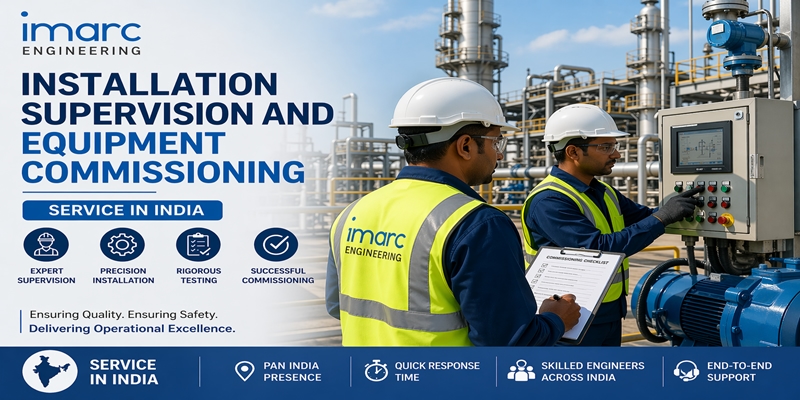
IMARC Engineering supports manufacturing projects through installation supervision and equipment commissioning services. Its approach includes site-readiness verification, installation monitoring, utility checks, functional testing, performance verification and commissioning documentation. For projects involving multiple OEMs or contractors, coordinated oversight helps identify unresolved interfaces and track corrective actions. This support enables plant owners and project managers to assess equipment readiness against applicable technical requirements, organise commissioning activities and establish a documented transition from installation to operational handover.
Conclusion
Factory equipment that fails to start after installation is not necessarily defective. The cause may be an electrical fault, inadequate utility supply, incomplete mechanical checks, incorrect instrumentation, an active interlock or an unresolved system interface. A structured troubleshooting process helps identify the actual problem and prevents repeated, unproductive startup attempts. By planning readiness checks, assigning responsibilities and documenting test results, manufacturers can reduce avoidable commissioning delays and make better-informed decisions about when equipment is ready to proceed into production.
Contact Us:
IMARC Engineering
Phone: +91-120-433-0800
Email: sales@imarcengineering.com
India: C-130, Sector 2, Noida, Uttar Pradesh 201301
LinkedIn: https://www.linkedin.com/showcase/imarc-engineering/