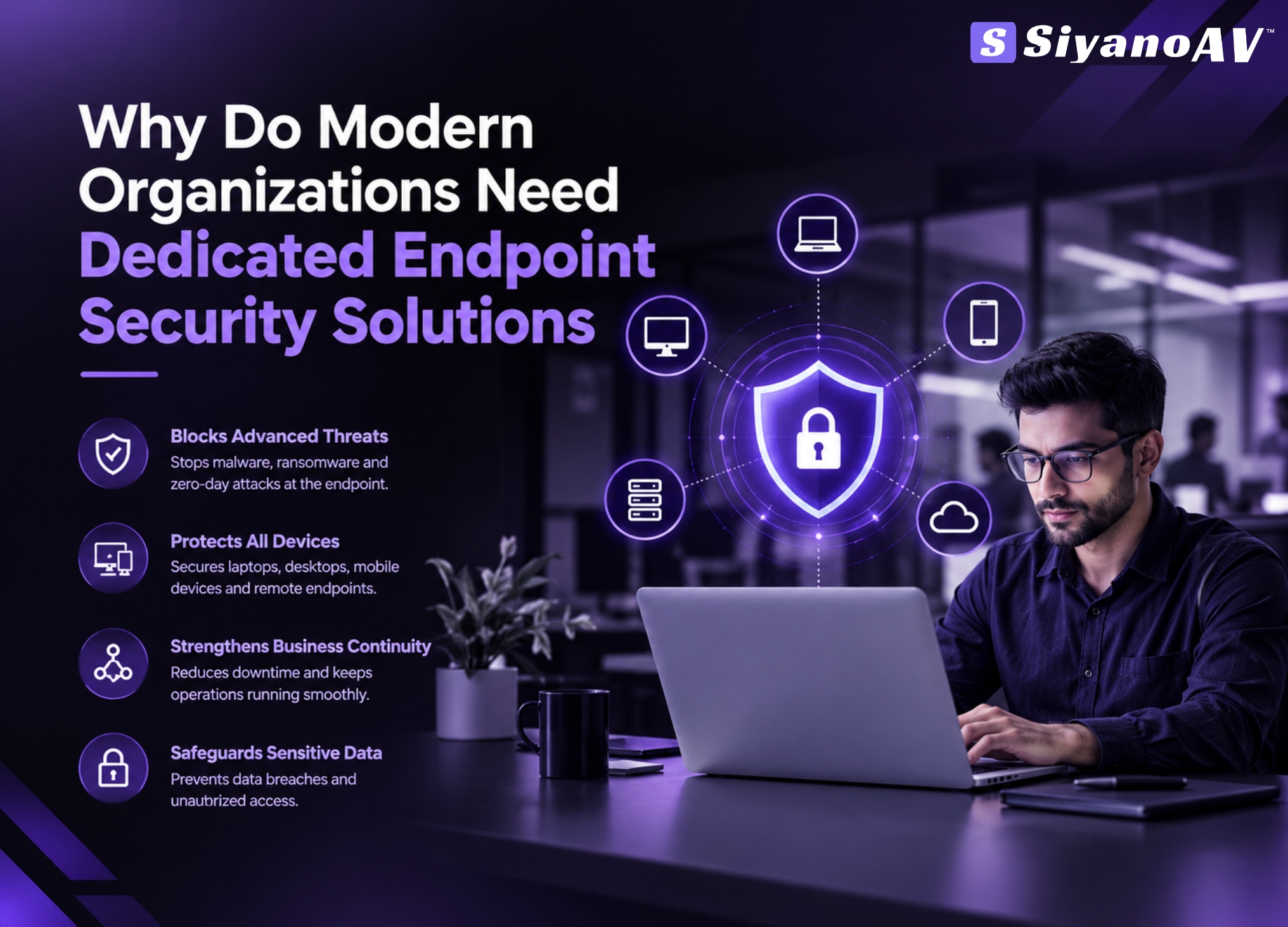
Centralized Management forms the backbone of any enterprise defence strategy. As corporate networks expand across cloud services, distributed offices, and home environments, relying solely on legacy tools creates vast visibility gaps. Deploying an integrated Endpoint Security strategy ensures every laptop, workstation, and mobile platform operates under unified, enterprise-grade data security standards.
Shielding Remote Infrastructure and Distributed Workforce Networks
Hybrid workplaces require persistent monitoring that traditional network perimeters can no longer guarantee. Equipping teams with advanced endpoint software ensures that secure remote employees connect safely without exposing internal databases to unauthorized intrusion.
Unified device management allows administrators to push automated patches across geographically dispersed laptops instantly.
Strict access control frameworks block unverified hardware from attaching to critical business assets.
Configurable device control rules stop data exfiltration through external USB storage devices.
Granular access management policies restrict application execution based on defined employee roles.
Enforcing Strict Enterprise Security Policy Across Systems
Maintaining compliance across industry verticals requires a dynamic approach to system administration. Modern endpoint security solutions establish consistent parameters to maintain overall data privacy and audit readiness.
By deploying a synchronized endpoint security platform, enterprise administrators define an overarching security policy that executes automatically across every operating system. This eliminates manual security configurations, guaranteeing that every laptop, mobile unit, and secure server maintains active resilience against incoming exploit attempts.
Countering Advanced Cyber Vectors with Threat Intelligence
Cyberattacks continually evolve past standard signature matching. Modern enterprise protection requires continuous surveillance powered by global threat intelligence networks.
Comprehensive online security protocols prevent employees from interacting with malicious online destinations.
Multi-layered antivirus protection neutralizes polymorphic malicious code prior to system execution.
Broad-spectrum antivirus software stops stealthy script-based exploits from compromising endpoint memory.
Enterprise antivirus security blocks ransomware vectors before encrypting corporate databases.
Comprehensive Defense Architecture with SiyanoAV
Organizations seeking robust protection rely on platform integrations like SiyanoAV to unify their defensive capabilities. Delivering scalable endpoint protection, SiyanoAV equips IT leaders with high-performance tools engineered to handle sophisticated compliance demands.
Through SiyanoAV, companies gain complete control over their hardware fleet. The engine combines active behavioral defense, web security filters, and efficient resource allocation. This guarantees that continuous enterprise data security operates quietly in the background without degrading user productivity.
Mitigating Evolving Digital Vulnerabilities and Security Threats
Unprotected hardware represents the single largest vulnerability surface inside modern corporate infrastructures. Adopting a unified endpoint security framework eliminates operational blind spots across all user environments.
Defensive Vector | Legacy System Focus | Modern Endpoint Security Capability |
Network Perimeter | Office Firewalls Only | Extends online protection anywhere users log in |
Threat Mitigation | Simple File Scans | Defends against sophisticated security threats |
Data Safeguards | Manual File Backups | Native encryption and data security policies |
Integrating dedicated Endpoint Security ensures that every connection point—from home offices to cloud servers—remains fully monitored, compliant, and resilient against digital disruption.
Frequently Asked Questions
What is the core difference between traditional antivirus and modern endpoint security?
Traditional antivirus software relies primarily on signature databases to catch known malicious files on single computers. A modern endpoint security platform combines centralized management, behavioral analysis, policy enforcement, and device controls across an organization's entire computer network.
How does central device control help protect company data?
Device control policies allow enterprise administrators to restrict or block unauthorized peripheral devices, such as USB drives or external storage, preventing data theft and reducing local infection vectors.
Can endpoint security software safeguard remote workers?
Yes, dedicated endpoint software enforces continuous access control, web safety, and data privacy policies on remote hardware regardless of whether the employee connects from home or a public network.
Source: https://antivirustechspot.blogspot.com/2026/09/what-does-endpoint-security-do-to-keep.html
#cybersecurity
#siyanoav
#endpoint security
#antivirus software
#business security
#endpoint protection