
Strength training has operated under the same mechanical principles since ancient Greeks lifted stones for athletic development. Add mass, multiply by gravitational acceleration, move it through space—the formula remains unchanged whether you're hoisting a barbell or using the latest chrome-plated machine. This consistency provided reliability but also imposed limitations that generations of lifters simply accepted as inherent to resistance training. The transition to digital resistance home gym technology doesn't merely shrink equipment or add screens—it fundamentally reconsiders how force is generated and applied during training, enabling capabilities that couldn't exist within gravity-based systems. Understanding these differences helps separate genuinely useful innovation from clever repackaging of conventional approaches.
How Digital Resistance Actually Works
Electromagnetic resistance systems create training loads through controlled magnetic fields acting on conductive materials, generating force that opposes movement without relying on physical mass. This approach allows the system to modulate resistance instantly based on programming inputs, sensor feedback, and movement characteristics detected in real-time. Unlike weight plates that provide constant downward force modified only by leverage changes, digital resistance can increase during the strong portion of your range of motion, decrease through weaker segments, or maintain perfectly consistent tension regardless of body position.
The practical implications emerge during actual training. Consider a bicep curl using traditional dumbbells—resistance peaks when your forearm is perpendicular to gravity and diminishes as you approach full contraction. Digital systems can maintain peak tension throughout the entire range, creating continuous muscular demand that matches your actual strength curve rather than gravitational mechanics. This addresses a fundamental limitation of free weights that coaches have worked around through technique adjustments and exercise selection for decades.
Programmable Resistance Profiles
Variable resistance isn't entirely new—chains and bands have provided crude versions for years, adding progressive load as you complete lifts. What digital systems contribute is precision and programmability across unlimited configurations. You can set eccentric phases to deliver greater resistance than concentric portions, creating overload specifically during the muscle-lengthening phase where you're naturally stronger. This proves particularly valuable for hypertrophy training, where eccentric emphasis generates significant growth stimulus.
Accommodating resistance adjusts force based on detected velocity, automatically reducing load when you slow down and increasing it when you accelerate. This creates a self-regulating training effect that matches your momentary capabilities rather than imposing fixed demands regardless of fatigue state. Traditional approaches achieve something similar through autoregulation techniques, but those require experience and discipline to implement consistently. With programmed resistance curves, the equipment handles this adjustment automatically while you focus on movement quality.
Space Efficiency Through Consolidation
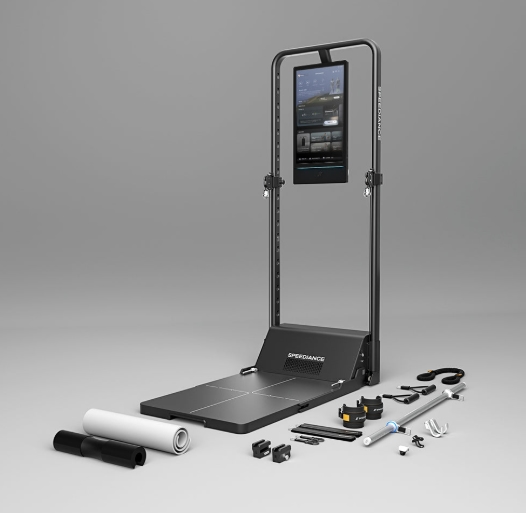
The equipment footprint advantage stems from eliminating weight stacks and replacing mechanical cable systems with compact motors. A comprehensive gym setup traditionally demands space for a power rack, bench, cable station, and various dumbbells—easily consuming a hundred square feet even with efficient organization. Digital resistance concentrates equivalent functionality into a unit occupying roughly the footprint of a small desk, not through compromise but through technological substitution of bulkier mechanical systems.
This consolidation extends beyond physical dimensions to functional capability. Switching between exercises that would require moving between different machines or changing cable attachments happens through interface selections and accessory swaps that take seconds. The reduction in transition time might sound minor, but it compounds over complete workouts, allowing higher training density and better cardiovascular conditioning alongside strength work. You're not just saving space—you're reclaiming time that would otherwise disappear into equipment adjustments.
Connected Training Features
Integration with software platforms enables tracking capabilities that would require dedicated coaching attention in traditional settings. The system logs every repetition with data on time under tension, peak force generation, range of motion consistency, and velocity throughout the movement. This information reveals patterns about your performance that aren't apparent subjectively—perhaps you're cutting range of motion as you fatigue, or your eccentric tempo varies unpredictably between sets.
Structured program delivery goes beyond workout lists to provide actual periodization frameworks that adjust based on demonstrated progress. The software recognizes when you've successfully completed prescribed work and modulates upcoming sessions accordingly, implementing progressive overload systematically rather than leaving it to guesswork. For people training without coaches, this represents access to programming sophistication that was previously unavailable outside formal athletic settings or expensive personal training relationships.
Practical Limitations to Consider
Digital resistance systems face constraints that traditional equipment doesn't encounter. Maximum force generation is limited by motor capacity and power supply rather than how many weight plates you can load. This ceiling exists well above what most recreational trainees will ever approach, but serious strength athletes chasing maximum numbers may find themselves constrained sooner than they would with conventional barbells and sufficient weight plates.
The reliance on electronic components introduces different maintenance considerations and potential failure modes. Traditional equipment fails predictably—cables fray gradually, upholstery wears visibly, mechanical parts show wear before breaking. Electronic systems can experience sudden failures without warning, and repairs require manufacturer service rather than straightforward mechanical fixes. Quality manufacturers like Speediance address this through robust design and comprehensive warranties, but the nature of the technology means you're dependent on continued manufacturer support in ways that don't apply to purely mechanical equipment.
Training Applications and Results
Hypertrophy training within moderate repetition ranges represents the sweet spot for digital resistance systems. The ability to maintain constant tension, emphasize eccentric phases, and ensure consistent tempo creates ideal conditions for muscle growth. Trainees focused on building muscle size rather than maximum strength find these systems deliver excellent results without the complications of managing free weights.
Muscular endurance development and circuit training benefit particularly from quick transitions and programmable work-to-rest ratios. You can structure high-intensity sessions that would be logistically difficult with traditional equipment, flowing between exercises without the dead time that fragments training stimulus. This makes the systems especially valuable for people with limited training windows who need to maximize work accomplished in compressed timeframes.
Investment Perspective
Evaluating cost requires comparing the complete traditional setup that delivers equivalent functionality—power rack, adjustable bench, barbell with sufficient weight plates, cable system, and various accessories. Assembled piece by piece, this collection approaches or exceeds the cost of integrated digital systems while consuming substantially more space and requiring more complicated installation. The digital approach consolidates these investments into a single purchase with installation that typically requires no structural modifications or professional assistance.
The operational cost over time tilts further toward digital systems. Traditional equipment demands ongoing investment in additional weight plates as you progress, replacement cables and upholstery as components wear, and potentially new equipment pieces as you want exercise variety. Digital systems scale with you through software and resistance adjustments, with maintenance primarily limited to cleaning and occasional accessory replacement. This cost structure makes long-term ownership economics more predictable and often more favorable than accumulating traditional equipment gradually.
Rethinking Home Training
Digital resistance technology has reached maturity where it serves as a complete training solution rather than a compromise for people who can't access traditional equipment. The capabilities extend beyond replicating conventional approaches to enabling training methods that weren't previously practical outside specialized facilities. Whether this matters for your specific situation depends on your training goals, space constraints, and preferences about equipment interaction. The technology delivers genuine advantages in areas like consistent tension, precise progression, and integrated tracking, while traditional approaches retain benefits in maximum load capacity and mechanical simplicity. Understanding these distinctions honestly allows you to make equipment decisions based on actual needs rather than assumptions about what serious training requires.





