Introduction
Orchha is a historic town in Madhya Pradesh known for its royal palaces, impressive forts, ancient temples, and distinctive Bundela architecture. Located along the Betwa River, the town preserves the legacy of a former princely kingdom through its remarkable monuments. Travelers interested in history and heritage can explore these landmarks while planning a homestay in Orchha.
The historic buildings of Orchha offer a glimpse into royal life, traditional architecture, artistic expression, and the region's cultural development. Exploring them on foot is a rewarding way to understand the town's past.
Orchha Fort Complex: The Heart Of Royal Heritage
The Orchha Fort Complex is one of the town's most important historical attractions. It contains several palaces and structures associated with the Bundela rulers.
Exploring Jahangir Mahal
Jahangir Mahal is among the most recognised buildings in the complex. It was built by Raja Bir Singh Deo and is associated with the visit of Mughal emperor Jahangir.
Its architecture includes courtyards, balconies, domes, and decorative details. The building reflects the historical relationship between the Bundela kingdom and the Mughal court.
Discovering Raj Mahal
Raj Mahal is known for its historic interiors and colourful murals. The paintings depict religious stories, figures, and cultural themes.
Visitors interested in traditional Indian art can observe the decorative details and learn how paintings were used to enrich royal spaces.
Visiting Sheesh Mahal
Sheesh Mahal is another historic structure within the fort complex. Its architectural character and association with the surrounding royal buildings make it an interesting part of a heritage walk.
Exploring The Historic Fortifications
Orchha's fort complex includes gateways, defensive structures, and connecting passages that reflect the town's historical importance.
Understanding The Fort's Strategic Location
The fort complex stands near the Betwa River and is surrounded by a landscape that contributed to the town's historic character.
Observing Traditional Construction
Stonework, arches, courtyards, and elevated structures demonstrate the architectural skills used during the Bundela period.
Visiting Chaturbhuj Temple
Although primarily a religious monument rather than a palace, Chaturbhuj Temple is an important part of Orchha's architectural heritage.
Exploring Its Monumental Design
The temple is recognised for its tall towers and large interior spaces. Its appearance combines traditional temple elements with a structure that can resemble a palace.
Learning About Its History
The temple is associated with the Bundela period and local traditions connected with the worship of Lord Rama.
Discovering Ram Raja Temple
Ram Raja Temple is one of Orchha's most important religious landmarks.
Understanding Its Unique Tradition
The temple is traditionally associated with worshipping Lord Rama as a king. This gives it a distinctive position in the town's religious and cultural identity.
Experiencing Local Customs
Daily prayers and devotional activities are an important part of the temple's atmosphere. Visitors should follow instructions regarding footwear, photography, and access to worship areas.
Exploring The Royal Chhatris Along The Betwa River
The royal chhatris are among Orchha's most recognisable historical structures.
Understanding Their Purpose
These memorial structures were built in honour of Bundela rulers and members of the royal family. Their domes, columns, and platforms reflect traditional architectural styles.
Enjoying The Riverside Setting
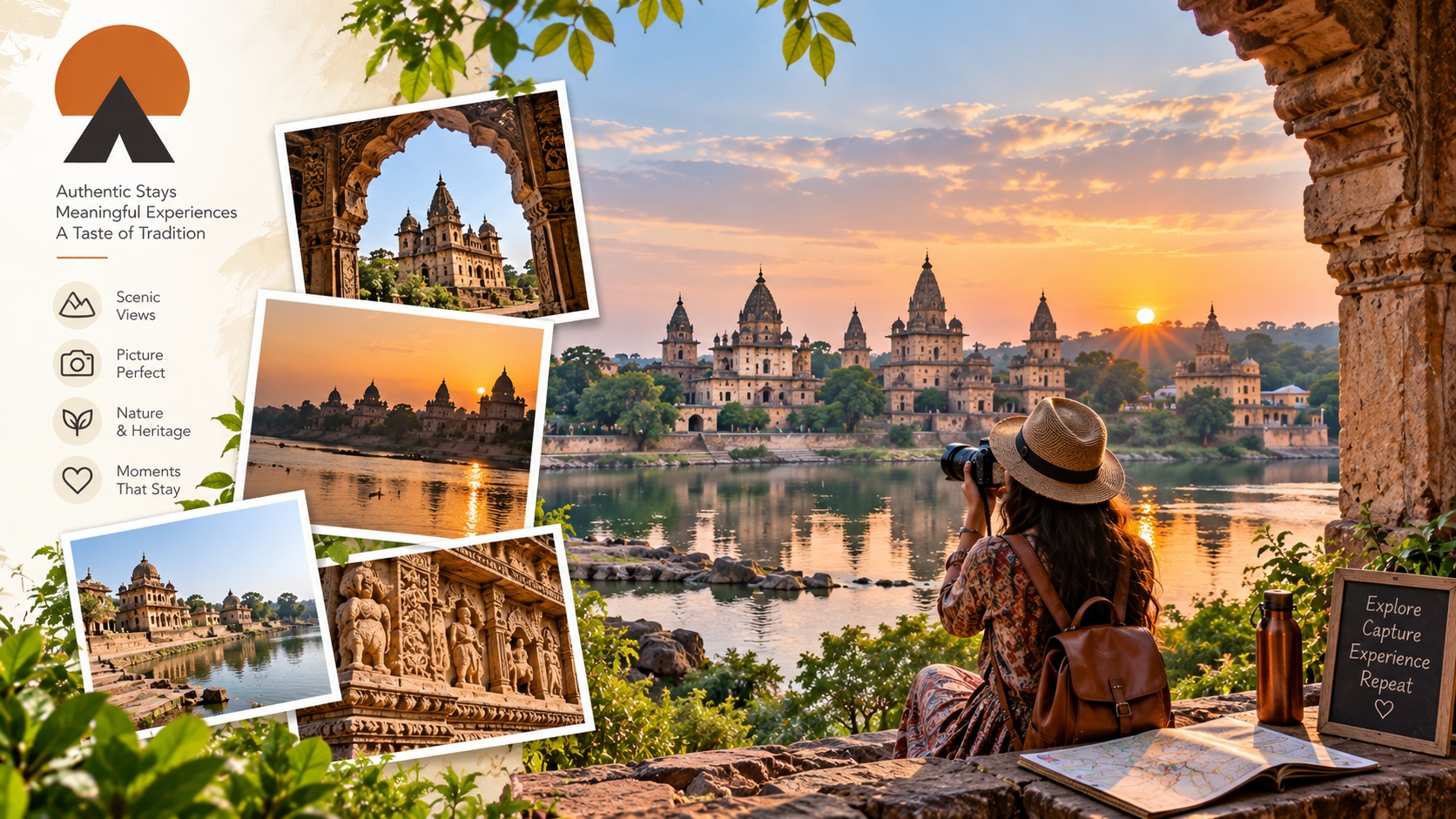
The chhatris stand along the Betwa River, creating a distinctive heritage landscape. Visitors can enjoy the views and photograph the monuments from suitable public areas.
Combining Heritage Exploration With Local Culture
A visit to Orchha can include more than its forts and palaces. Travelers can explore local markets, regional food, temples, and nearby settlements.
The town's traditional food and handmade products offer another perspective on Bundelkhand culture. Combining these experiences with monument visits creates a balanced itinerary.
Planning A Historic Tour
The cooler months are generally comfortable for exploring Orchha on foot. Travelers should check monument timings, entry arrangements, and local conditions before visiting.
Comfortable footwear, drinking water, and sun protection are useful for a day of sightseeing.
Responsible Heritage Tourism
Historic structures require care and preservation. Visitors should avoid writing on walls, damaging carvings, or leaving litter behind.
Following photography rules and respecting religious customs helps protect Orchha's cultural heritage.
Conclusion
Orchha offers a fascinating journey through royal architecture, historic fortifications, religious traditions, and riverside monuments. Jahangir Mahal, Raj Mahal, Sheesh Mahal, and the royal chhatris each reveal a different aspect of the town's past. Exploring these attractions during a stay with Raahghar can make a heritage-focused trip more meaningful.
Frequently Asked Questions
1. Which is the most famous palace in Orchha?
Jahangir Mahal is among the most recognised palaces in Orchha and is located within the Orchha Fort Complex.
2. What can visitors explore inside Orchha Fort Complex?
Visitors can explore Jahangir Mahal, Raj Mahal, Sheesh Mahal, courtyards, gateways, and other historic structures.
3. What is special about Ram Raja Temple?
It is traditionally associated with worshipping Lord Rama as a king, giving it a distinctive religious identity.
4. Where are Orchha's royal chhatris located?
The royal chhatris are situated along the Betwa River and were built as memorials for Bundela rulers.
5. When is a suitable time to explore Orchha's forts and palaces?
The cooler months are generally comfortable for outdoor heritage sightseeing and walking tours.