
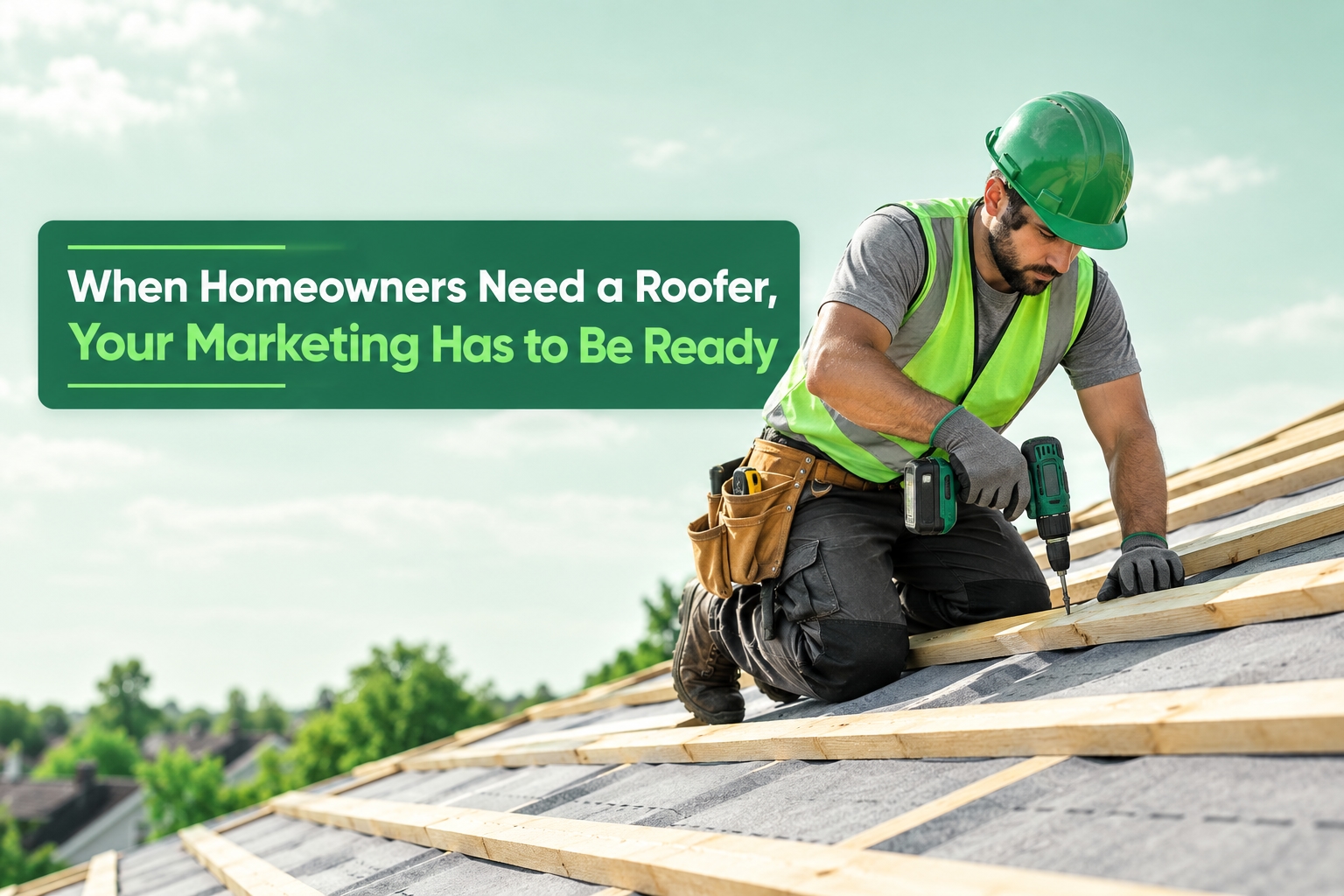
Nobody shops for a roof for fun. Most homeowners don't think about theirs at all until a hailstorm rolls through, a ceiling stain spreads overnight, or an inspector flags missing shingles two weeks before closing. Then, suddenly, they need someone they can trust, and they need that person fast.
That moment is where roofing jobs are won or lost. The uncomfortable part is that the decision often happens before you ever get a phone call. The homeowner searches, scans a few names in the map pack, reads a handful of reviews, and picks two or three companies to contact. If your business isn't on that short list, it doesn't matter how good your crews are.
This is why roofing contractor marketing can't be something you switch on after the phone goes quiet. It has to be built and waiting.
Roofing Demand Doesn't Arrive on a Schedule
Roofing is event-driven in a way most trades aren't. One storm can squeeze months of insurance work into a few frantic weeks, while a calm season forces you to create demand yourself. It's really two businesses running under one roof, so to speak.
Retail replacement buyers take their time. They'll often collect several bids over two to eight weeks, compare warranties, and ask about financing. Insurance jobs move on a different clock entirely, set by adjusters, supplements, and mortgage escrow releases rather than the homeowner's patience.
A plan that treats these the same will struggle with both. The retail side needs steady visibility and trust. The storm side needs speed.
What "Ready" Actually Looks Like
Effective roofing contractor marketing doesn't mean spending more. It means having the right pieces in place before you need them.
You show up where people look first: For most homeowners, that's Google Maps and the local pack. Solid local SEO in every town you serve, a website built to convert rather than just look nice, and real project galleries (drone shots, before-and-after photos, streets you've actually worked on) prove you're established and local. More people are also asking AI assistants and voice search for a "roofer near me," so your presence needs to reach beyond a single search engine.
Your reviews do the selling: Roofing carries one of the widest trust gaps of any trade, partly because storm chasers have burned so many homeowners. Review volume and decency tell people you'll still be around when the warranty matters. The simplest fix is also the most overlooked: request a review automatically when every job wraps up, and respond to the negative ones calmly and professionally.
Your storm plan is already written: When hail hits your area, you don't want to be designing ads and drafting landing pages. Pre-built creative, mapped canvassing routes, insurance-claim education content, and paid search campaigns that can launch within days are what separate contractors who capture the surge from those who hear about it afterward.
Your off-season pipeline keeps moving: Inspection and maintenance programs, gutter and skylight work, commercial re-roof outreach, and financing-led replacement campaigns keep crews busy when the weather stays quiet. Age-of-roof data and neighborhood campaigns around completed jobs help fill the gaps.
Speed Matters More Than Volume
Here's where a lot of roofing contractor marketing quietly falls apart. The ads work, the leads come in, and then nobody calls back for six hours. By then, the homeowner has booked an inspection with someone else.
Readiness includes the handoff. Fast response, clean intake, same-day proposals, financing presented on every estimate, and a real follow-up cadence for unsold bids are what turn ad spend into signed work. Without them, you're paying to warm up leads for your competitors.
Measure the Number That Pays the Bills
Lead counts look nice in a report, but they don't pay for shingles. Retail roofing leads commonly run between $100 and $300, while the cost per signed contract can range from roughly $800 to $2,500 depending on the market. That second number, weighed against gross profit per square, tells you whether a channel deserves more budget.
Keep retail and insurance margins separate, too. They rarely match, and scaling spend without knowing the difference is how busy companies end up with thin bank accounts. Watch production capacity as well. Selling faster than your crews can install is a quick route to cash strain and unhappy reviews.
Realistic timelines keep everyone patient. Paid campaigns often produce signed jobs within 30 to 60 days, while SEO and brand work compound over six to twelve months and gradually lower your blended acquisition cost.
Build It Before the Storm, Not During It
Good roofing contractor marketing is less about clever ads and more about preparation. When a homeowner finally looks up at a sagging roofline and reaches for their phone, the contractor with visibility, strong reviews, a quick response, and a clear sales process wins the inspection. Everyone else is left guessing.
Penrose Growth helps roofing companies build retail and storm pipelines side by side, then connects them to a sales process measured by signed contracts rather than lead volume. If your marketing only works while you're pushing it, it may be time to build something that's ready on its own. Talk to Penrose Growth about getting your roofing business in position before the next homeowner starts searching.