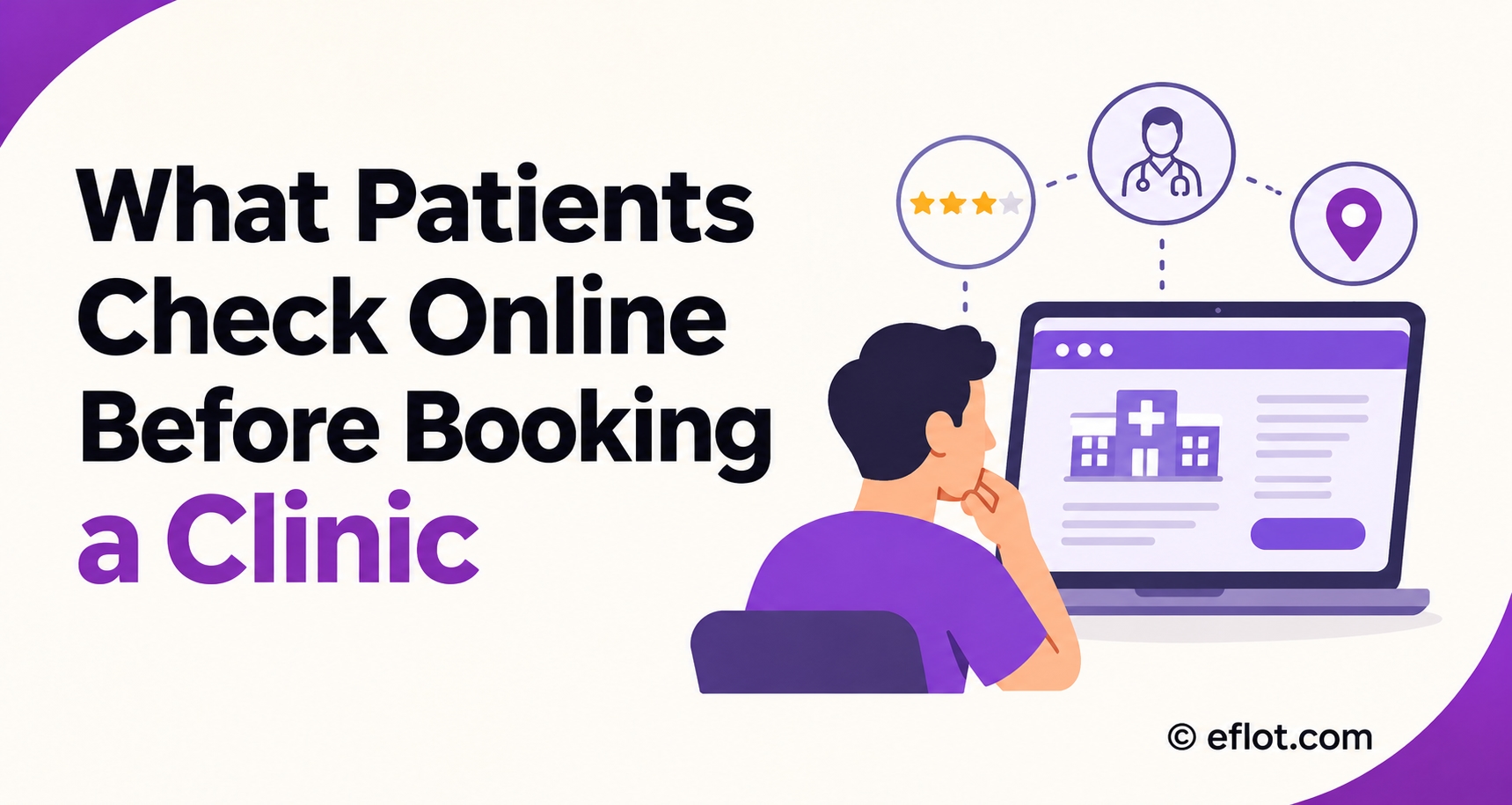
Before a patient calls a clinic, they usually search first. They look up the doctor, read reviews, check the address and see whether booking is easy. For a worried patient or a family member, this quiet research can take only a few minutes, but it often decides which clinic gets the call.
If any step feels unclear, they move on to the next clinic. This post explains what patients check, how to build trust online, and what to look for in a marketing partner.
What Patients Check
Most patients look for the same handful of things:
Doctor qualifications and experience
Clear descriptions of services and conditions treated
Reviews and ratings from other patients
Location, hours, parking and how to reach the clinic
A simple way to book or call
Whether the site feels professional, safe and up to date
If your website or Google profile leaves any of these unanswered, a patient may never reach out, however good your care is.
Build Trust With Helpful Content
Patients want to understand before they decide. Short articles and videos from doctors on common concerns, preparing for a visit, recovery and when to seek care build trust. Write in simple language, avoid unexplained medical terms and have the doctor review everything before it is published.
Be careful with promises. Never claim cures or guaranteed outcomes, and follow medical advertising rules and patient privacy requirements. Do not share a patient's photos, stories or reviews without clear consent. Honest, calm information does more for trust than bold claims.
Keep Your Listings Accurate
An up-to-date Google Business Profile with the correct phone number, hours, services and photos helps nearby patients find you. Check it regularly, especially around holidays and when doctors' schedules change. Reply politely to reviews, including critical ones, without sharing any private details. A respectful reply shows future patients how you treat people.
Use Social Media Sensibly
Health tips, doctor introductions, awareness days and short explainers work well, because they help people before they ever need an appointment. Social media marketing services can plan a steady calendar, while the doctor approves each post for accuracy and tone.
Keep the tone caring and avoid fear-based messaging. Answer comments with general information and invite people to book a consultation for personal advice.
Fix the Booking Path
A fast, mobile-friendly site with a visible Book Appointment button does more than a pretty design. Many patients search on a phone, sometimes late at night and under stress. They should be able to see your timings, find your location and book in a few taps. Well-planned web design and development services make it easy for an anxious patient to reach you, and they keep the site secure and accessible.
Choosing a Partner
Healthcare marketing carries more rules and more sensitivity than most sectors. A healthcare digital marketing agency that understands them can save you from costly mistakes. Before you hire, ask:
How do you handle medical advertising rules and patient privacy?
Who reviews content for medical accuracy before it is published?
How will you report results, and which numbers will I see?
What will you do in the first 30 days?
Clear, specific answers are a good sign. Vague promises are not.
Measure What Matters
Track appointment requests, calls from the website and bookings that started online. Look at which services and pages bring patients and which stages they drop off at. Review the numbers monthly and adjust.
Final Thoughts
Patients choose the clinic that feels clear, caring and trustworthy online. Eflot is an AI-powered digital marketing agency that helps healthcare brands build that trust without crossing the lines that matter.