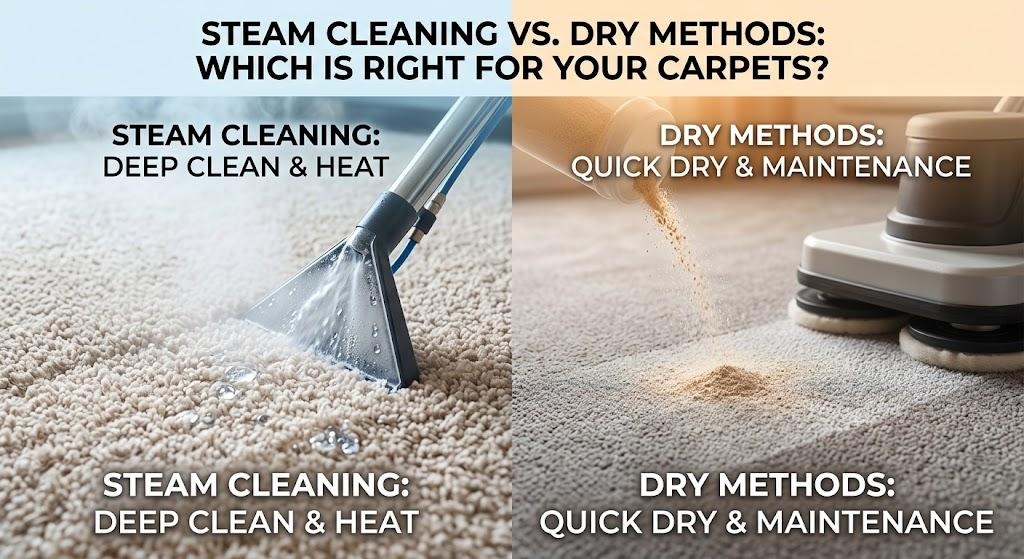
When people compare carpet and upholstery cleaning options, the biggest question is often whether steam cleaning or dry methods will work better. Both approaches are widely used, but they are not the same in how they remove dirt, how long they take to dry, and what kinds of materials they suit best. If you are trying to decide between the two for your home or business, understanding the differences can save time, protect surfaces, and help you get better results.
This topic matters for more than just appearance. The cleaning method you choose can affect indoor air quality, stain removal, fabric wear, and how soon a room can be used again. For example, someone comparing services like carpet cleaning warrington may want to know whether a deep wet clean or a low-moisture process is more suitable for everyday carpet care. The answer depends on the material, the level of soil, and how much drying time you can allow.
Key Points
Steam cleaning uses water, heat, and extraction to remove dirt from deep within fibers.
Dry methods use minimal moisture and are designed for faster drying times.
Steam cleaning is often better for heavily soiled carpets and deep sanitation needs.
Dry methods can be useful for delicate fabrics, frequent maintenance, and quick turnaround.
The best choice depends on the surface material, stain type, and how soon the area must be ready for use.
What Steam Cleaning Actually Means
Steam cleaning is a deep-cleaning process that uses hot water mixed with cleaning solution, then extracts the water and loosened soil from the carpet or fabric. Despite the name, most carpet steam cleaning does not rely on actual steam alone. Instead, the machine injects hot water into the fibers and then pulls it back out along with dirt, allergens, and residue.
This method is known for reaching below the surface. It can remove embedded debris that regular vacuuming cannot touch. Because of the heat and moisture involved, steam cleaning is often chosen for homes with pets, allergy concerns, or heavily trafficked areas that collect deep grime over time.
How steam cleaning works
The process usually follows a few steps. First, loose dirt is removed by vacuuming. Then a cleaning solution is applied to break down soil and stains. Hot water is introduced under pressure, and the machine immediately extracts the liquid. This leaves the fibers cleaner, though also wetter than dry cleaning methods.
What Dry Methods Are
Dry cleaning methods use very little water. Instead of soaking the fibers, they rely on absorbent compounds, specialized powders, or low-moisture cleaning agents that bind to dirt and are then removed through vacuuming or agitation. Some dry methods use encapsulation, where soil is trapped in a crystallized residue that can be vacuumed away later.
Dry methods are often chosen when quick drying is important. They are practical for commercial spaces, busy households, or delicate materials that should not be exposed to excess moisture. While they may not always clean as deeply as hot water extraction, they can still provide solid results when used correctly and regularly.
Common dry cleaning approaches
Dry compound cleaning: An absorbent material is worked into the carpet and then vacuumed out.
Encapsulation: Cleaning agents surround dirt particles so they can be removed after drying.
Low-moisture bonnet cleaning: A rotating pad absorbs surface soil from the carpet.
Main Differences Between Steam Cleaning and Dry Methods
The clearest difference is moisture. Steam cleaning uses much more water and requires a longer drying period. Dry methods use significantly less moisture and usually allow the surface to be used much sooner. This single difference influences nearly every other factor, including cleaning depth, convenience, and material compatibility.
Cleaning depth
Steam cleaning generally provides a deeper clean because hot water can reach into carpet fibers and loosen embedded dirt. It is more effective for heavy buildup, oily residue, and stubborn stains. Dry methods are better for surface dirt and routine upkeep, though they may not remove deeply trapped soil as thoroughly.
Drying time
Drying time is one of the biggest practical differences. Steam-cleaned carpet may take several hours to more than a day to dry depending on airflow, humidity, and pile thickness. Dry methods often dry within an hour or two, making them useful when access to the room cannot be interrupted for long.
Stain removal
Steam cleaning tends to perform better on many common household stains, especially when the stain has set into the fibers. Dry methods can help with light soil and fresh spots, but they may struggle with deep discoloration or greasy residues unless repeated or paired with targeted spot treatment.
Risk of moisture-related issues
Because steam cleaning introduces more water, there is a greater need to control over-wetting. If carpets or upholstery remain damp for too long, odors or mildew can develop. Dry methods reduce this risk, though they still require proper technique to avoid leaving behind residue.
When Steam Cleaning Makes More Sense
Steam cleaning is usually the better choice when the goal is intensive restoration. It is often used in homes with pets, children, or high foot traffic because those environments create more embedded dirt and allergens. It can also be helpful for periodic deep cleaning rather than frequent maintenance.
This method is commonly chosen for:
Heavily soiled carpets
Odor removal
Allergen reduction
Large areas with deep-set dirt
Periodic maintenance after long use
It is important to note that steam cleaning works best when the carpet is strong enough to handle moisture and when there is enough time for proper drying. Good ventilation and extraction equipment make a major difference in the final result.
When Dry Methods Are a Better Fit
Dry methods are often the practical choice in situations where time, fabric sensitivity, or access matters. Offices, retail spaces, and busy homes may prefer this approach because it minimizes downtime. It can also be useful for rugs or upholstery that should not absorb much water.
Dry cleaning may be the better option for:
Quick turnaround needs
Delicate fibers or moisture-sensitive materials
Routine maintenance between deeper cleans
Commercial spaces that must stay open
Areas where excess water is a concern
While dry methods are convenient, they are usually best viewed as maintenance tools rather than total restoration solutions. For a carpet that has years of buildup, a low-moisture method may improve appearance but not fully reset the fibers the way hot water extraction can.
Which Method Is Safer for Different Materials?
Material type should guide the decision. Synthetic carpets often tolerate steam cleaning well, especially when professionally handled. Natural fibers, antique rugs, and some upholstery fabrics can be more sensitive to heat and moisture, which makes dry methods or specialized low-moisture systems safer.
Always check manufacturer care instructions before choosing a method. Some materials can shrink, bleed dye, or lose texture if cleaned too aggressively. In those cases, a gentle dry method may preserve the material better than a deep wet process.
Cost and Maintenance Considerations
Steam cleaning may cost more upfront because it is more labor-intensive and equipment-heavy, but it often provides a more complete result. Dry methods may be less expensive for routine service, especially when used regularly as part of a maintenance schedule.
From a long-term perspective, the best value depends on use. A home with light traffic may only need occasional dry cleaning plus periodic steam cleaning. A busy household or commercial property may benefit from a deeper steam clean followed by regular low-moisture care.
How to Choose the Right Method
To choose wisely, think about four questions: How dirty is the surface? How soon does it need to be dry? What material is being cleaned? Is the goal deep restoration or routine upkeep?
If the carpet looks dull, feels sticky, or holds odors, steam cleaning is usually the stronger choice. If the goal is to refresh the surface quickly with minimal interruption, a dry method may be more practical. In many real situations, the best approach is a combination of both over time.
Conclusion
Steam cleaning and dry methods each serve an important purpose, but they are designed for different needs. Steam cleaning goes deeper, removes more embedded soil, and is often the best option for heavily used or heavily soiled surfaces. Dry methods offer speed, convenience, and a lower-moisture solution that works well for maintenance and delicate materials.
The right choice depends on the condition of the carpet or upholstery, the type of fabric, and how much drying time you can allow. By understanding these differences, you can make a more informed decision and keep your floors and furnishings looking and performing better over time.
FAQ
Is steam cleaning the same as hot water extraction?
Not exactly, although the terms are often used interchangeably. Hot water extraction is the more accurate description for most carpet steam cleaning methods.
Do dry methods clean as well as steam cleaning?
Dry methods can work well for light soil and maintenance, but steam cleaning usually provides a deeper clean for embedded dirt and stains.
How long does carpet take to dry after steam cleaning?
Drying time varies, but it often takes several hours and sometimes longer depending on airflow, humidity, carpet thickness, and how much water was used.
Are dry cleaning methods safe for all carpets?
They are safer for moisture-sensitive materials, but not every carpet responds the same way. Always check the care instructions before choosing a method.
Which method is better for allergies?
Steam cleaning is often better for reducing allergens because it removes more embedded dust, pollen, and pet-related debris from deep in the fibers.
Can I switch between steam cleaning and dry methods?
Yes. Many people use dry methods for regular upkeep and steam cleaning for deeper periodic cleaning. This combination can be effective for many homes and businesses.