Have you ever noticed people joining their thumb and index finger while meditating? This simple hand position is known as Gyan Mudra, one of the most familiar gestures in yoga and meditation.
In traditional yogic practices, mudras are symbolic gestures performed with the hands or other parts of the body. They are often used during meditation, pranayama and spiritual practices to develop awareness and support concentration.
Although many mudras look simple, each has its own traditional meaning and place in yogic practice. Understanding them can add another dimension to a regular yoga routine.
What Are Yoga Mudras and Why Are They Practised?
The Sanskrit word mudra is commonly translated as a gesture, seal or symbolic expression. In yoga, mudras are deliberate positions of the hands or body used during meditation, breathing exercises and certain traditional practices.
Hasta Mudras refer specifically to hand gestures. Some are formed by bringing particular fingers together, while others involve positioning the palms and fingers in specific ways.
Mudras are traditionally associated with symbolic meanings and yogic concepts. Some modern explanations also connect them with energy flow, but scientific evidence for specific healing claims remains limited.
Learning these traditional techniques is part of the broader study of yoga. For example, the 200 Hour Yoga Teacher Training in Bali introduces students to different dimensions of yoga, including meditation, pranayama, philosophy and traditional practices.
7 Traditional Yoga Mudras and Their Meanings
Here are seven commonly discussed mudras and how they are traditionally practised.
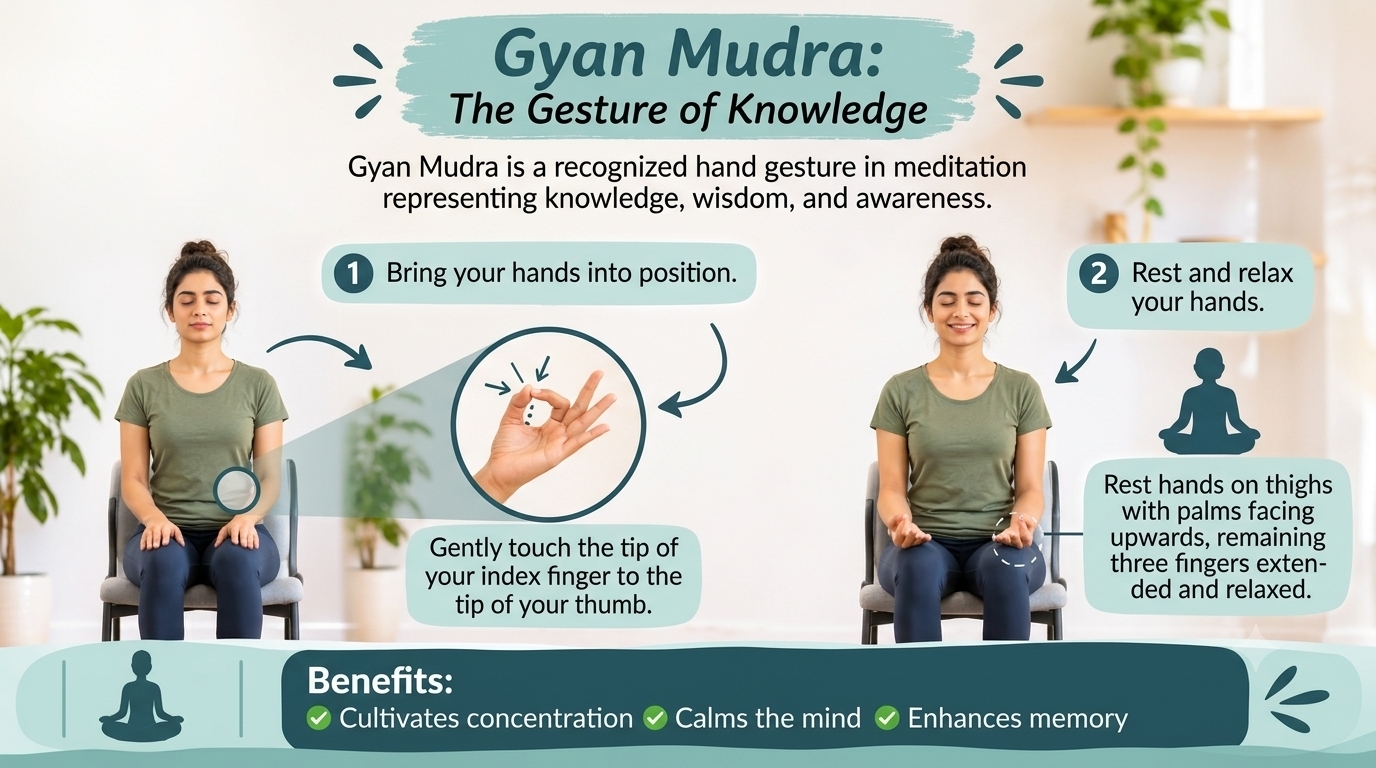
1. Gyan Mudra: The Gesture of Knowledge
Gyan Mudra is one of the most recognised hand gestures in meditation.
To practise it, gently touch the tip of your index finger to the tip of your thumb. Keep the remaining three fingers extended but relaxed. Rest your hands on your thighs with your palms facing upwards.
Traditionally, Gyan Mudra represents knowledge, wisdom and awareness. It is often used during seated meditation and breathing exercises.
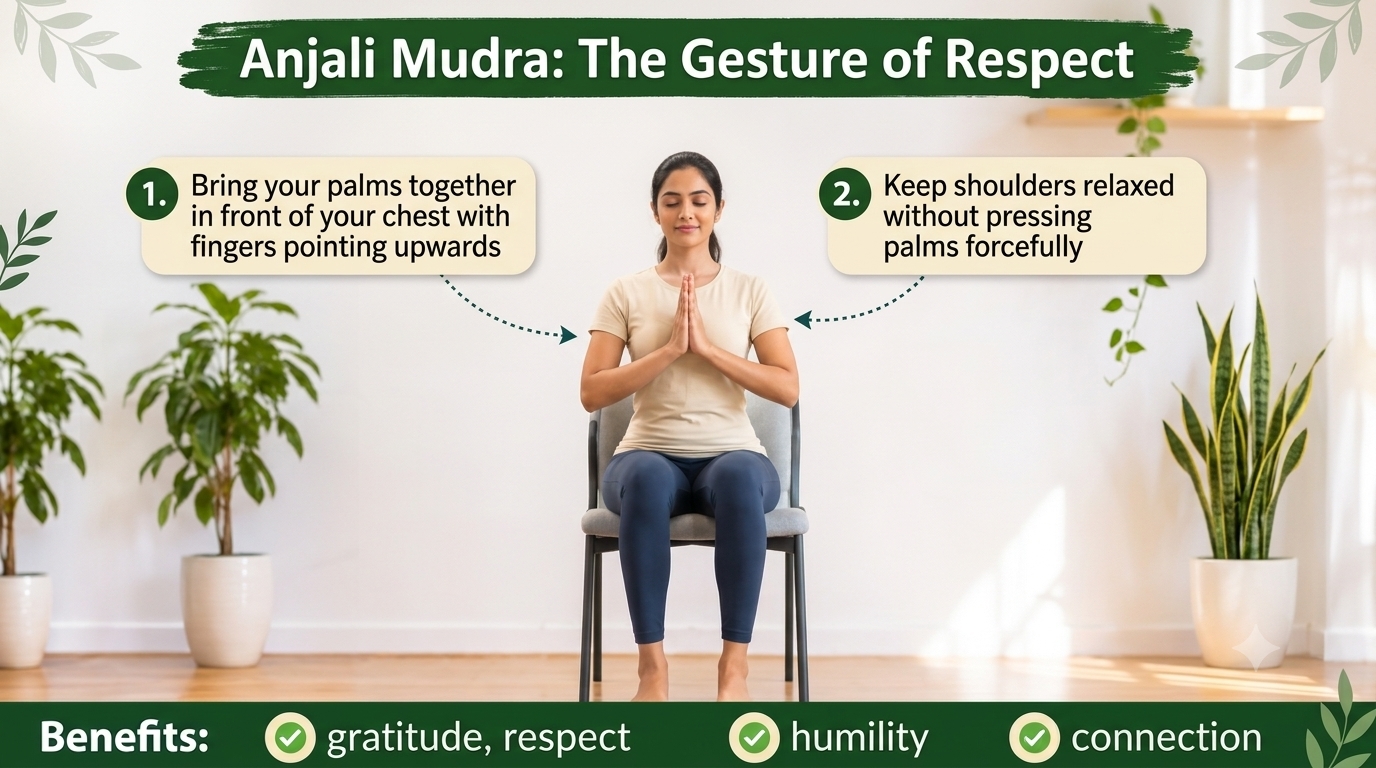
2. Anjali Mudra: The Gesture of Respect
Anjali Mudra is commonly seen at the beginning and end of yoga classes.
Bring your palms together in front of your chest, keeping the fingers pointing upwards. Allow your shoulders to relax and avoid pressing the palms together forcefully.
This gesture traditionally represents gratitude, respect, humility and a sense of connection. It is also widely used as a greeting in several Indian traditions.
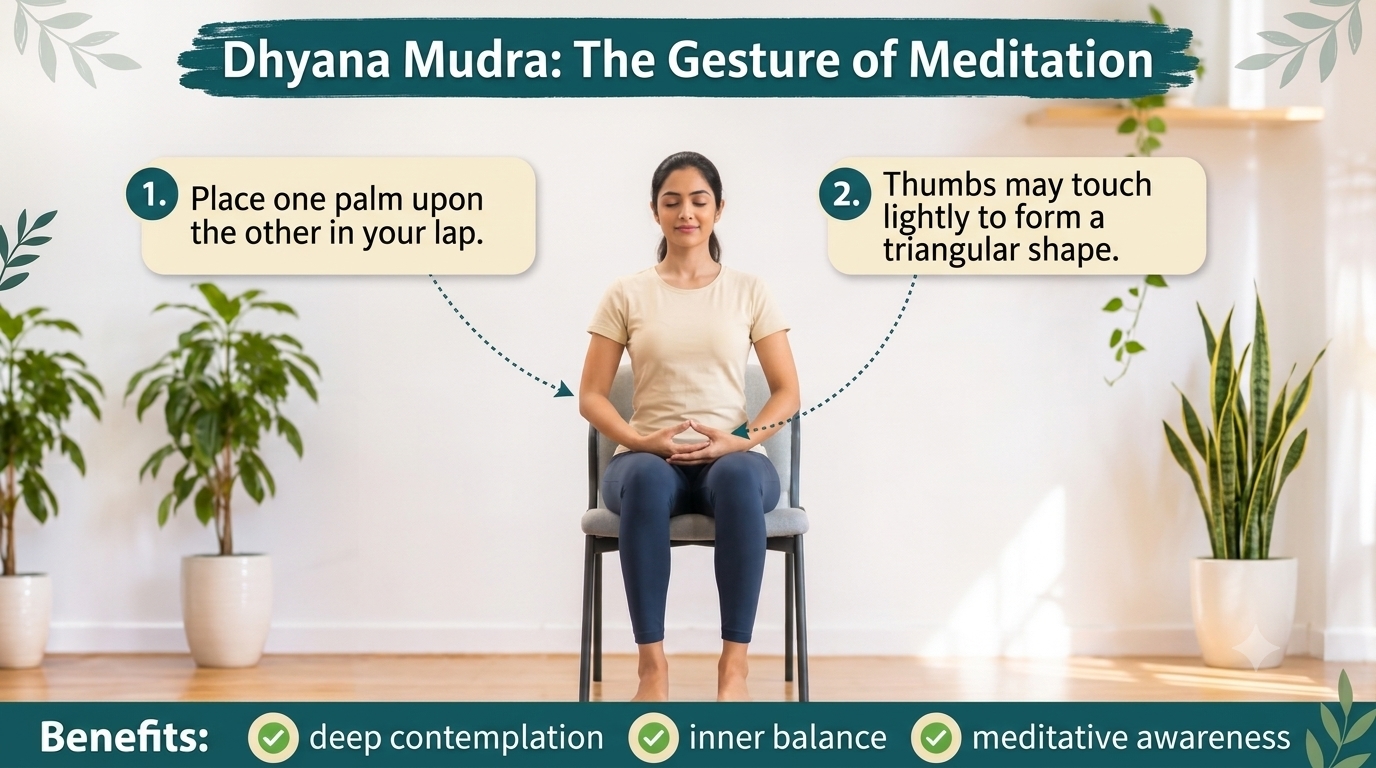
3. Dhyana Mudra: The Gesture of Meditation
Dhyana Mudra is frequently used during seated meditation.
Place your hands in your lap, with one palm resting on the other. The thumbs may touch lightly to form a triangular shape.
Traditionally, this mudra represents deep contemplation, inner balance and meditative awareness.
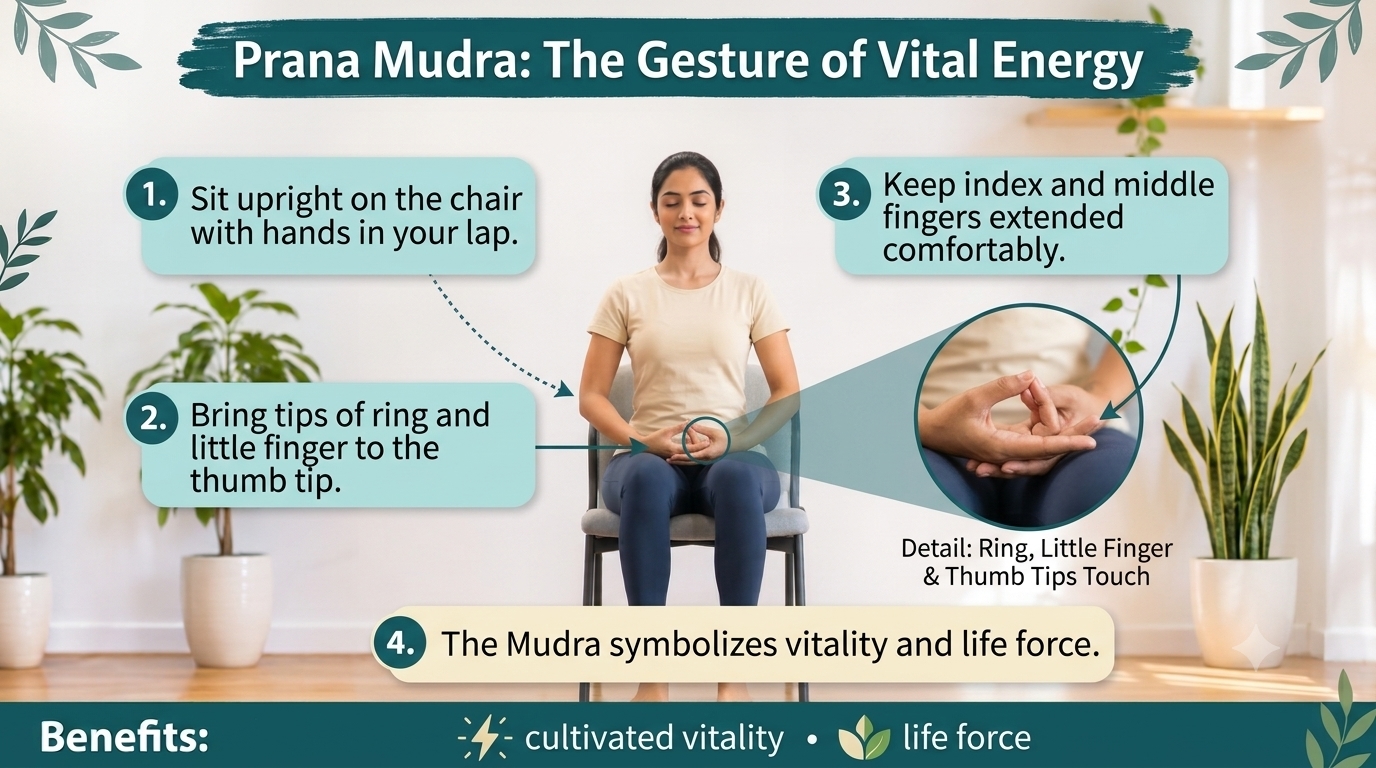
4. Prana Mudra: The Gesture of Vital Energy
Prana Mudra is traditionally associated with vital energy.
Bring the tips of your ring finger and little finger towards the tip of your thumb. Keep the index and middle fingers extended comfortably.
Practitioners often use this gesture during seated breathing exercises or meditation. In traditional interpretations, it symbolises vitality and the life force.
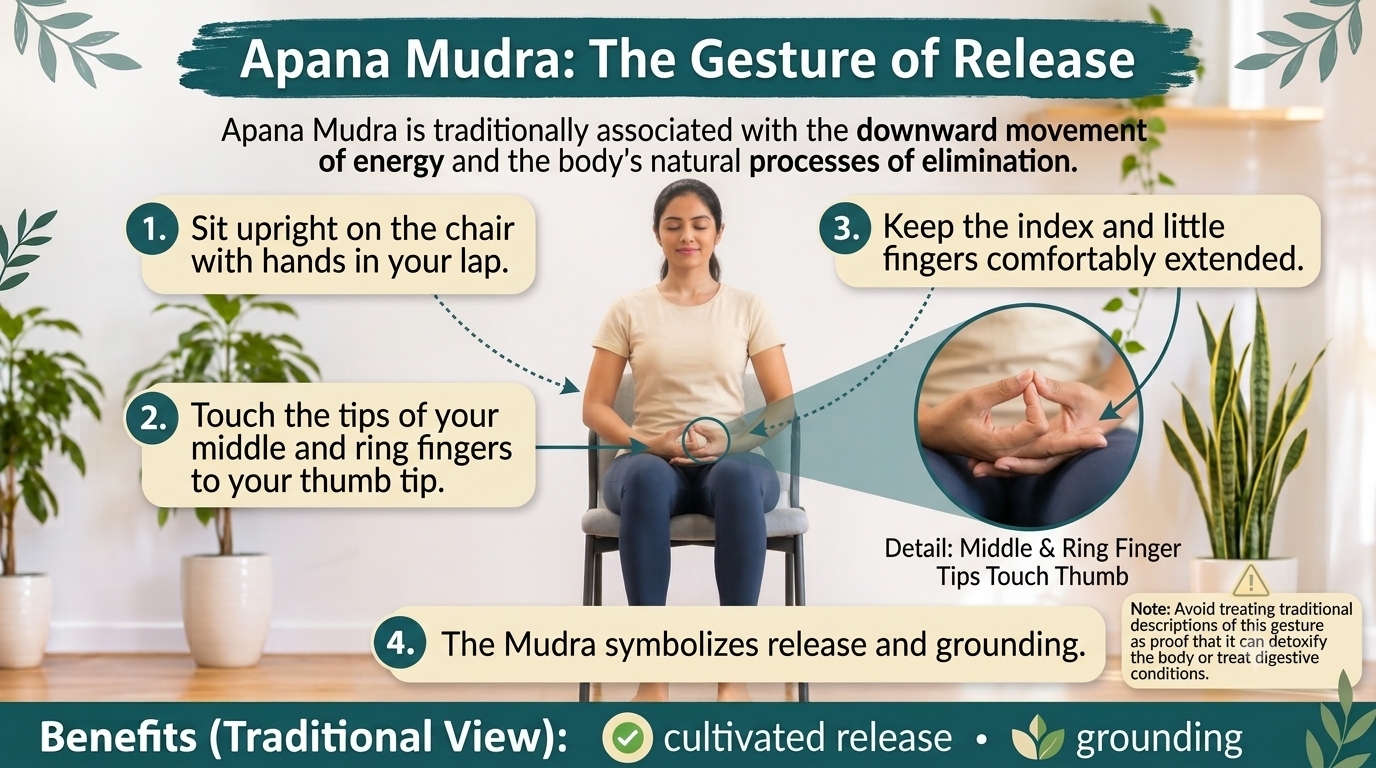
5. Apana Mudra: The Gesture of Release
Apana Mudra is traditionally associated with the downward movement of energy and the body's natural processes of elimination.
Touch the tips of your middle and ring fingers to your thumb. Keep the index and little fingers extended.
It is commonly practised in a comfortable seated position. Avoid treating traditional descriptions of this gesture as proof that it can detoxify the body or treat digestive conditions.
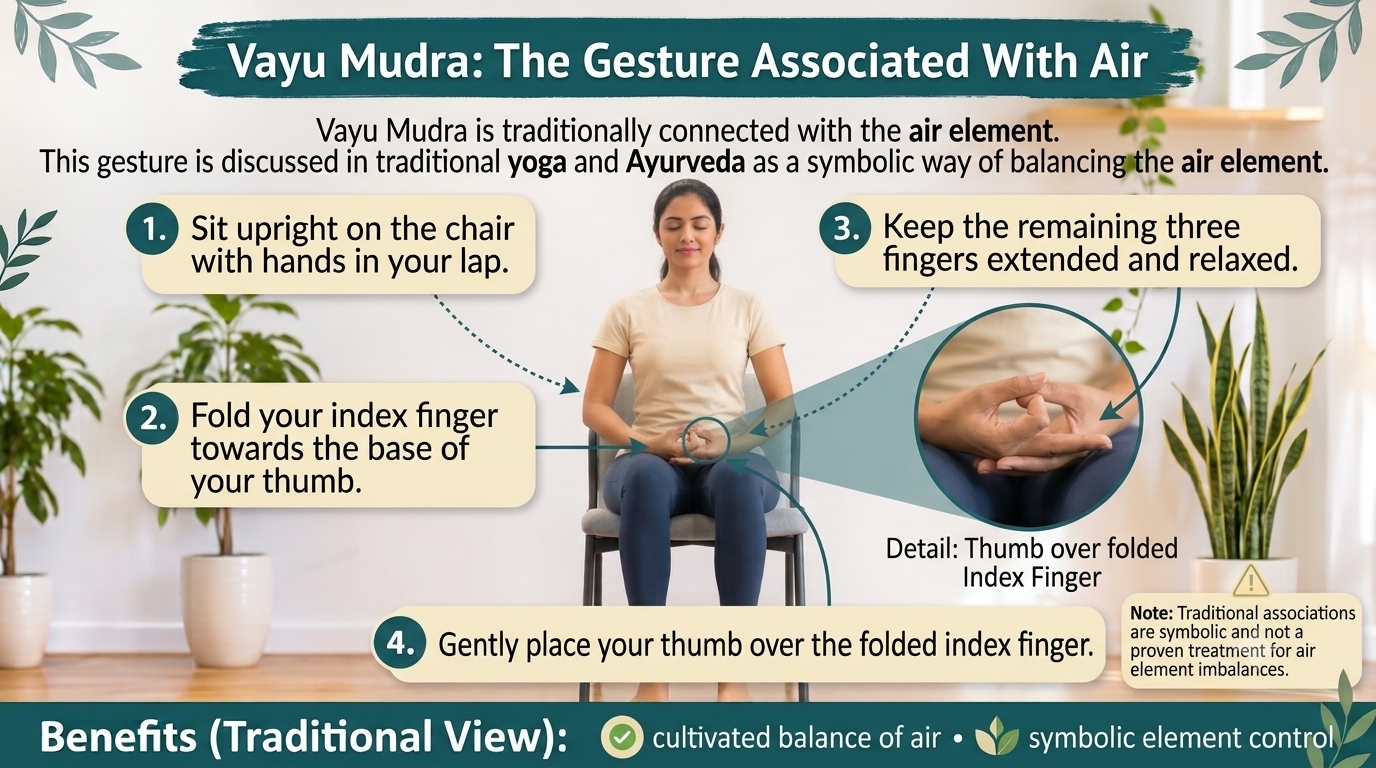
6. Vayu Mudra: The Gesture Associated With Air
Vayu Mudra is traditionally connected with the air element.
Fold your index finger towards the base of your thumb and gently place your thumb over it. Keep the remaining fingers extended without creating unnecessary tension.
This gesture is discussed in traditional yoga and Ayurveda as a symbolic way of balancing the air element.
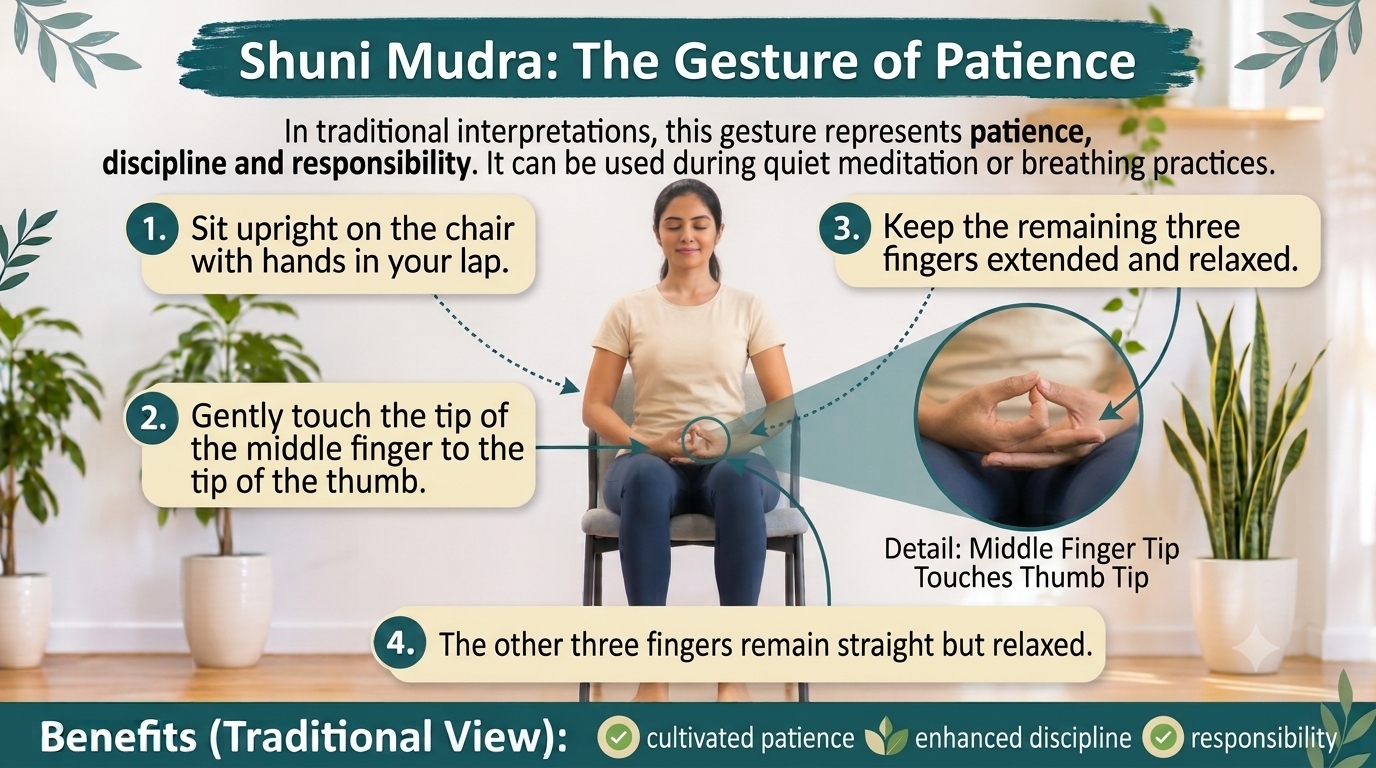
7. Shuni Mudra: The Gesture of Patience
Shuni Mudra is formed by gently touching the tip of the middle finger to the tip of the thumb.
Keep the remaining fingers relaxed and extended.
In traditional interpretations, this gesture represents patience, discipline and responsibility. It can be used during quiet meditation or breathing practices.
How to Practise Mudras Correctly
Mudras are generally simple to practise, but comfort and awareness are important.
Follow these basic steps:
Choose a quiet and comfortable place.
Sit on a chair or yoga mat with your spine naturally upright.
Relax your shoulders, arms and hands.
Form the chosen mudra without squeezing your fingers.
Breathe naturally and maintain awareness of your posture.
Continue for a few minutes, gradually increasing the duration if comfortable.
You do not need to perform all eight mudras in one session. Start with one gesture and observe how it feels during meditation.
Can Mudras Be Practised During Meditation and Pranayama?
Yes. Many traditional mudras are practised alongside meditation and pranayama. They provide a physical point of attention that can make it easier to remain aware of the present moment.
For example, Gyan Mudra is commonly used during seated meditation, while Anjali Mudra may be included at the beginning of a yoga session.
Students exploring 200 Hour Yoga Teacher Training Bali can learn how traditional gestures fit into the broader practice of yoga. At Bali Yoga Retreats, yoga education includes subjects such as asana, meditation, pranayama and philosophy, offering opportunities to understand practices beyond their physical appearance.
Conclusion
Yoga mudras are traditional gestures that bring symbolic meaning and awareness into yoga and meditation. From Gyan Mudra and Anjali Mudra to Prana Mudra and Dhyana Mudra, each gesture has its own traditional interpretation.
You can begin with one simple hand position during meditation and practise it without forcing your fingers or expecting immediate results. Like other aspects of yoga, consistency, comfort and mindful attention are more valuable than complexity.
Frequently Asked Questions
1. What Is the Most Common Yoga Mudra?
Gyan Mudra is among the most commonly practised yoga mudras. It involves gently joining the thumb and index finger and is traditionally associated with knowledge and awareness.
2. Can Beginners Practise Yoga Mudras?
Yes. Most basic hand mudras are simple and can be practised by beginners while sitting comfortably.
3. How Long Should You Hold a Mudra?
There is no single duration suitable for everyone. Beginners can start with a few minutes and increase the duration according to comfort.
4. Can Mudras Be Practised While Walking?
Some people use simple hand gestures during everyday activities, but traditional mudras are commonly practised in a relaxed, attentive position, especially during meditation.
5. Are Yoga Mudras Scientifically Proven to Cure Diseases?
There is not enough strong scientific evidence to establish that specific hand mudras cure diseases. They may be used as part of a mindful practice but should not replace medical treatment.