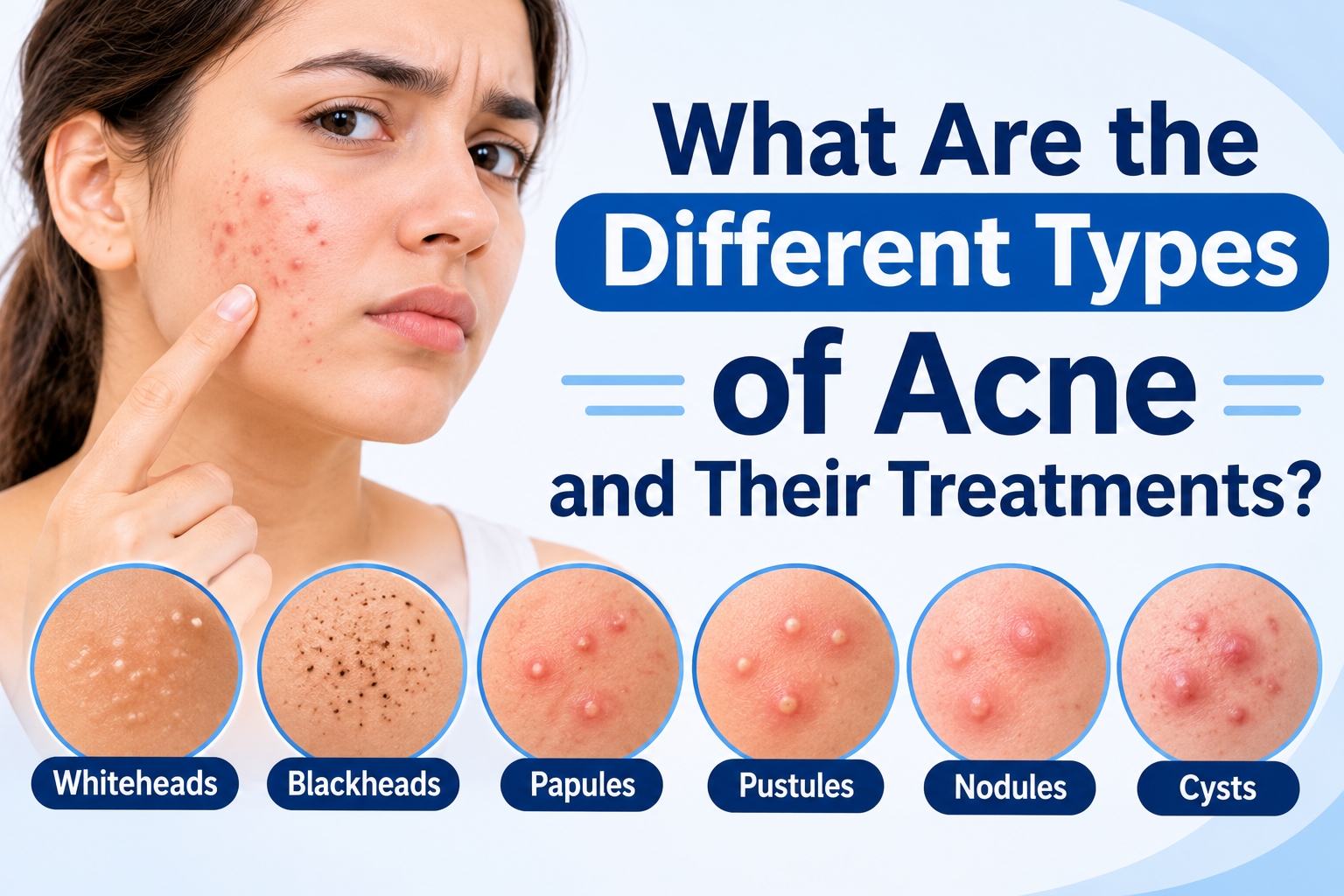
Acne is one of the most common skin conditions and can affect people of different ages. It usually develops when hair follicles become clogged with oil, dead skin cells, and bacteria. Acne can appear on the face, chest, shoulders, and back. While some people experience occasional pimples, others may develop persistent breakouts that leave marks or scars. Understanding the different types of acne is important because each type may require a different treatment approach.
1. Understanding Acne and Its Causes
Acne develops when excess oil (sebum), dead skin cells, and bacteria accumulate inside hair follicles. Hormonal changes, stress, certain medications, genetics, and skincare habits can also contribute to breakouts.
The severity of acne varies from person to person. Some cases can be managed with basic skincare and topical products, while others require medical attention. People considering Acne Treatment in Jaipur can consult a qualified dermatologist to identify their acne type and understand suitable treatment options.
2. Whiteheads
Whiteheads are a common type of non-inflammatory acne. They develop when pores become blocked with oil and dead skin cells. Unlike blackheads, the blocked pores remain closed, creating small white or skin-coloured bumps.
Common causes:
Excess oil production.
Accumulation of dead skin cells.
Hormonal changes.
Use of pore-clogging skincare products.
Treatment options:
Whiteheads can often be managed with salicylic acid, which helps remove dead skin cells and unclog pores. Dermatologists may also recommend topical retinoids to prevent new blockages. Using non-comedogenic skincare products can help reduce recurring breakouts.
3. Blackheads
Blackheads are another type of non-inflammatory acne. They appear as small dark spots, usually on the nose, forehead, and chin. The dark colour develops when the material inside an open pore reacts with air.
Common causes:
Excess sebum production.
Dead skin cell buildup.
Hormonal fluctuations.
Inadequate cleansing.
Treatment options:
Salicylic acid and topical retinoids are commonly used to manage blackheads. Gentle cleansing and regular skincare can also help. In some cases, a dermatologist may recommend professional comedone extraction.
Scrubbing the skin aggressively or squeezing blackheads can cause irritation and should be avoided.
4. Papules
Papules are small, red or pink bumps that develop when the skin becomes inflamed around blocked hair follicles. They usually do not contain visible pus and may feel sensitive when touched.
Common causes:
Bacterial activity within clogged pores.
Hormonal changes.
Excess oil production.
Skin inflammation.
Treatment options:
Dermatologists may recommend benzoyl peroxide, topical retinoids, or other anti-inflammatory acne medications depending on the severity. Gentle skincare and avoiding unnecessary touching can also help prevent further irritation.
5. Pustules
Pustules are inflamed pimples that contain pus. They often appear as red bumps with white or yellow centres. They can develop on the face, shoulders, chest, and back.
Common causes:
Bacterial activity.
Blocked pores.
Excess oil production.
Inflammation around hair follicles.
Treatment options:
Benzoyl peroxide is commonly used to reduce acne-causing bacteria and inflammation. Salicylic acid and prescription medications may also be recommended. Patients should avoid popping pustules because this can increase the risk of infection, dark marks, and scarring.
6. Nodular Acne
Nodular acne is a more severe form of acne. It develops when inflammation occurs deeper beneath the skin, creating large, firm, and painful lumps. These bumps may remain for several weeks and can increase the risk of permanent scarring.
Common causes:
Hormonal changes.
Excessive oil production.
Genetic factors.
Severe inflammation within hair follicles.
Treatment options:
Nodular acne generally requires medical treatment. A dermatologist may prescribe oral medications, including isotretinoin in selected cases, after evaluating the patient's condition. Other prescription treatments may also be considered.
Early medical attention is important to reduce the possibility of long-term skin damage.
7. Cystic Acne
Cystic acne is one of the most severe forms of acne. It develops when deep inflammation creates large, painful, pus-filled lesions beneath the skin. These lesions commonly appear on the face, jawline, chest, and back.
Common causes:
Hormonal imbalances.
Genetic predisposition.
Excess oil production.
Severe inflammation and blocked pores.
Treatment options:
Cystic acne often requires treatment from a dermatologist. Depending on the condition, options may include prescription medications, oral antibiotics for selected cases, hormonal treatments, or isotretinoin.
In some situations, a dermatologist may use corticosteroid injections to reduce inflammation in individual painful lesions.
8. Hormonal Acne
Hormonal acne is commonly associated with changes in hormone levels. It frequently appears around the chin, jawline, and lower cheeks. Adults may experience hormonal acne even if they did not have acne during their teenage years.
Common causes:
Menstrual cycle changes.
Puberty.
Pregnancy-related hormonal changes.
Certain endocrine conditions.
Treatment options:
Treatment depends on the underlying cause and individual health factors. Dermatologists may recommend topical retinoids, benzoyl peroxide, or salicylic acid. In some patients, hormonal medications may be considered under medical supervision.
9. How to Prevent Frequent Acne Breakouts
Although acne cannot always be prevented, certain skincare habits can help reduce breakouts and support healthier skin.
Some useful practices include:
Wash your face gently twice a day.
Use non-comedogenic skincare products.
Avoid touching or squeezing pimples.
Remove makeup before sleeping.
Apply sunscreen suitable for your skin type.
Avoid excessive scrubbing.
Maintain a balanced diet and healthy lifestyle.
Follow a consistent skincare routine.
If acne continues despite regular skincare, professional evaluation can help identify the underlying reasons.
10. When Should You Consult a Dermatologist?
Occasional pimples may improve with basic skincare, but persistent or severe acne should not be ignored. You should consider consulting a dermatologist if you experience painful breakouts, deep skin lesions, frequent inflammation, or acne scars.
A dermatologist examines the skin, identifies the type and severity of acne, and recommends an appropriate treatment plan. Treatment may include topical medications, oral medicines, chemical peels, or other procedures depending on individual requirements.
Conclusion
Different types of acne require different treatment approaches. While whiteheads and blackheads may respond to topical skincare products, inflammatory, nodular, and cystic acne often require professional medical attention. Identifying the acne type early can help reduce breakouts and lower the risk of permanent scarring. If you are experiencing persistent skin problems, consulting a qualified dermatologist for a Best Acne Treatment in Jaipur can help you understand suitable treatment options and develop a skincare plan based on your skin's needs.