Warehousing plays an essential role in modern supply chain management. Businesses that import, export, manufacture, or distribute products rely on efficient storage and inventory management to keep their operations running smoothly.
A warehouse is more than just a place to store goods. It is an important part of the logistics process, connecting suppliers, manufacturers, transportation providers, distributors, and customers. When warehouse operations are properly organized, businesses can improve inventory control, reduce delays, and maintain a more reliable flow of products.
As international trade continues to grow, effective warehousing and supply chain management have become increasingly important. Companies need to coordinate storage, transportation, order fulfillment, and inventory planning to meet customer expectations and respond to changing market conditions.
In this article, we explore the role of warehousing in supply chain management, the different types of warehouses, and how businesses can improve their logistics operations.
What Is Warehousing in Supply Chain Management?
Warehousing refers to the process of storing goods before they are transported to their next destination or delivered to customers.
In supply chain management, warehouses serve as central points where products are received, inspected, organized, stored, and prepared for distribution.
They help businesses manage the movement of goods between different stages of the supply chain. For example, imported products may arrive at a warehouse after international transportation before being distributed to retailers, wholesalers, or individual customers.
Modern warehousing operations often include several activities:
Receiving incoming shipments from suppliers and manufacturers.
Inspecting products for damage or discrepancies.
Organizing goods according to inventory requirements.
Monitoring stock levels and product availability.
Preparing orders for shipment.
Coordinating outgoing transportation and deliveries.
Managing returns and reverse logistics.
Each of these activities contributes to the overall efficiency of the supply chain.
Why Is Warehousing Important for Supply Chain Operations?
Efficient warehousing helps businesses maintain control over their products and coordinate transportation more effectively.
Without proper storage and inventory management, companies may experience stock shortages, delayed deliveries, damaged products, and unnecessary operational complications.
Here are some of the main reasons warehousing is important for supply chain management.
1. Better Inventory Management
Inventory management is one of the most important responsibilities of warehouse operations.
Businesses need accurate information about how many products are available, where they are stored, and when additional inventory will be required.
An organized warehouse helps companies monitor stock levels, identify shortages, and avoid accumulating unnecessary inventory.
Accurate inventory records also make it easier to coordinate purchasing decisions and plan future shipments.
2. Improved Order Fulfillment
Warehouses help businesses prepare customer orders efficiently.
When products are properly organized and inventory information is accurate, employees can locate items, package shipments, and arrange transportation more effectively.
This is particularly important for retailers and e-commerce businesses that process large numbers of orders and need to maintain consistent delivery schedules.
3. More Efficient Transportation Planning
Warehousing and transportation are closely connected.
Businesses often use warehouses as distribution points where international shipments are received before being moved to their final destinations.
By coordinating warehouse activities with transportation schedules, companies can organize deliveries, consolidate cargo, and reduce unnecessary movement of goods.
This can help improve logistics efficiency throughout the supply chain.
4. Greater Supply Chain Flexibility
Demand for products can change unexpectedly due to seasonal trends, market conditions, promotional campaigns, or supply disruptions.
Warehouses provide businesses with additional flexibility by allowing them to store inventory until it is needed.
Maintaining appropriate stock levels can help companies respond to increased demand and temporary transportation delays without interrupting their operations.
Different Types of Warehouses
Not all warehouses serve the same purpose. Businesses choose storage facilities based on their products, transportation requirements, distribution strategies, and inventory management needs.
Understanding the different types of warehouses can help companies select the right storage solution.
1. Distribution Centers
Distribution centers are designed to receive products, process orders, and move goods to their next destinations.
Unlike traditional storage facilities, distribution centers often focus on the rapid movement of inventory rather than long-term storage.
They are commonly used by retailers, wholesalers, manufacturers, and e-commerce companies.
2. Public Warehouses
Public warehouses provide storage services to multiple businesses.
Companies can use these facilities without owning or operating their own warehouse infrastructure.
This arrangement can be useful for businesses that need temporary storage, seasonal capacity, or additional space during periods of increased demand.
3. Private Warehouses
Private warehouses are owned or operated by individual companies for their own storage and distribution requirements.
They provide greater control over warehouse operations, inventory organization, and internal processes.
Private facilities are often used by larger manufacturers, retailers, and distributors with consistent storage requirements.
4. Bonded Warehouses
Bonded warehouses are facilities authorized by customs authorities where imported goods can be stored under customs control before applicable duties and taxes are paid.
They can provide businesses with additional flexibility when managing international shipments and customs procedures.
The specific rules and benefits depend on the country and applicable customs regulations.
5. Cold Storage Warehouses
Cold storage facilities are designed to maintain controlled temperatures for products that require specific environmental conditions.
They are commonly used for food, pharmaceuticals, certain chemicals, and other temperature-sensitive goods.
Proper temperature management helps maintain product quality and reduce the risk of damage during storage.
The Relationship Between Warehousing and International Freight Shipping
Warehousing is an important part of international logistics because products often need to pass through several stages before reaching their final destination.
An international shipment may involve transportation from a supplier to a port, ocean or air freight transportation, customs clearance, temporary storage, and final delivery.
Warehouses help connect these stages by providing locations where cargo can be received, organized, stored, and prepared for further transportation.
For example, a company importing products from overseas may use a warehouse near a major transportation hub to receive international shipments before distributing them across different regions.
This approach can help businesses coordinate incoming cargo with local delivery schedules and inventory requirements.
Cargo Consolidation and Deconsolidation
Warehouses can also support cargo consolidation and deconsolidation.
Consolidation involves combining smaller shipments into a larger shipment to organize transportation more efficiently.
Deconsolidation is the opposite process, in which a larger shipment is separated into individual orders or smaller deliveries.
These processes are particularly relevant to Less than Container Load (LCL) shipping, where cargo from multiple shippers shares container space.
Proper coordination between freight transportation and warehouse operations helps ensure that cargo is handled and distributed according to the required schedules.
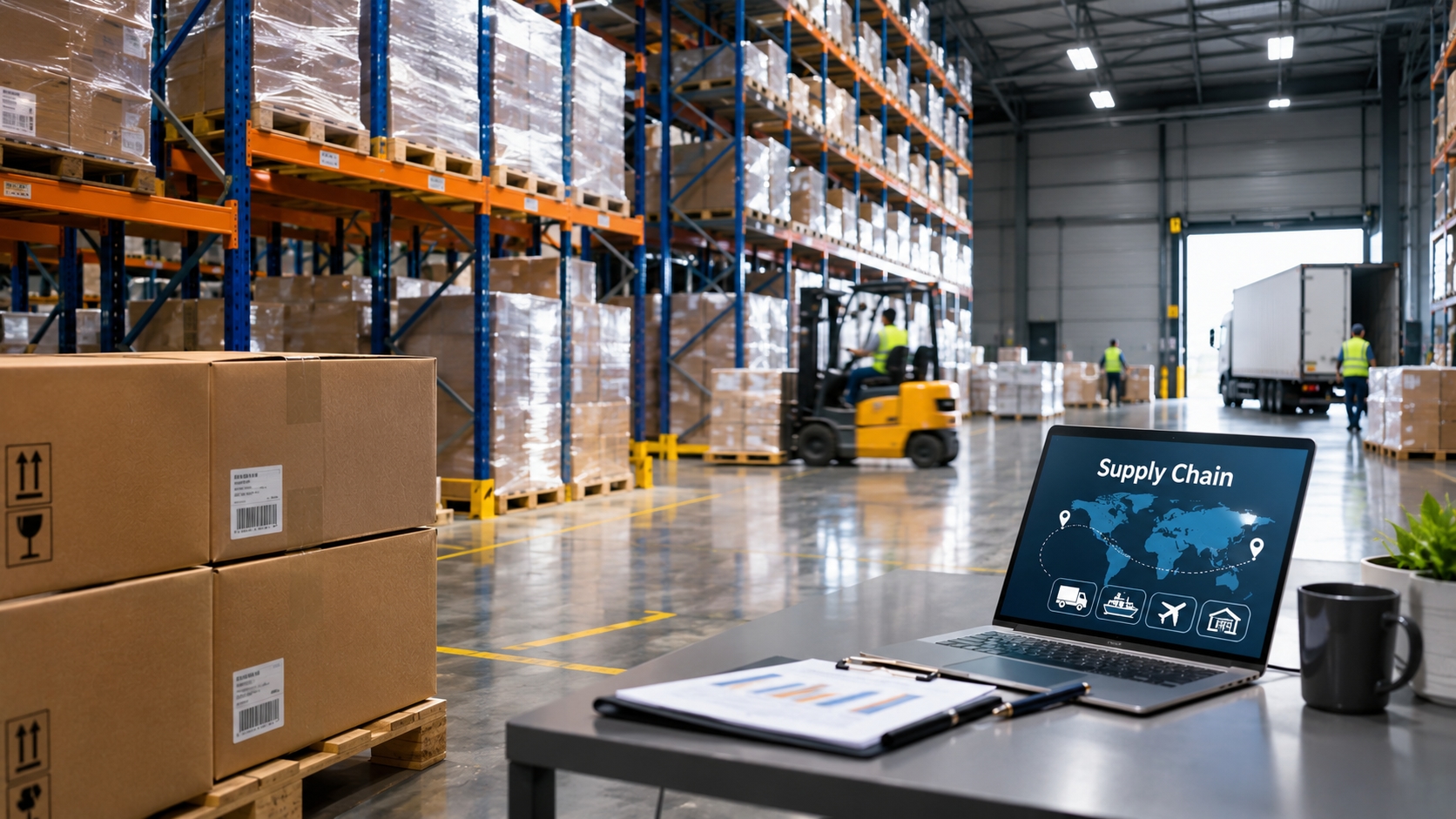
How Technology Improves Warehouse and Supply Chain Management
Technology has significantly changed how modern warehouses operate.
Businesses increasingly use digital systems to monitor inventory, organize storage, track shipments, and improve communication between different supply chain participants.
Some of the most widely used technologies include:
Warehouse Management Systems (WMS)
A Warehouse Management System helps businesses manage daily warehouse activities.
These systems can support inventory tracking, product location management, order processing, receiving, and shipping operations.
By providing accurate inventory information, WMS platforms help reduce manual errors and improve operational visibility.
Barcode and RFID Technology
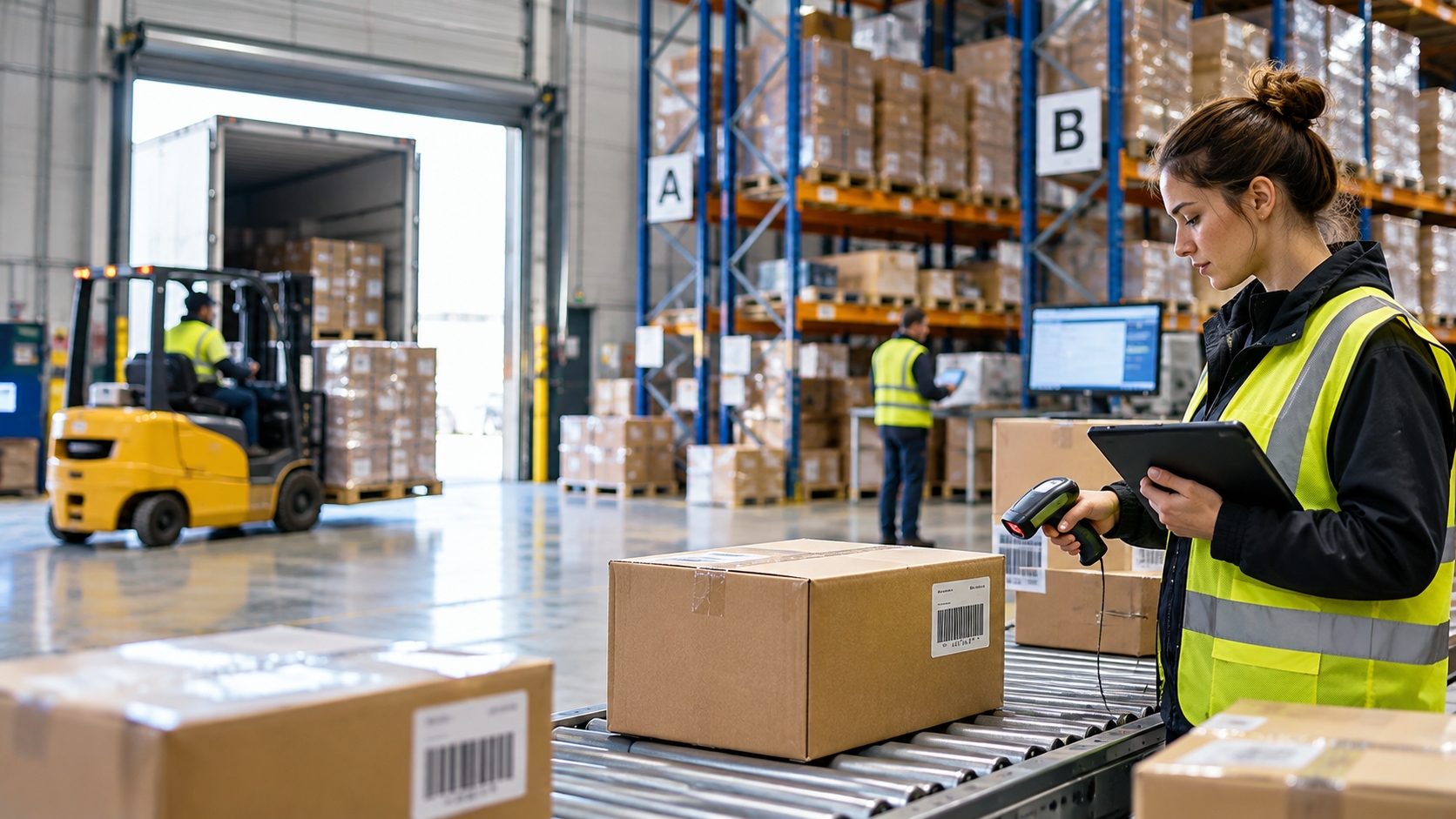
Barcode scanning and Radio Frequency Identification (RFID) systems help businesses identify and track products throughout warehouse operations.
These technologies make it easier to record incoming and outgoing inventory, verify shipments, and maintain accurate stock information.
Automated Warehouse Equipment
Automated storage systems, conveyor belts, sorting equipment, and robotic picking solutions can improve warehouse productivity.
Automation can reduce repetitive manual tasks, support faster order processing, and help businesses manage larger volumes of goods.
Real-Time Inventory Tracking
Digital inventory platforms allow businesses to monitor stock levels and product movements more effectively.
Real-time information helps companies identify potential shortages, coordinate replenishment, and make more informed purchasing decisions.
Common Warehousing and Supply Chain Challenges
Even well-organized logistics operations can experience difficulties. Businesses need to identify potential problems and develop strategies to prevent disruptions.
Some of the most common challenges include:
1. Poor Inventory Accuracy
Incorrect inventory records can lead to stock shortages, order processing mistakes, and unnecessary purchasing.
Regular inventory checks, barcode scanning, and warehouse management systems can help improve accuracy.
2. Limited Storage Capacity
Businesses may experience storage shortages during seasonal peaks or periods of increased demand.
Planning inventory requirements in advance and reviewing available warehouse capacity can help reduce this risk.
3. Inefficient Warehouse Layout
Poorly organized storage areas can increase the time required to locate, pick, and prepare products.
A warehouse layout should support efficient movement of goods and provide convenient access to frequently handled inventory.
4. Transportation Delays
Delays in international freight transportation can affect warehouse schedules and inventory availability.
Businesses should coordinate with suppliers and logistics providers to monitor shipment progress and prepare for possible disruptions.
5. Rising Operational Complexity
As businesses expand into new markets, their supply chains may involve more suppliers, transportation routes, warehouses, and distribution points.
Without effective coordination, these additional operations can make inventory management and delivery planning more difficult.
Best Practices for Improving Warehousing Efficiency
Improving warehouse performance requires a combination of effective planning, accurate information, and well-organized operations.
Businesses can use several strategies to strengthen their warehouse and supply chain processes.
Organize inventory systematically: Establish clear storage locations and product identification procedures.
Use warehouse management technology: Digital systems can improve inventory accuracy and operational visibility.
Monitor stock levels regularly: Review inventory data to identify shortages and excess stock.
Coordinate warehouse and transportation schedules: Align incoming shipments with available storage and distribution capacity.
Prepare for seasonal demand: Forecast inventory requirements and plan additional storage capacity when necessary.
Train warehouse employees: Ensure staff understand safety procedures, equipment operation, and inventory processes.
Review warehouse performance: Monitor order accuracy, processing times, inventory discrepancies, and delivery performance.
Consistently applying these practices can help businesses improve productivity and maintain more reliable supply chain operations.
How Warehousing Supports Business Growth
As companies expand, their logistics requirements often become more complex.
Businesses may begin importing larger quantities of products, serving customers in new regions, or working with additional suppliers and distributors.
Efficient warehousing helps support this growth by providing the storage capacity and operational structure needed to manage increasing product volumes.
It also allows businesses to organize inventory closer to their customers, coordinate distribution more effectively, and respond to changes in market demand.
For companies involved in international trade, combining effective warehousing practices with reliable freight transportation can create a more flexible and efficient logistics strategy.
Final Thoughts
Warehousing is a fundamental part of modern supply chain management. It connects transportation, inventory control, order fulfillment, and product distribution while helping businesses maintain a consistent flow of goods.
Whether a company needs temporary storage, inventory management, cargo consolidation, or distribution support, an effective warehouse strategy can improve logistics operations and reduce the risk of supply chain disruptions.
Successful international trade depends on more than simply transporting products between countries. It requires careful coordination of every stage, from the initial shipment to final delivery.
By investing in efficient warehouse operations and working with experienced logistics partners, businesses can build stronger supply chains and manage international transportation requirements more effectively.
For businesses looking to coordinate international cargo transportation and logistics operations, RAM Shipping provides solutions designed to support global shipping and supply chain requirements.