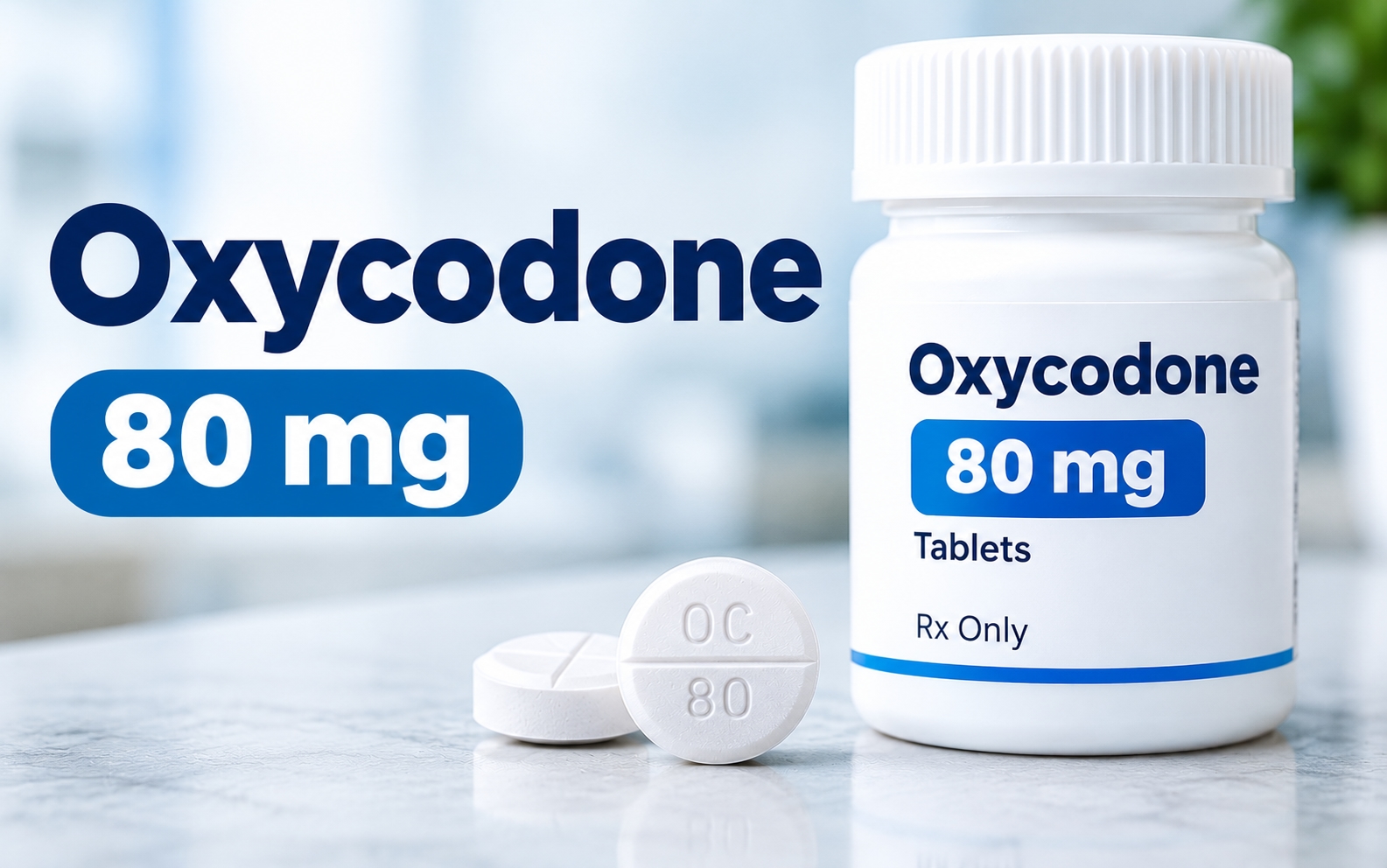
Oxycodone 80 mg is a high-strength prescription opioid used in certain circumstances to manage severe pain when other treatment options are inadequate. Because oxycodone can cause serious respiratory depression, dependence, misuse, overdose, and potentially fatal complications, it should only be used under the supervision of a qualified healthcare professional. Patients searching for information about how to Buy Oxycodone Online should understand that prescription opioids should be obtained only through a legitimate, licensed pharmacy with a valid prescription. Unverified websites may sell counterfeit or incorrectly manufactured medicines, creating significant health risks. A healthcare professional can determine whether oxycodone is appropriate and explain the correct formulation, dose, duration, and monitoring requirements.
What Is Oxycodone 80 mg?
Oxycodone is an opioid analgesic that acts on opioid receptors in the central nervous system to reduce the perception of pain. An oxycodone 80 mg tablet represents a high strength and should never be taken unless specifically prescribed for the individual patient. The amount prescribed depends on several factors, including the severity of pain, previous opioid exposure, other medications, medical conditions, and the patient's response to treatment.
Patients should never increase their dose independently or use medication prescribed to someone else.
Understanding Different Oxycodone Formulations
Oxycodone is available in immediate-release and extended-release formulations. The term oxycodone 80 mg ER generally refers to an extended-release formulation designed to release medication gradually over time. Extended-release products must be used exactly as directed because altering, crushing, chewing, or otherwise manipulating certain formulations can cause the medication to be released too quickly.
Patients should rely on the prescription label and official packaging rather than color or appearance when identifying medication.
What About Oxycodone Pill Colors?
People sometimes search for descriptions such as oxycodone 80 mg blue or green oxycodone 80 mg when attempting to identify tablets. However, color alone is not a reliable way to determine whether a tablet contains oxycodone or whether it is genuine. Tablet appearance can vary between manufacturers, formulations, and markets.
Never take an unidentified tablet based solely on its color, shape, or markings. If there is any doubt about a medication, ask a pharmacist to verify it.
Common Side Effects
Oxycodone may cause drowsiness, dizziness, nausea, vomiting, constipation, and slowed reaction time. These effects can become more pronounced when oxycodone is combined with alcohol, sedatives, sleeping medicines, or other substances that depress the central nervous system.
Patients should avoid driving or performing hazardous activities until they know how the medicine affects them.
Serious Safety Risks
One of the most serious risks associated with oxycodone is respiratory depression, in which breathing becomes dangerously slow or shallow. Extreme sleepiness, difficulty waking, slow breathing, unusual snoring, or blue or gray-colored lips or skin can indicate an emergency.
Naloxone may reverse an opioid overdose when administered promptly. Patients and household members should discuss overdose prevention and naloxone availability with a healthcare professional where appropriate.
Safe Storage and Disposal
Store oxycodone securely and never share it with another person. Because opioids can be misused, keeping medication in a secure location can reduce accidental or intentional exposure. Unused medication should be disposed of according to local pharmacy or medication-take-back guidance.
Conclusion
Oxycodone 80 mg is a high-strength prescription opioid requiring careful medical supervision. Understanding formulations such as oxycodone 80 mg ER, recognizing that tablet colors are not reliable identifiers, following the prescribed dose, and knowing the signs of overdose are important parts of responsible use. Patients should obtain prescription opioids only through legitimate healthcare and pharmacy channels and should consult a healthcare professional with any questions about their medication.