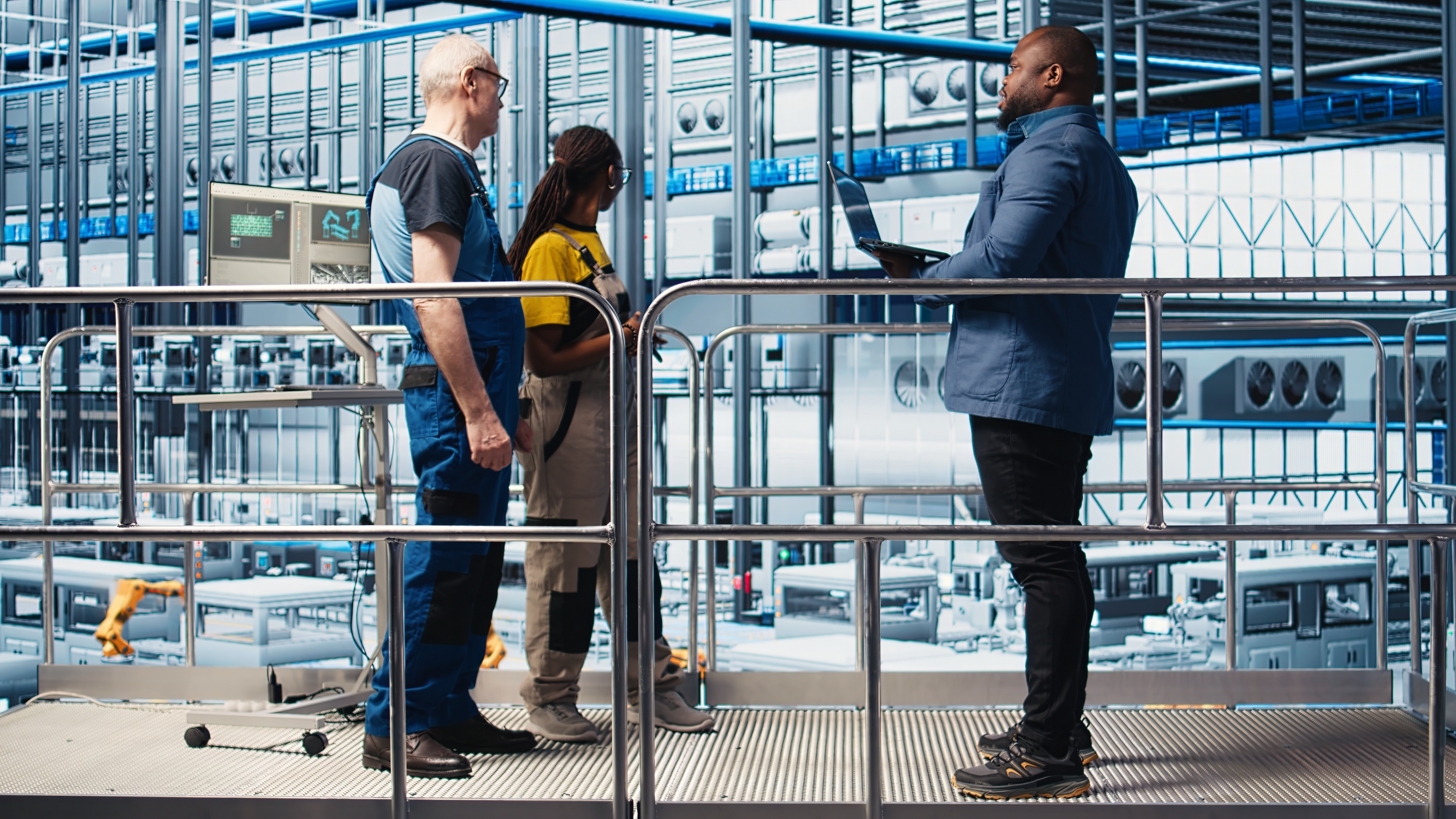
Cooling facilities depend on a combination of major equipment, distribution infrastructure, controls and supporting utilities. Each component has a different service life, maintenance requirement and replacement cost. A properly designed district cooling plant must therefore be managed as a long-term technical asset rather than as a collection of independent machines. The performance of a connected district cooling system also depends on how operators select, operate, maintain, and replace equipment over time.
Lifecycle management provides a structured way to make these decisions. It considers the full period from planning and procurement through commissioning, operation, refurbishment and eventual replacement. This approach helps operators balance reliability, efficiency, financial responsibility and environmental performance.
Understanding the Main Plant Components
Cooling equipment
The primary cooling equipment removes heat from circulating water. Select chillers and associated systems based on the expected demand profile, required temperatures, local climate, and operating conditions.
Assess equipment specifications using comparable performance data. Rated efficiency alone may not describe how a machine will perform at partial load or under the conditions expected at a particular facility.
The selection process should also consider maintainability, parts availability, technical support and compatibility with the proposed plant configuration.
Pumps and heat-transfer equipment
Pumps circulate water through the plant and distribution network. Their energy consumption depends on flow requirements, pressure losses, equipment selection and control strategy.
Heat exchangers transfer thermal energy between circuits where required. Their performance can deteriorate due to fouling, poor water quality, or unsuitable operating conditions.
These components may be less prominent than chillers, but their condition can significantly affect total system performance. Maintenance planning should address them as essential parts of the overall installation.
Electrical and control systems
Electrical distribution, switchgear, motors, sensors, and control systems support safe, coordinated operation. Failures in these components can interrupt service even when the main cooling equipment remains mechanically sound.
Lifecycle planning should include inspection, testing, software support, sensor calibration, and replacement component availability. Control systems may also require upgrades as equipment changes or security requirements evolve.
Planning Procurement and Installation
Defining the technical requirements
Procurement should begin with a clear statement of the required operating conditions, expected loads, reliability objectives and environmental considerations. This helps suppliers provide comparable proposals and reduces the risk of selecting equipment that does not fit the actual application.
Requirements should cover installation constraints, noise limits, maintenance access, electrical demand, water requirements and compatibility with existing systems where applicable.
Engineering teams should evaluate the complete proposal rather than choosing solely on initial price. Differences in efficiency, service support and replacement requirements can affect long-term value.
Evaluating suppliers and support
Suppliers should be assessed on technical compliance, documented performance, warranty terms, maintenance support, and spare-part availability. The organisation should also understand the expected lead time for critical components.
Equipment documentation needs to be complete and accessible to the teams responsible for operation and maintenance. Missing drawings, unclear control sequences or incomplete commissioning records can create avoidable difficulties later.
Commissioning and handover
Commissioning verifies that equipment is installed correctly and operates within specified limits. Testing may cover temperatures, flows, pressure, electrical operation, alarms, controls and safety functions.
The handover process should include operating manuals, maintenance schedules, equipment inventories, and commissioning results. Staff training is also important because operators must understand both normal operation and abnormal conditions.
Maintaining Assets Throughout Their Service Life
Preventive and condition-based maintenance
Preventive maintenance follows planned intervals, while condition-based maintenance uses inspection findings and operational measurements to determine when intervention may be required.
Both approaches can be useful. Monitoring alone should not replace mandatory inspections and safety requirements, but condition data can help operators identify problems that need attention before the next scheduled service.
Maintenance decisions should reflect equipment criticality, operating history, manufacturer guidance and the consequences of failure.
Monitoring deterioration
Performance indicators can reveal gradual equipment deterioration. Rising energy use, abnormal vibration, changing temperatures, increased pressure losses, and repeated alarms may indicate the need for investigation.
Operators should compare measurements with a suitable baseline and account for changes in demand and operating conditions. A deviation does not necessarily mean that a component has failed, so diagnosis should precede replacement.
Reliable records help determine whether the problem recurs and whether previous corrective work was effective.
Managing corrosion and water quality
Water circuits require appropriate treatment and monitoring to limit corrosion, scale and fouling. The specific treatment programme depends on system design, water quality and operating conditions.
Poor water management can reduce heat-transfer performance and damage equipment. Operators should follow suitable technical guidance and applicable health and environmental requirements.
Inspection records should document relevant measurements, treatment activities and corrective actions.
Deciding When to Refurbish or Replace Equipment
Assessing condition and remaining life
Age alone is not a sufficient reason to replace equipment. Operators should consider physical condition, reliability, energy performance, maintenance costs, parts availability and the consequences of failure.
A component that is approaching the end of its expected service life may remain suitable if its condition is acceptable and support remains available. Conversely, a relatively recent component may require replacement if it cannot meet operational requirements safely or reliably.
Document and review condition assessments as new evidence becomes available.
Comparing refurbishment with replacement
Refurbishment may extend equipment's useful life and reduce the need for immediate capital expenditure. Replacement may be preferable when repair costs are high, efficiency is poor or the existing design no longer meets requirements.
The comparison should include expected future maintenance, energy use, reliability and installation costs. It should also consider whether the replacement can be integrated into the existing plant without extensive modifications.
Lifecycle cost analysis provides a more complete basis for decision-making than comparing purchase prices alone.
Planning replacements in stages
Replacing multiple components at the same time may create a high capital requirement and increase disruption. A staged programme can spread investment across several years, provided the sequence is technically sound.
Prioritise equipment with unacceptable safety risks, high failure consequences, or significant performance problems. Replacement plans should also consider lead times and the availability of temporary operating arrangements.
Financial and Environmental Considerations
Understanding total ownership cost
The total cost of an asset includes procurement, installation, energy, water (where applicable), maintenance, repairs, financing, and eventual disposal. These costs occur at different times and may be affected by changes in prices and operating conditions.
Financial assessments should state their assumptions clearly. Discount rates, expected equipment life, maintenance costs, and demand forecasts can influence comparisons between alternatives.
Sensitivity analysis can show how the decision changes if energy prices, utilisation or replacement costs differ from the original forecast.
Evaluating energy performance
Equipment upgrades may reduce energy consumption, but the outcome depends on the complete operating arrangement. A new chiller may provide limited benefit if pumps, heat exchangers or controls remain inefficient.
Evaluate a district cooling plant using consistent measures of electricity consumption and cooling output. This allows operators to assess whether upgrades improve actual performance rather than relying only on manufacturer ratings.
Managing equipment disposal
At the end of its service life, equipment may contain metals, electrical components, oils or refrigerants that require appropriate handling. Disposal and recovery procedures should comply with applicable regulations and environmental requirements.
Where feasible, materials can be directed towards authorised recovery or recycling processes. Qualified personnel should recover and manage refrigerants rather than release them deliberately.
Environmental planning should begin before replacement work starts so that contractors understand the required procedures.
Digital Asset Registers and Planning
Maintaining accurate records
An asset register should identify major equipment, its location, installation date, specifications, maintenance history and replacement requirements. It can also record critical spare parts and relevant warranty information.
Accurate records help operators plan maintenance and identify components approaching important service milestones. They also reduce dependence on informal knowledge held by individual staff members.
Update records after repairs, modifications, and replacements.
Developing a replacement roadmap
A replacement roadmap ranks future investments by condition, operational risk, cost, and expected benefit. It should distinguish urgent work from planned upgrades and identify dependencies between components.
Review the roadmap regularly because equipment condition and operating requirements can change. Coordination with budget planning helps ensure that major replacements are not deferred indefinitely.
Final Thoughts
Lifecycle management helps cooling operators make informed decisions about procurement, maintenance, refurbishment and replacement. It encourages a broader assessment of performance, recognising that an installation's cost and reliability depend on its full operating life.
A well-managed district cooling system requires accurate records, appropriate maintenance, reliable controls and realistic investment planning. The same discipline supports effective management of a district cooling plant, where decisions about individual components can influence the performance of the wider network.
By combining condition assessments with lifecycle cost analysis and measurable energy indicators, operators can prioritise investments more effectively and maintain infrastructure that remains reliable, serviceable and fit for purpose.