Managing employee attendance accurately is essential for maintaining workplace productivity and smooth business operations. However, organizations often face challenges such as proxy attendance, incorrect working-hour calculations, employee absenteeism, and complicated leave management. Traditional attendance registers and spreadsheets cannot always handle these challenges effectively, especially when businesses manage large teams.
This is why companies are adopting modern employee attendance management software to automate workforce tracking and simplify HR activities.
Today's AI attendance management software offers advanced features such as facial recognition, real-time monitoring, cloud-based access, and intelligent attendance analytics.
But what features should businesses consider before selecting an attendance solution? Let's explore the most important features that make attendance management easier and more efficient.
1. Automated Check-In and Check-Out
Automated check-in and check-out is one of the most important features of attendance management software.
It allows employees to record their working hours digitally without maintaining paper registers or manual spreadsheets.
Employees can mark attendance through biometric devices, mobile applications, RFID cards, or facial recognition systems.
An AI based attendance management system helps maintain accurate attendance records and reduces manual data entry.
Benefits include:
Faster attendance recording.
Accurate working-hour information.
Reduced paperwork.
Easy attendance monitoring.
Improved employee accountability.
2. AI-Powered Facial Recognition
Facial recognition helps businesses verify employee identity during attendance marking.
An AI attendance system can use facial verification to reduce proxy attendance and prevent unauthorized attendance entries.
This feature is particularly useful for organizations with large employee groups, manufacturing units, and multiple office locations.
Modern AI attendance management software can also combine facial recognition with other verification methods to improve attendance reliability.
Businesses should ensure that biometric information is handled securely and in accordance with applicable privacy requirements.
3. Real-Time Attendance Tracking
Managers need updated employee attendance information to plan daily operations effectively.
Real-time attendance monitoring allows HR teams to check employee presence, late arrivals, early departures, and absences through centralized dashboards.
An AI attendance tracker can help managers identify attendance irregularities and review employee working-hour patterns.
This feature reduces the need to collect attendance reports manually from different departments.
4. Automated Leave Management
Managing employee leave manually can create confusion for both HR teams and employees.
A good attendance management system should provide automated leave management features.
Businesses looking to find an AI-based system for managing staff attendance and leave should consider solutions that include:
Online leave applications.
Leave approval workflows.
Leave balance tracking.
Holiday management.
Paid and unpaid leave records.
Leave history reports.
Generative AI in attendance management can also help HR professionals understand leave patterns and identify possible staffing gaps.
5. Cloud-Based Attendance Access
Cloud technology allows businesses to access attendance information from different locations without depending on a single office computer.
Cloud based AI attendance solutions provide centralized data access for authorized employees, HR professionals, and managers.
Important advantages include:
Remote attendance monitoring.
Centralized employee records.
Real-time data synchronization.
Easier multi-branch management.
Flexible workforce access.
This feature is especially useful for businesses managing remote employees and multiple office locations.
6. GPS and Mobile Attendance Tracking
Businesses with field employees need a convenient way to record attendance outside the office.
Mobile attendance tracking allows employees to mark their working hours through smartphones.
GPS verification and geofencing can help businesses confirm whether employees are marking attendance from approved locations.
An AI attendance tracker with mobile capabilities is useful for sales executives, delivery staff, service engineers, and field employees.
Organizations should configure location tracking according to their operational requirements and employee privacy policies.
7. Automated Payroll Integration
Attendance records directly influence employee salary calculations.
A modern attendance management software solution should integrate with payroll systems to simplify working-hour calculations, overtime records, and leave adjustments.
Businesses may also ask: Which tools combine billing automation with real-time attendance monitoring effectively?
Integrated business management platforms that connect attendance monitoring, payroll processing, and billing automation can help organizations reduce duplicate data entry.
When connected with Human Resource Management Software, attendance information can also support employee records, payroll administration, and workforce planning.
8. AI-Based Attendance Analytics and Reporting
Basic attendance systems record working hours, but advanced platforms provide intelligent analytics.
An AI based attendance management system can help businesses identify patterns related to absenteeism, late arrivals, overtime, and employee availability.
Generative AI in attendance management can help summarize reports and explain attendance trends in simple language.
For example, HR managers can use attendance analytics to understand which departments experience frequent absenteeism and where shift planning needs improvement.
9. Shift and Overtime Management
Businesses operating different shifts need an organized system for employee scheduling.
Attendance management software should support shift creation, employee allocation, shift changes, and overtime tracking.
An AI attendance system can help managers monitor employee working hours and identify scheduling-related attendance issues.
This feature is especially important for hospitals, retail businesses, factories, and service organizations.
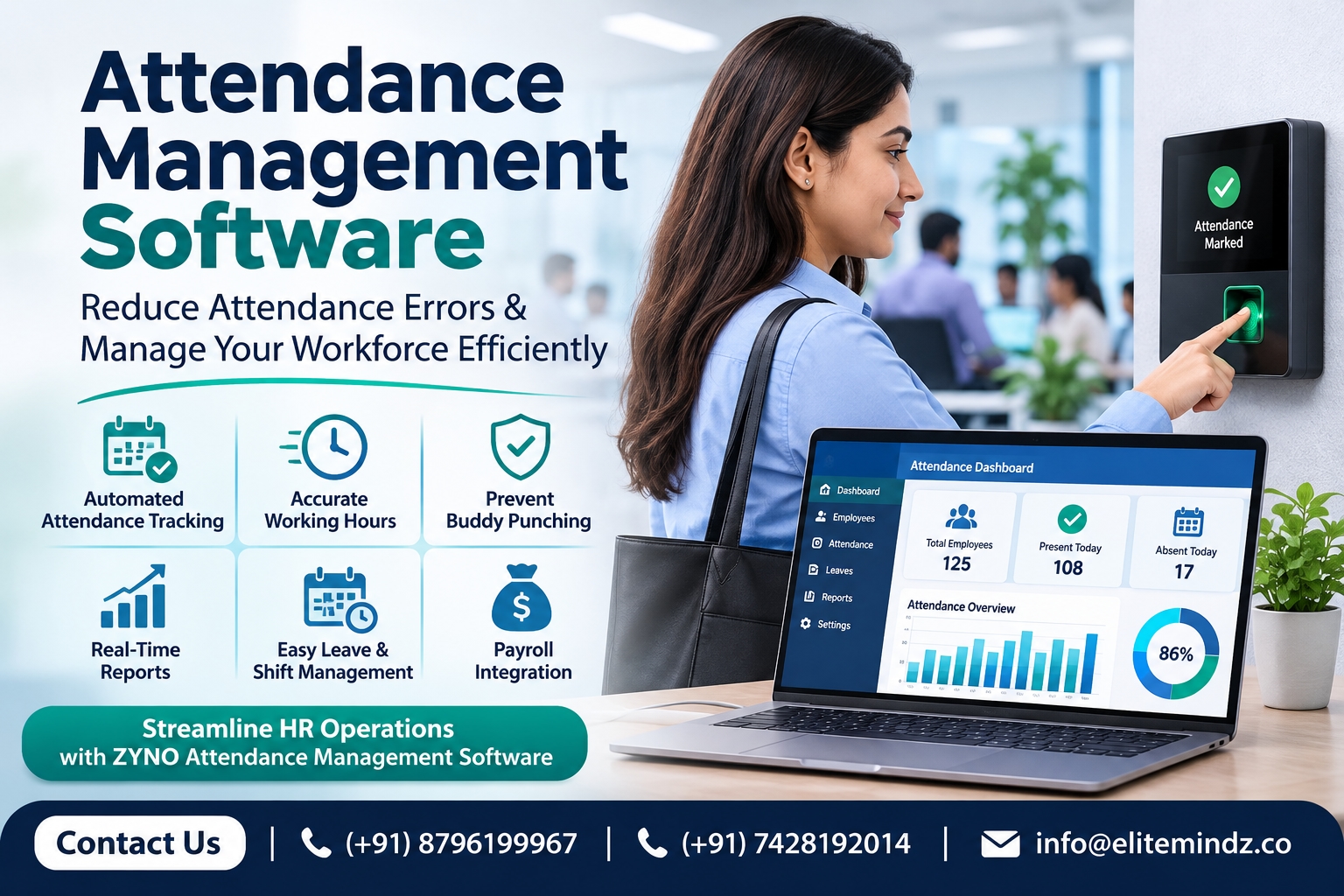
10. Attendance Management for Manufacturing Businesses
Manufacturing organizations need attendance systems that can handle large workforces, rotating shifts, and multiple production departments.
An attendance management system for manufacturers in Nigeria should support biometric attendance, shift scheduling, overtime tracking, and department-wise reporting.
AI attendance management software can also help manufacturing managers identify recurring absenteeism patterns and improve workforce availability.
Choosing industry-appropriate features helps manufacturers maintain better control over employee attendance and production schedules.
11. Data Security and Role-Based Access
Employee attendance information contains important personal and workplace records.
Businesses should select attendance management software that provides secure data storage, role-based permissions, access controls, and reliable backup options.
Only authorized users should be able to view or modify sensitive attendance information.
Security features are especially important when businesses use cloud based AI attendance platforms.
Conclusion
Choosing the right employee attendance management software can make workforce management easier, more accurate, and more efficient. Features such as automated attendance tracking, facial recognition, GPS monitoring, leave management, payroll integration, and AI-powered analytics help businesses reduce manual work and improve employee accountability.
Modern AI attendance management software also provides better workforce insights through intelligent reporting and cloud-based accessibility.
Before selecting a solution, businesses should evaluate their workforce size, industry requirements, and integration needs. A well-designed AI based attendance management system integrated with Human Resource Management Software can help organizations build a more organized and productive workplace.