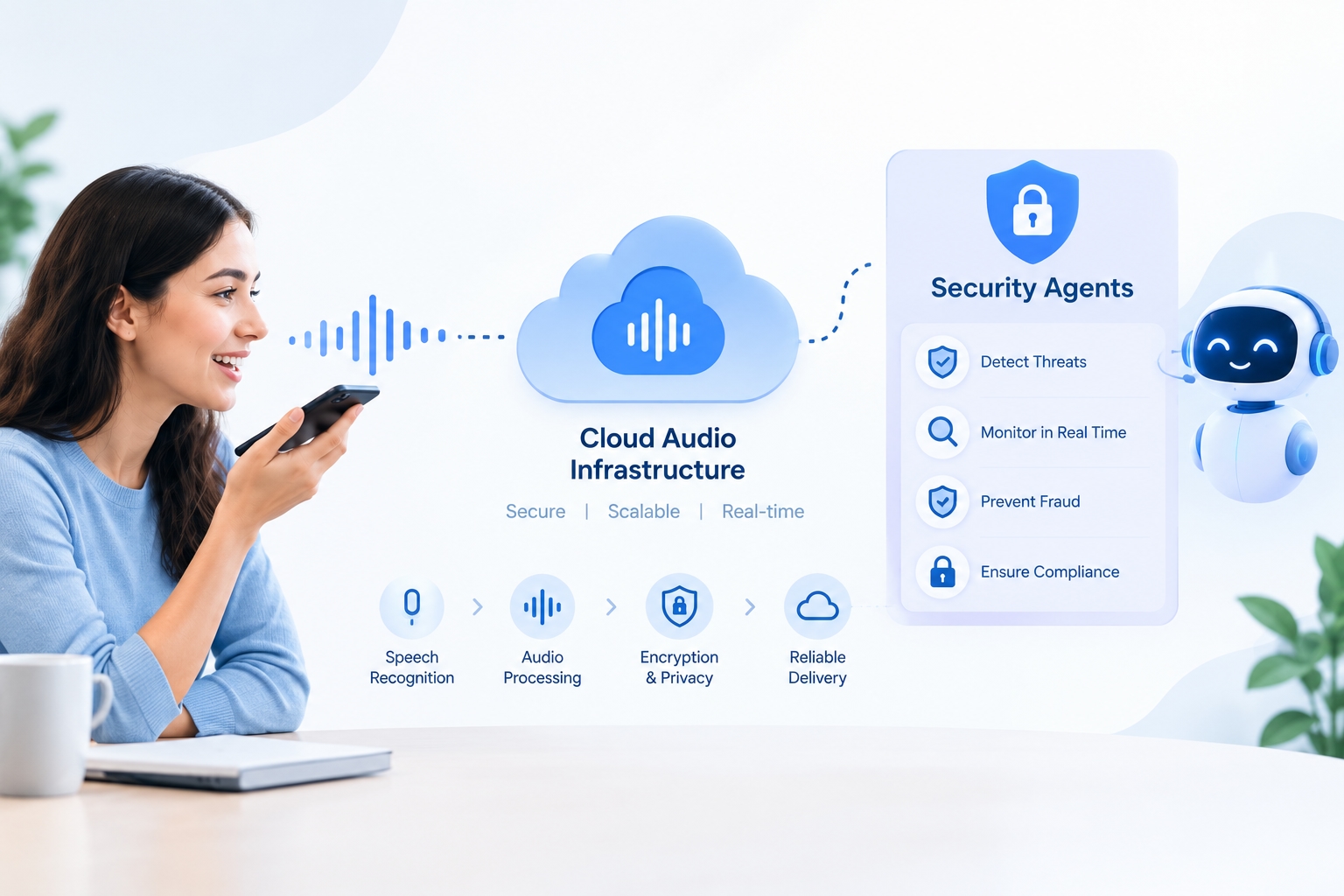
Every time someone speaks a command to a smart speaker, joins a call center queue, or hears an announcement over a hospital paging system, there is a decent chance none of the real work is happening inside the device in front of them. It is happening somewhere on a remote server, milliseconds away, processing the request and sending instructions back. That architecture is called cloud-connected audio, and it has quietly become the backbone of nearly every modern voice system.
The shift matters because it decouples what a device can do from the hardware sitting inside it. A manufacturer can push a software update overnight and every speaker in the field suddenly supports a new language or a better noise cancellation model, without anyone touching the physical unit. That flexibility is powerful, and it also creates a new category of responsibility around what gets said, stored, and processed once audio leaves a device and enters the cloud.
Companies building voice products, whether that is a consumer device or an enterprise communications platform, increasingly bring in a specialized AI Development Company in Los Angeles specifically because this stack touches so many disciplines at once: real-time audio processing, cloud infrastructure, natural language understanding, and security, all layered on top of each other.
How Cloud Connected Audio Actually Works
Compare an old transistor radio to a modern smart speaker. The radio does everything locally, receiving a signal and playing it, full stop. A cloud-connected device is really just an endpoint. It captures sound or a spoken command, sends it to the cloud, and waits for instructions back. The device itself does not need to be particularly smart, because the intelligence lives in the cloud layer behind it. We walk through this architecture end to end, including the interface, processing, and delivery layers, in our full explainer on Cloud Connected Audio.
That same cloud layer is where the interesting capabilities get added over time. Natural-sounding text-to-speech, real-time translation, and voice cloning for personalized alerts all sit on top of this foundation, and none of them would be practical to run locally on a low-power consumer device.
Where the System Stops Just Transporting Sound and Starts Making Decisions
Take a corporate call center already running on a cloud audio pipeline. Add an agent that listens in real time, flags compliance risks, and routes the call to the right specialist, and the audio system stops being a simple pipe for sound and starts making active decisions. The same pattern shows up in infrastructure monitoring. A system watching the health of a cloud audio pipeline, tracking latency spikes, packet loss, and device dropouts across thousands of endpoints, can reroute traffic before users ever notice a glitch.
And a security-focused layer can screen voice-based communications for phishing attempts or policy violations before a broadcast goes out to an entire organization, the same underlying pattern covered in our breakdown of the Messaging Security Agent. Voice channels are not immune to the same social engineering tactics that plague chat and email. If anything, a convincing voice message can be harder for a person to second-guess in the moment than a written one.
Why This Stack Needs More Than One Team's Expertise
Low latency audio processing that does not introduce noticeable lag in a live conversation
Cloud infrastructure that can absorb traffic spikes across thousands of simultaneous endpoints
Natural language understanding accurate enough to trigger the right action from a spoken command
Security monitoring layered on top, watching for anomalies without slowing the system down
Clear data retention and access policies for every recorded interaction
Very few in-house teams have deep experience across all five of these areas at once, which is a large part of why voice AI projects often bring in outside specialists rather than treating it as a standard feature build.
The Governance Layer People Forget Until It Is Too Late
None of this works well without solid thinking about accountability. Encryption in transit and at rest is table stakes now, not a differentiator. The harder questions are the same ones that apply to any autonomous system: who reviews what the security agent flags, how long is recorded audio retained, and what happens when the system makes a wrong call during a sensitive conversation. AI transformation being a governance problem more than a purely technical one is not a side note here. Cloud audio is simply one of the clearer places to see that principle play out in practice.
What Businesses Should Scope Before Building a Voice AI Feature
Define exactly which endpoints, apps, or hardware need to connect to the cloud layer
Decide upfront how long audio and transcripts will be retained, and who can access them
Set clear escalation rules for anything a security or monitoring agent flags
Test latency under realistic load, not just in a quiet development environment
Plan for multi-language support early if your user base spans more than one region
Real World Deployment Patterns Worth Knowing
Most organizations do not build this entire stack at once. A hospitality group might start with a simple cloud-connected announcement system across its properties, then layer in a monitoring agent once it has enough scale to justify the investment, and only add a full security screening layer once voice channels start carrying sensitive information like guest payment details or room access codes. That staged rollout is usually the right instinct, rather than trying to launch every capability simultaneously.
What matters is designing the initial architecture so those later layers can be added without a rebuild. Choosing cloud infrastructure and data formats that anticipate future monitoring and security needs, even before those features are scoped, saves a significant amount of rework later compared to bolting security onto a system that was never designed with it in mind.
Frequently Asked Questions
What is cloud connected audio?
It is an audio system where the processing, storage, and decision-making happen on remote cloud servers rather than inside the physical device, which functions mainly as an endpoint.
Is cloud-connected audio less secure than local processing?
Not inherently, but it does introduce a different set of risks around data in transit and access control, which need to be addressed with proper encryption and governance rather than assumed away.
Can a messaging security agent monitor voice conversations, not just text?
Yes, the same underlying pattern of real-time monitoring and flagging applies to voice channels, though the technical implementation differs from text-based messaging.
What industries rely most heavily on cloud-connected audio?
Consumer smart devices, enterprise call centers, healthcare paging systems, and hospitality or retail environments running centralized audio across many locations are among the heaviest users.
Voice interfaces are becoming a default expectation rather than a novelty, and the infrastructure behind them, cloud audio pipelines paired with real-time security monitoring, is what determines whether that experience feels seamless or becomes a liability. Getting both pieces right from the start is far cheaper than retrofitting security onto a system that was only ever designed to transport sound.