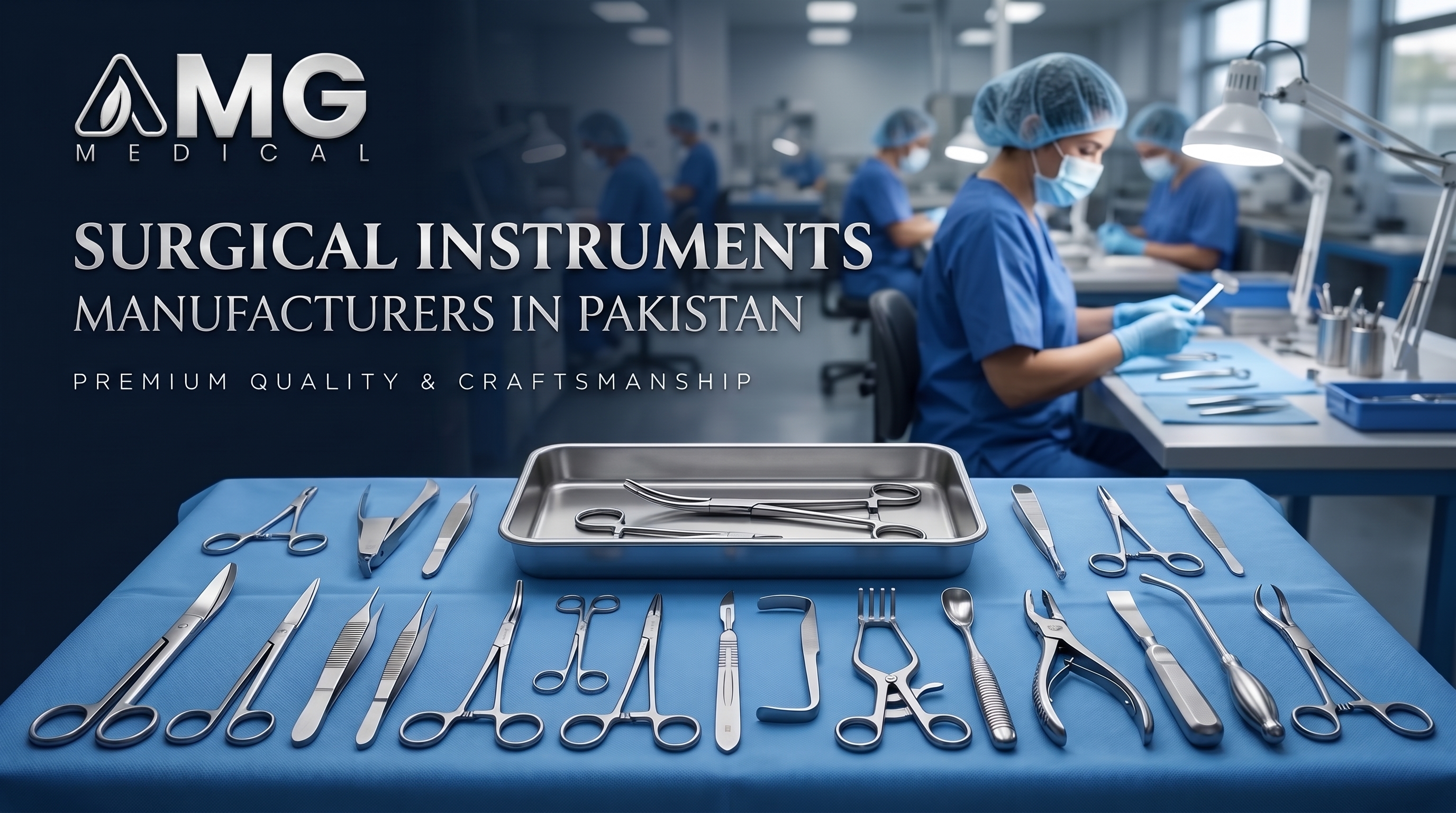
Pakistan has a well-known medical instrument industry that serves hospitals, clinics, laboratories, and healthcare professionals in many parts of the world. The country is especially known for producing surgical tools used in different medical procedures. These products support doctors and surgical teams by helping them perform tasks with control and accuracy.
Surgical instruments are used for cutting, holding, gripping, clamping, and handling tissue during medical procedures. They come in different shapes, sizes, and designs according to their purpose. The quality of these tools is important because they are used directly in patient care.
Surgical instruments manufacturers in Pakistan play an important role in producing tools for local and international markets. Their work includes product design, material selection, manufacturing, finishing, inspection, and packaging. Reliable manufacturers focus on quality and follow suitable production practices to meet the needs of healthcare facilities.
Understanding the Surgical Instrument Industry in Pakistan
Pakistan has developed a strong position in the production of medical and surgical instruments. The industry includes manufacturers that produce general surgical tools as well as instruments for specialized medical fields.
Sialkot is one of the country's best-known centers for surgical instrument production. Many businesses in this area have experience in metalwork, instrument making, and export services. Their products are supplied to hospitals, medical distributors, and healthcare businesses in different countries.
The industry continues to develop through improved production methods, better materials, and attention to product quality. This helps manufacturers meet the changing needs of modern healthcare.
Types of Surgical Instruments Made in Pakistan
Manufacturers produce many types of tools for different medical procedures. General instruments include scissors, forceps, clamps, needle holders, retractors, and scalpels. Each tool is designed to perform a specific task during surgery.
Scissors are used for cutting tissue, sutures, and other materials. Forceps help surgeons hold or handle tissue, while clamps are used to secure blood vessels or other structures when required. Needle holders provide a firm grip during stitching, and retractors help keep the surgical area open.
Some manufacturers also produce specialized instruments for dental, orthopedic, gynecology, ENT, and other medical fields. The design and features of each instrument depend on the procedure for which it is intended.
Importance of Quality Materials
The materials used in medical tool production have a major effect on product quality. Stainless steel is widely used because it offers strength, resistance to corrosion, and suitability for repeated cleaning when properly cared for.
The selected material should match the intended use of the tool. Instruments need to maintain their shape and function during normal handling and approved cleaning and sterilization processes.
Manufacturers should pay attention to the quality of raw materials before production begins. Proper material selection can help improve durability and support reliable performance.
Modern Manufacturing Processes
The production of medical tools involves several steps. It may begin with selecting suitable materials and shaping the metal according to the required design. Skilled workers then carry out processes such as cutting, forming, grinding, and polishing.
After shaping, moving parts and joints may be assembled and adjusted. The finished product is inspected to check its size, surface, alignment, and function. Any instrument that does not meet the required standards should be corrected or rejected.
Modern tools and improved production methods can help manufacturers achieve more consistent results. However, skilled workers and careful quality checks remain important throughout the process.
Importance of Skilled Workers
Experienced workers play a major role in surgical instrument production. They understand how different tools are made and how small design details can affect their use.
A slight problem with the alignment, grip, or joint of an instrument can affect its performance. Skilled workers help reduce these problems by paying attention to detail during shaping, assembly, and finishing.
Training is also important because manufacturing methods and customer requirements can change over time. Businesses that support worker development can improve their production skills and maintain consistent product quality.
Custom Surgical Instrument Suppliers
Healthcare facilities and distributors may need instruments with specific sizes, shapes, or features. In such cases, custom surgical instrument suppliers can help provide products based on particular requirements.
Custom production may involve changes to an existing design or the development of a tool for a specialized procedure. Before production begins, the supplier and customer should discuss the intended use, material, measurements, and required features.
Clear communication helps reduce mistakes and ensures that the finished product matches the requested design. Custom instruments should also go through suitable inspection and testing before they are supplied for medical use.
Quality Control and Inspection
Quality control is an important part of medical instrument manufacturing. Each product should be checked to make sure it is suitable for its intended purpose.
Inspection may include checking the instrument's shape, size, surface finish, sharpness, grip, and moving parts. Scissors should open and close smoothly, while forceps should provide a suitable grip. Clamps and needle holders should also be checked for proper movement and locking.
Manufacturers should keep suitable quality records and follow relevant requirements for the markets they serve. These steps can help build trust with hospitals, distributors, and other buyers.
Supporting Hospitals and Healthcare Facilities
Surgical tools are essential for many hospital departments. Operating rooms need different instruments for cutting, holding, clamping, stitching, and exposing the surgical area.
Reliable products help surgical teams prepare for procedures and carry out their work with suitable tools. Hospitals also need instruments that can be cleaned, inspected, and sterilized according to approved procedures.
Manufacturers can support healthcare facilities by offering a range of products and providing clear information about their materials, care, and intended use.
Export Opportunities and Global Demand
Pakistan's surgical instrument industry serves both local and international markets. Manufacturers and exporters supply products to medical distributors, hospitals, clinics, and other healthcare businesses.
International buyers often consider product quality, pricing, delivery times, communication, and supply capacity before choosing a manufacturer. Businesses that maintain clear product information and consistent quality can build stronger relationships with customers.
Meeting the requirements of different markets is also important. Manufacturers should understand the rules that apply to their products and provide the required documents when supplying international buyers.
Choosing the Right Manufacturer
Selecting a suitable manufacturer requires careful research. Buyers should consider the company's experience, product range, manufacturing process, quality checks, and ability to meet delivery needs.
It is also useful to ask about materials, product specifications, packaging, and after-sales support. Samples can help buyers review the finish and function of products before placing larger orders.
A reliable manufacturer should communicate clearly and provide accurate information about its products. Buyers should also check whether the company can meet the relevant quality and regulatory requirements for their market.
Future of Surgical Instrument Manufacturing in Pakistan
The medical instrument industry continues to change as healthcare needs and technology develop. Manufacturers are working to improve product designs, production methods, and quality control.
Better machinery can support more accurate shaping and finishing, while improved inspection methods can help identify product faults. There is also growing demand for specialized tools designed for different areas of medicine.
Continued investment in worker training, product development, and quality systems can help the industry remain competitive. These improvements can also create new opportunities in local and international markets.
Conclusion
Surgical instruments manufacturers in Pakistan support the healthcare industry by producing tools for general and specialized medical procedures. Their products help surgical teams perform important tasks, while skilled workers and careful manufacturing processes contribute to product quality.
Material selection, modern production methods, inspection, and customer support are all important parts of successful manufacturing. Custom surgical instrument suppliers can also meet specific needs by providing products based on customer requirements.
By choosing reliable manufacturers and focusing on quality, healthcare facilities and medical distributors can find suitable instruments for their work.
More Info: Amg Medical