India throws away millions of tonnes of plastic every year, and only a fraction of it gets processed into something usable again. That gap between what's discarded and what's actually recycled is exactly where the opportunity sits. For anyone weighing whether to enter this space, here's a practical walkthrough of what building a plastic recycling plant actually involves — from paperwork to production floor.
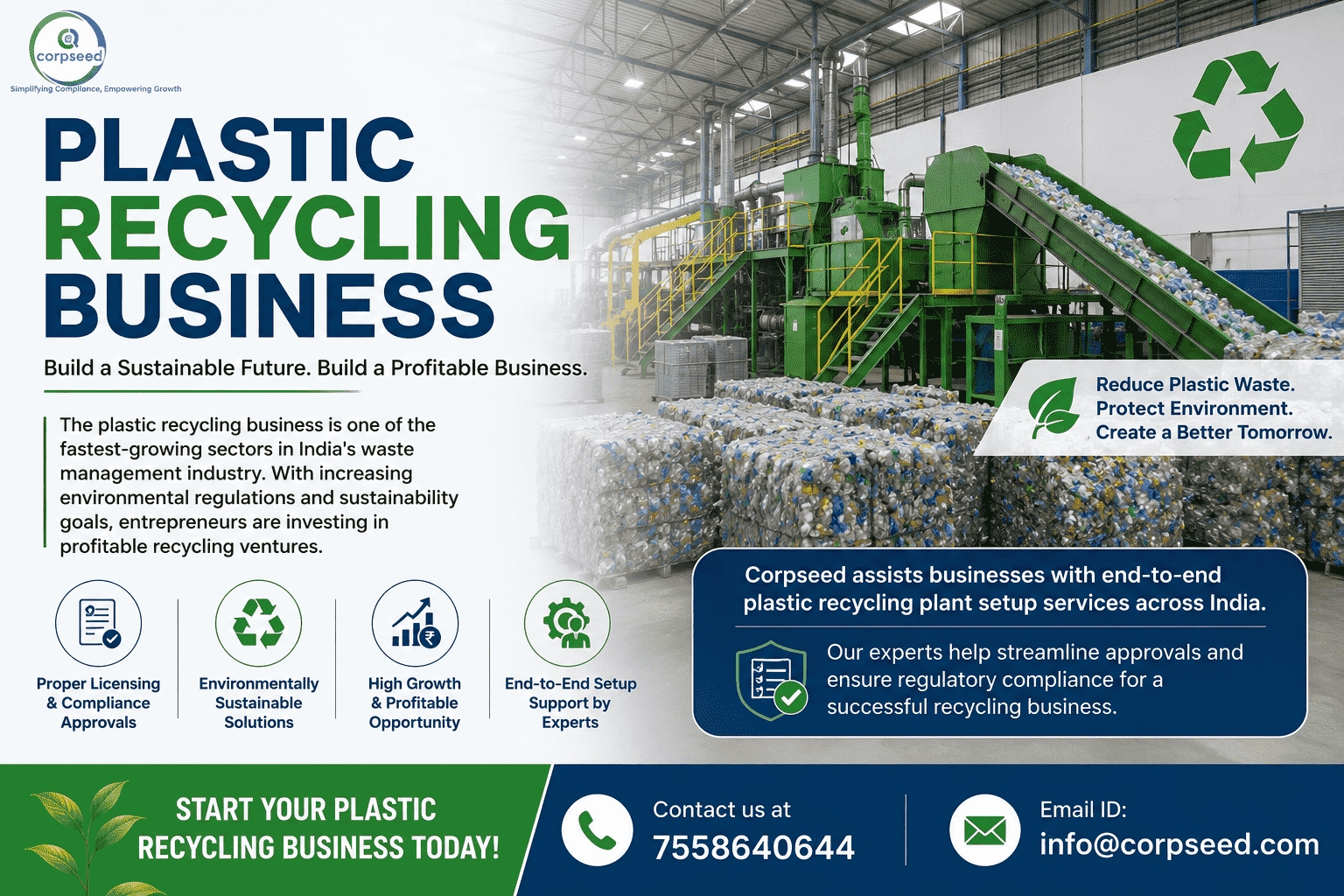
What Does a Plastic Recycling Plant Actually Do?
At its core, a recycling plant is a conversion business. It takes in discarded plastic — bottles, packaging film, industrial scrap, household waste — and turns it into clean, usable raw material: granules, pellets, or flakes that manufacturers can melt down and remold into new products.
Waste goes in one end. A sellable industrial commodity comes out the other. That simple loop is the whole business, and it's why this industry sits right at the crossroads of environmental necessity and manufacturing economics.
Why This Business Makes Sense in 2026
A few things are lining up in favor of new entrants right now:
Rising raw material costs for virgin plastic are pushing more manufacturers toward recycled inputs, especially in packaging and textiles.
Steady, non-seasonal demand. Recycled HDPE, PP, and PET granules are used across construction, automotive parts, textiles, and packaging — industries that don't slow down much.
Low barrier to entry compared to other manufacturing. You don't need a massive facility on day one. A pilot-scale unit is enough to test the model before you commit serious capital.
Improving collection infrastructure. Waste aggregation networks, scrap dealer chains, and municipal collection systems have matured significantly, making feedstock easier to source than it was five years ago.
This is not a fast-money business. It's a operations-heavy, compliance-driven one — and the plants that survive long-term are the ones that treat licensing and quality control as core parts of the business, not paperwork to rush through.
Step-by-Step: Getting Your Plant Off the Ground
1. Set Up the Business Structure
Pick a legal structure that fits your funding and liability needs — Private Limited Company, LLP, or a proprietorship for smaller setups. On top of that, you'll typically need:
PAN and GST registration
A trade license from your local municipal body
Factory registration, which depends on your state and workforce size
MSME/Udyam registration — not mandatory, but it opens doors to subsidies and easier institutional loans
2. Get Your Environmental Clearances
This is where most first-time operators lose momentum. You'll need:
Consent to Establish (CTE) from your State Pollution Control Board — this has to be secured before construction starts
Consent to Operate (CTO) — obtained once the facility is physically built, but before you start commercial production
Any state-specific plastic processing registrations required to legally handle and process plastic waste
Both CTE and CTO are usually valid for five years and need renewal after that. Turnaround time generally runs 30–60 days, and the single biggest cause of delay is an incomplete or poorly documented application — not the review process itself.
3. Build the Physical Facility
You'll need space allocated for four distinct zones: incoming waste storage, sorting and washing, processing, and finished-goods storage. Reliable power and water supply, along with proper drainage, are non-negotiable.
Core machinery typically includes:
Sorting conveyors
Shredders
Granulators
Washing and drying lines
Extruders or pelletizers
Don't cut corners on equipment quality here. Underpowered machines don't fail immediately — they fail slowly, through downtime and inconsistent pellet quality, both of which eat directly into your resale margins later.
4. Lock Down a Reliable Feedstock Supply
Your output is only as good as your input. Build relationships early with scrap dealers, local waste aggregators, and Urban Local Bodies. Feedstock consistency — not machinery, not location — is usually the single biggest factor separating profitable plants from struggling ones.
5. Stay on Top of Ongoing Compliance
Worker safety protocols, periodic pollution board inspections, and timely renewal of your CTE/CTO are ongoing obligations, not one-time boxes to check. Falling behind on compliance doesn't just risk fines — regulators can suspend your operations entirely until you're back in line.
Rough Investment Breakdown
Cost Component | Estimated Range (₹) |
Land and site setup | 20 lakh – 60 lakh+ |
Machinery and equipment | 25 lakh – 2 crore+ |
Utilities and compliance costs | 5 lakh – 20 lakh |
Working capital | Variable, based on scale |
A pilot-scale unit can be started with a fraction of this. Larger integrated facilities need more capital upfront but generally deliver better economies of scale once running at full capacity.
Frequently Asked Questions
Is plastic recycling profitable in India? Generally, yes — though margins are shaped heavily by feedstock consistency, plant scale, and the quality of your finished output. Revenue mainly comes from selling processed flakes, granules, or pellets to manufacturers.
What licenses do I absolutely need before starting? At minimum: business and GST registration, Consent to Establish and Consent to Operate from your State Pollution Control Board, and any applicable municipal or fire-safety clearances.
How long do approvals usually take? Environmental clearances typically take 30–60 days if your application is complete and well-documented from the start.
Can I start small? Yes — many operators begin with a pilot unit to build operational experience and cash flow before scaling into a larger facility.
What can a recycling plant actually produce? Common outputs include plastic pellets and granules, industrial-grade flakes, and moulded utility products, depending on the equipment you invest in and the market you're targeting.
Bottom Line
Setting up a plastic recycling plant in India is a realistic move for both first-time entrepreneurs and established manufacturers looking to diversify. The businesses that last are the ones that treat licensing, environmental approvals, and feedstock sourcing as the foundation — not a formality to rush past on the way to production. Get those right, and you're building a business with genuine, durable demand behind it.