
The staff-to-trekker ratio is the number of trained staff supporting each group of trekkers. A lower number of trekkers per staff member means more attention, faster help and safer decisions on the mountain. On my Chopta Chandrashila Trek with Trek The Himalayas (TTH), the size of the support team was one of the reasons I felt safe as a first-timer.
What is a staff-to-trekker ratio?
It is a simple comparison: how many trekkers there are for each member of the support team. For example, “one staff member for every eight trekkers” means every staff member looks after about eight people. The fewer trekkers each staff member looks after, the more individual attention you get.
Why does the ratio matter for safety?
On a Himalayan trek, you can be hours from a road and a day from a hospital. A good ratio helps in five ways:
Faster response in an emergency. More staff means someone is always free to help.
Better altitude monitoring. Staff can check each trekker’s symptoms and oxygen levels regularly.
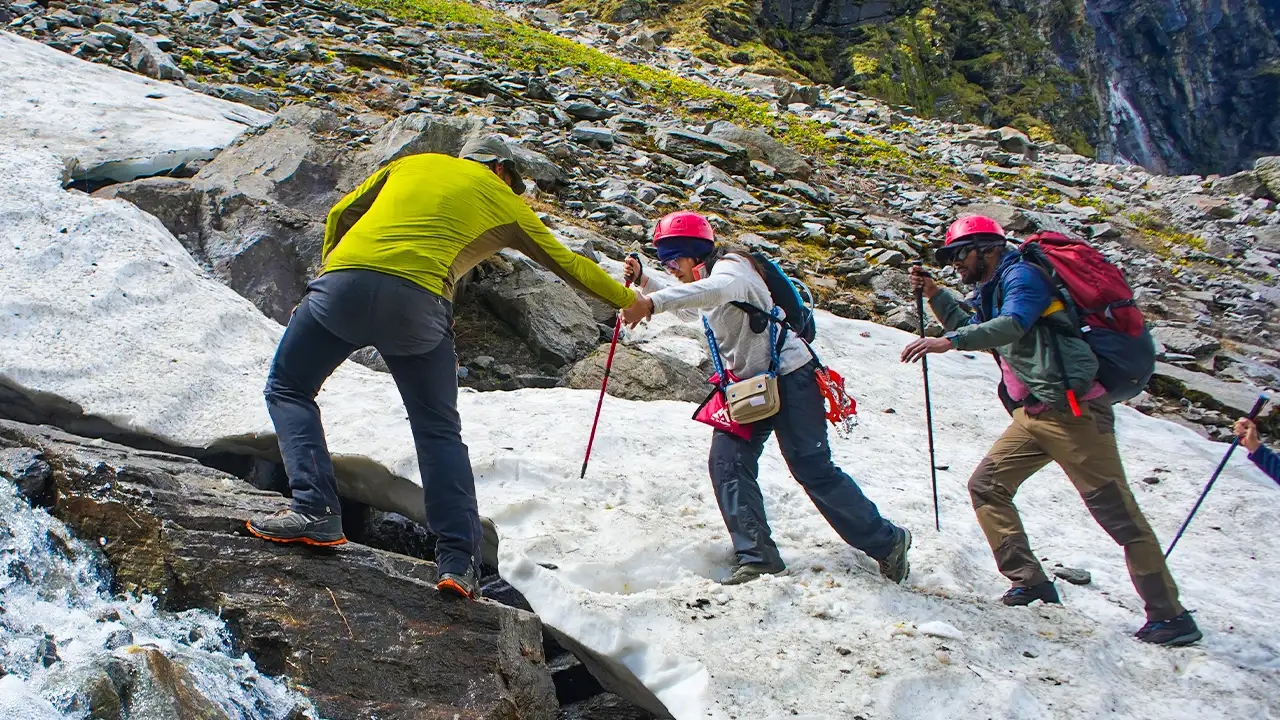
Safer group management. When the group spreads out, staff can stay with both the fast and the slow trekkers.
Easier evacuation. If someone must go down, other staff can stay with the rest of the group.
More support for beginners. Slower trekkers do not feel left behind.
What does the TTH support team look like?
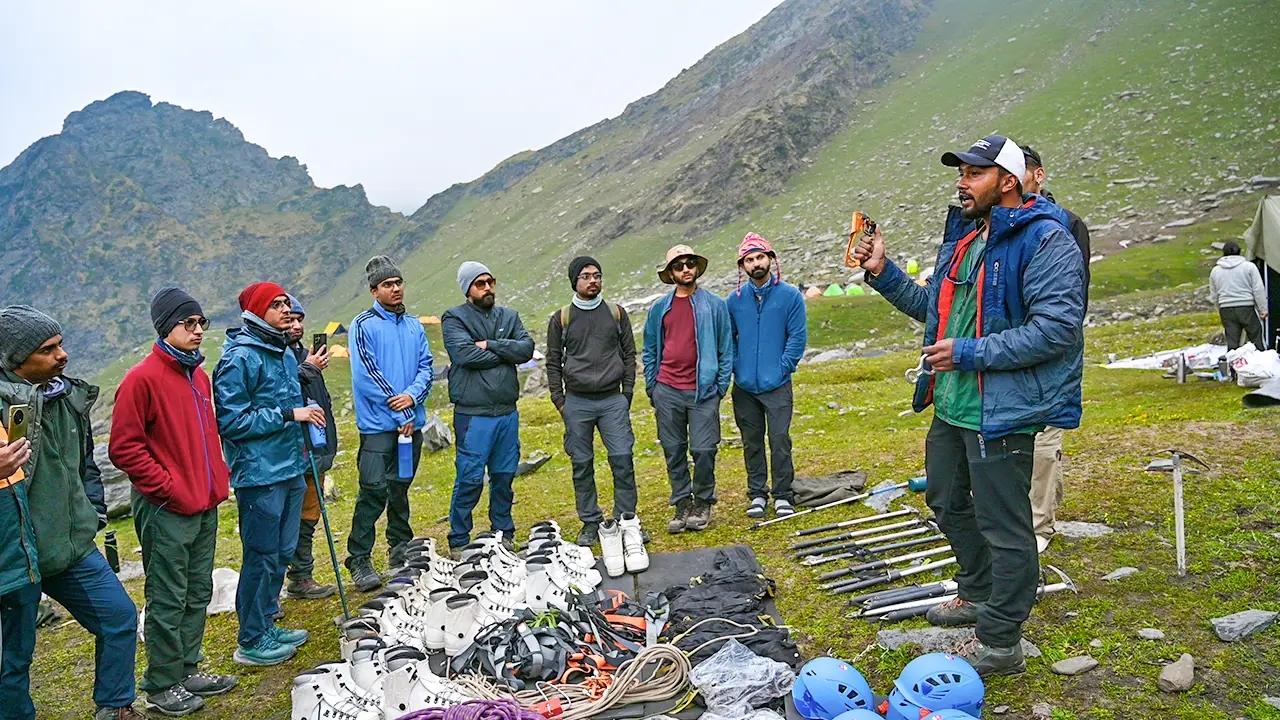
A TTH trek is supported by a Trek Leader, an Assistant Trek Leader, a Camp Manager and three guides. The leaders have completed mountaineering and advanced first-aid courses, and the company lists BMC, AMC and Wilderness First Responder (WFR) certifications. The cooks are trained in first aid as well, so more people on the team can help if something goes wrong.
The Trek Leader and the Assistant Trek Leader each carry a first-aid kit, and the team carries oximeters to check oxygen and pulse, oxygen cylinders, a stretcher and rope.
What was my experience on the Chopta Chandrashila trek?
On my trek, I never felt left alone on the trail or at camp. The team felt close by, the leader was friendly, and I was comfortable asking questions. As a beginner, that mattered more than I expected. When you are tired on a climb, knowing someone is nearby makes a real difference.
Why do trek leaders and ratio go together?
A good ratio does not help if the staff are not trained. Always look at both numbers and qualifications. A well-staffed trek with trained leaders, first-aid equipment and a clear emergency plan is much safer than one with a few untrained helpers. Ask what training the staff have, not just how many there are.
What should you ask about staff numbers?
When a company quotes a ratio, check what it counts:
Who is counted as staff? Trek leaders and guides are different from cooks and helpers.
Are trained leaders counted separately from other crew?
Does the ratio change on harder days, such as summit day?
How does the team stay spread across the group? Good practice places staff at the front, middle and back.
Does the ratio matter more for some trekkers?
Yes. It matters most for first-time trekkers, families, women travelling in groups and older trekkers, because they may need more attention and a slower pace. It also matters on winter and high-altitude treks, where conditions change quickly. Indiahikes is also known as a safety-conscious company, so ask any company for its current ratio and team structure.
Questions to ask before booking
How many staff support a group of my size?
How many of them are trained leaders and guides?
What first-aid and emergency training does the team have?
What medical equipment does the team carry?
How does the team stay with slower trekkers?
What is the emergency and evacuation plan?
Frequently asked questions
What is a staff-to-trekker ratio?
It is the number of trekkers each support team member looks after. A lower number of trekkers per staff member means more attention and safer support.
Why does the staff-to-trekker ratio matter?
It affects how quickly the team can respond to an emergency, monitor altitude symptoms and support slower trekkers.
Who supports a TTH trek?
A Trek Leader, an Assistant Trek Leader, a Camp Manager and three guides.
Are TTH staff trained in first aid?
Yes. The leaders have advanced first-aid training, and the cooks are trained in first aid as well.
Is a good ratio enough for safety?
No. You also need trained leaders, medical equipment and a clear emergency plan.
Conclusion
A good staff-to-trekker ratio gives you attention, faster help and peace of mind on the mountain. On my Chopta Chandrashila trek, TTH’s support team and trained leaders made me feel safe and looked after as a first-timer. Ask every company about its ratio, its staff training and its equipment before you book.