Are slow payments, delayed settlements, and high transaction costs affecting your crypto exchange business? Traditional payment methods can create challenges for cryptocurrency exchanges, especially when handling international transactions and large trading volumes.
Stablecoin-powered exchange infrastructure offers a practical way to improve payment processing and settlement operations. By integrating stablecoins such as USDT and USDC, exchanges can support faster transactions, reduce payment friction, and deliver a smoother trading experience.
Why Do Crypto Exchanges Face Payment and Settlement Challenges?
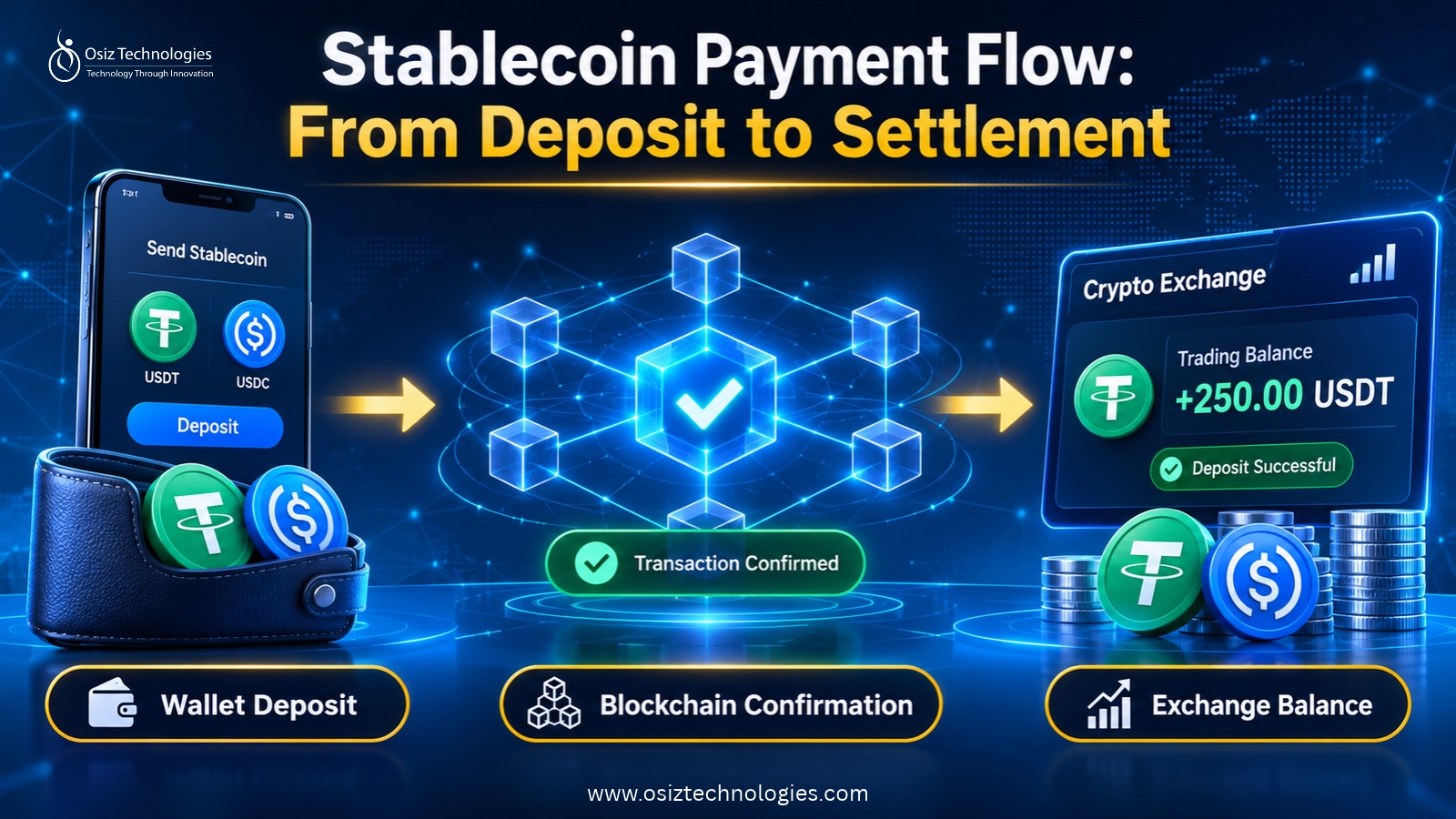
Payment processing is a critical part of every cryptocurrency exchange. However, traditional banking systems and cross-border payment networks can introduce operational difficulties.
Common challenges include:
Delayed Settlements: Traditional banking transfers may take hours or days to complete.
High Transaction Costs: International payments often involve additional processing and conversion fees.
Currency Conversion Issues: Different fiat currencies can complicate global transactions.
Payment Accessibility: Users in certain regions may face limitations when accessing banking services.
Liquidity Management: Delayed fund transfers can affect the availability of trading capital.
These challenges can impact user satisfaction and limit an exchange's ability to expand into international markets.
How Stablecoins Improve Exchange Payment Infrastructure
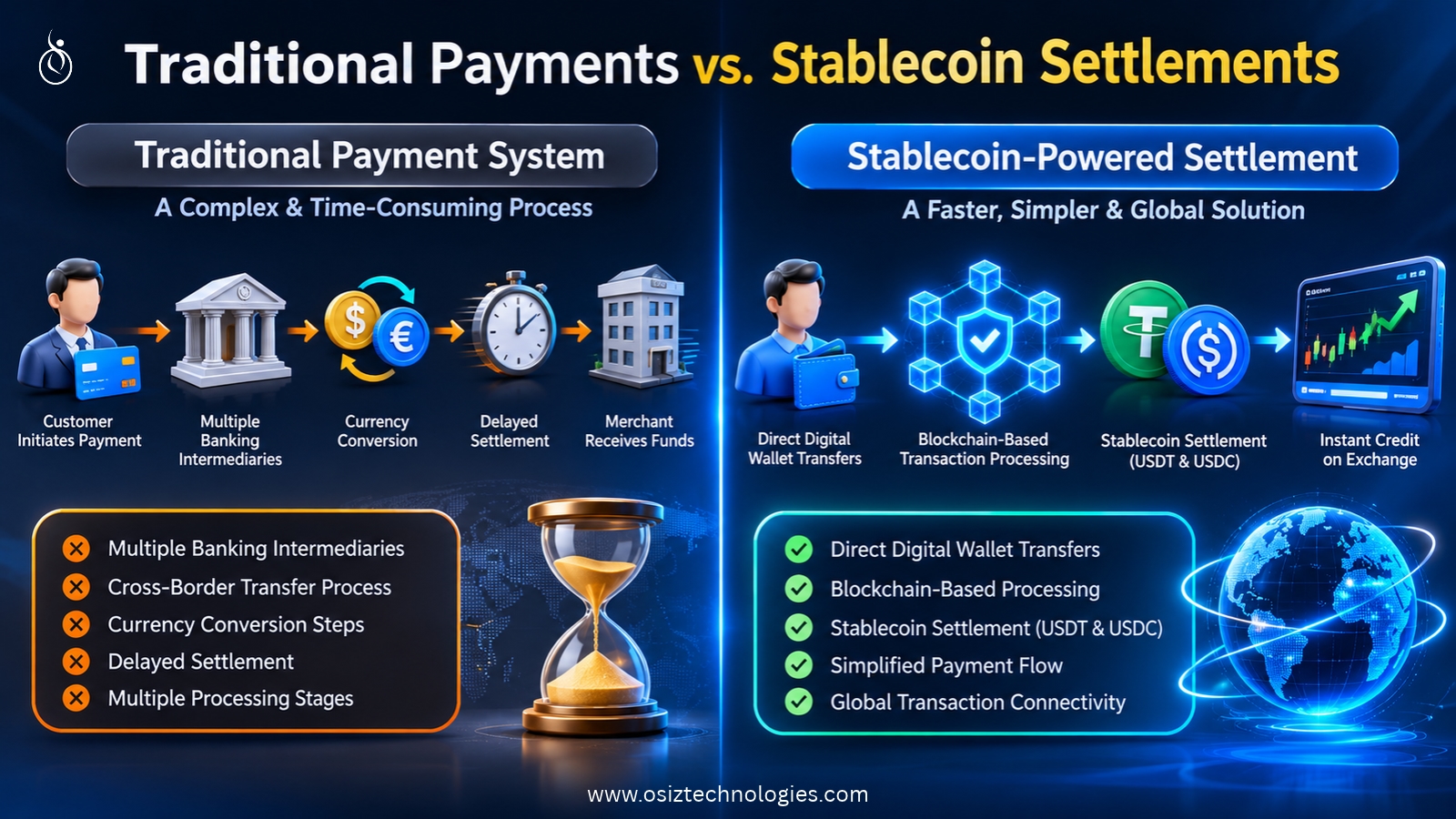
Stablecoins are digital assets designed to maintain a relatively stable value by referencing assets such as the US dollar. Integrating stablecoins into exchange infrastructure can simplify several payment and settlement processes.
Key advantages include:
Faster Transactions: Support quicker fund transfers between compatible blockchain networks.
Efficient Settlements: Enable streamlined settlement processes without depending entirely on traditional banking transfers.
Lower Payment Friction: Reduce certain intermediary and currency conversion requirements.
Global Accessibility: Support users across different geographical markets.
Trading Pair Flexibility: Enable stablecoin-based trading pairs such as BTC/USDT and ETH/USDC.
However, transaction fees, network congestion, liquidity, and regulatory requirements must be considered during implementation.
Build a Stablecoin-Ready Crypto Exchange
A successful cryptocurrency exchange requires more than trading functionality. It needs reliable payment infrastructure, secure wallet integration, liquidity management, and efficient transaction processing.
At Osiz Technologies, we provide cryptocurrency exchange development solutions with stablecoin integration, wallet connectivity, trading engine implementation, and payment infrastructure capabilities.
Our solutions help businesses establish exchange platforms designed to support evolving digital asset payment requirements.
Conclusion
Stablecoin-powered exchange infrastructure is creating new opportunities for crypto exchanges to improve payment efficiency and settlement operations. Businesses investing in stablecoin integration can strengthen their exchange infrastructure, support global users, and explore new revenue opportunities.