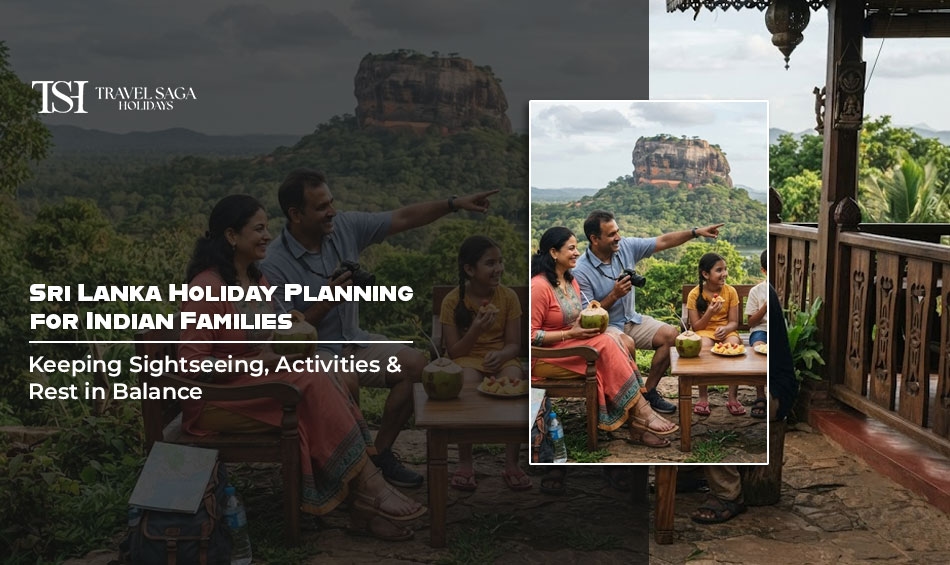
Planning a family holiday abroad is different from planning a trip for just two adults. Children may need breaks between activities, older family members may prefer a slower pace, and everyone needs enough time to actually enjoy the destination. Sri Lanka can work particularly well for this kind of holiday because it brings together beaches, green landscapes, cultural experiences, wildlife and relaxed coastal stays within a relatively compact destination.
For Indian families, a Sri Lanka Tour Package from India can make the planning process more manageable, particularly when the holiday needs to fit around school schedules, work commitments and different age groups. The real goal, however, should not be to see as much as possible. A better family holiday leaves enough room for sightseeing, activities, meals, rest and unexpected moments along the way.
How can families create a comfortable Sri Lanka holiday?
The first step is to stop treating every day as a sightseeing day.
A family itinerary becomes tiring when every morning starts early, every afternoon involves another attraction, and every evening ends with a long transfer. Instead, divide the holiday into different types of days.
For example:
Keep one part of the trip focused on cultural sightseeing.
Allow time for scenic journeys through the hills.
Include a relaxed coastal stay.
Keep physically demanding activities limited.
Leave some unscheduled time for children and parents to rest.
Avoid adding distant attractions simply because they are popular.
This approach is especially useful on a short international holiday. Five days can be enough to experience several sides of Sri Lanka, but only when the itinerary is realistic.
Is a Sri Lanka Tour Package from India suitable for families with different age groups?
It can be, provided the itinerary is planned around the people travelling rather than around a checklist of attractions.
A family with young children may prefer shorter sightseeing periods and more leisure time. Families travelling with teenagers can add more outdoor activities, while a multigenerational group may benefit from comfortable transfers and fewer changes between destinations.
Sri Lanka provides enough variety to accommodate these differences.
A single holiday can include:
Cultural and religious experiences
Scenic hill-country drives
Tea-growing landscapes
Beach relaxation
Wildlife experiences
Local food
Shopping
Optional water activities
City sightseeing
The advantage is that every family member does not have to enjoy exactly the same activity. One part of the day can be active while another can simply be about relaxing together.
How should a five-day family holiday be planned?
A Sri Lanka 5 Days Tour Package works best when families accept that five days cannot cover every corner of the country.
Instead of trying to add several long-distance journeys, choose a route that gives each day a clear purpose.
A practical rhythm could look like this:
Start with culture:
Use the first part of the holiday to experience Sri Lanka's cultural side and settle into the country's pace.
Move into the hills:
The central highlands offer a noticeable change in scenery. Tea plantations, cooler surroundings and scenic views can provide a welcome break from city sightseeing.
Keep time for nature:
A scenic train journey, waterfall visit or relaxed exploration can be more enjoyable for a family than another crowded attraction.
Add beach time:
A coastal stay gives everyone the opportunity to slow down. Children can enjoy open space while adults get some genuine downtime.
Finish without rushing:
Keep the final part of the holiday lighter, particularly if there is a flight back to India on the same day.
This type of planning creates a holiday with different moods instead of making every day feel identical.
What experiences are worth prioritising on a family trip?
Sri Lanka's biggest strength for family travel is its variety. You do not need to choose between a cultural holiday and a beach holiday because both can fit into the same trip.
Cultural experiences
Families can explore Buddhist temples, traditional cultural sites and historic areas. The Temple of the Tooth in Kandy is one of the country's important cultural attractions, while Colombo provides opportunities to experience the country's modern urban side.
When visiting religious places, families should dress respectfully and follow local rules. This is also a useful opportunity for children to learn about Sri Lankan culture beyond what they may see in photographs.
Hill-country experiences
The tea-growing regions provide some of Sri Lanka's most recognisable scenery.
Nuwara Eliya is known for its cooler climate and tea landscapes, while Ella is associated with scenic views, waterfalls and the famous Nine Arch Bridge.
Families do not necessarily need to turn these stops into demanding trekking days. Simply enjoying the scenery can be enough.
Beach experiences
Beach time is particularly valuable on a family holiday because it creates natural downtime.
Bentota is a popular coastal choice, with opportunities for relaxing by the sea and trying selected water-based activities. Families should choose activities according to the age and comfort level of each traveller rather than trying to fit every available option into one afternoon.
Wildlife and nature
Families interested in animals and nature can also consider wildlife experiences and safaris where they fit comfortably into the route.
For younger children, these experiences can add variety to a sightseeing-heavy itinerary. For parents, they provide an opportunity to see a different side of Sri Lanka.
When is a good time for an Indian family to visit Sri Lanka?
Sri Lanka has a tropical climate, but weather conditions vary between regions.
December to April is generally a favourable period for exploring the west and south coasts, enjoying outdoor activities and planning beach time. September to November can also be attractive for travellers looking for greener surroundings and comparatively fewer tourists.
May to August can bring monsoon conditions to parts of the south-west, although weather varies across the island.
Families should therefore consider both the season and the specific regions they intend to visit rather than choosing travel dates based only on a general country-wide weather forecast.
School holidays, flight availability and personal schedules also matter when deciding when to travel.
Also Read - Best Sri Lanka Tour Package for November 2026
What should Indian families know before travelling to Sri Lanka?
A little preparation before departure can prevent unnecessary stress once the holiday begins.
Sri Lanka is relatively convenient to reach from India, with direct flights available from major Indian cities such as Delhi, Mumbai, Chennai and Bengaluru to Colombo. The average flying time is around three to four hours.
The country's main international gateway is Bandaranaike International Airport.
Families should keep the following ready before departure:
Valid passports
ETA approval
Return or onward travel details
Accommodation information
Travel insurance
Local currency
Digital copies of important documents
Suitable clothing for both tropical and cooler areas
Sri Lanka uses the Sri Lankan Rupee and operates on GMT+5:30, the same time zone used in India. Sinhala and Tamil are the main local languages, while English is widely used in tourism and communication.
Do Indian travellers need an ETA for Sri Lanka?
Yes. Indian passport holders need an Electronic Travel Authorization for a tourist visit to Sri Lanka.
The current Sri Lankan immigration rules state that, from 25 May 2026, Indian nationals are among the countries eligible for a tourist ETA free of charge for 30 days. The ETA still needs to be obtained before arrival, and the scheme provides a double-entry facility within the 30-day validity period.
Families should apply using the same passport that will be used for travel and carefully check the information entered in the application. The official ETA system specifically advises applicants to verify passport number, nationality and date of birth before submitting the application.
Because immigration rules can change, travellers should always verify the latest requirements shortly before departure.
How can families make sightseeing less tiring?
One of the simplest ways is to group nearby experiences together.
Instead of travelling across the country several times in one day, use each destination for a particular type of experience. A cultural morning can be followed by a relaxed afternoon. A long transfer can be followed by an easier evening.
Families can also use these simple rules:
Avoid planning an early start after a very long travel day.
Keep one flexible period every day.
Carry snacks and water during longer transfers.
Allow younger children time to rest.
Do not book every optional activity in advance.
Keep comfortable footwear for sightseeing.
Carry light clothing for warmer areas and an extra layer for cooler hill regions.
Keep important documents accessible rather than packed away.
The aim is not to slow the holiday down unnecessarily. It is to prevent fatigue from becoming the main memory of the trip.
Where should families stay during the holiday?
Accommodation should support the itinerary rather than create additional travel.
Families may choose city hotels, beach resorts, tea-estate stays or higher-end resorts depending on their preferred travel style. Colombo and Kandy provide convenient city-based accommodation, while Bentota is better suited to families who want time near the coast. Nuwara Eliya can provide a different experience with its cooler surroundings and tea-country setting.
When choosing accommodation, consider:
Location
Room configuration
Travel time to planned activities
Accessibility for older family members
Distance from the beach or sightseeing areas
Whether the family needs a quieter evening environment
For a short holiday, staying in sensible locations can make a bigger difference than simply choosing the most luxurious property.
What should families avoid on a short Sri Lanka holiday?
The biggest mistake is attempting to cover too much.
A five-day trip becomes unnecessarily tiring when every day contains multiple attractions, long road journeys and several activities.
Try to avoid:
Changing accommodation too frequently
Scheduling long transfers on every day
Visiting attractions simply to tick them off
Planning demanding activities back-to-back
Leaving no free time
Ignoring regional weather
Waiting until the last minute to check travel documents
A family holiday should feel like a shared experience, not a race against the clock.
A few practical tips for Indian families
Before leaving for Sri Lanka, keep these small details in mind:
Carry some local currency for smaller purchases.
Keep digital and printed copies of important travel documents.
Respect local customs when entering temples and religious sites.
Stay hydrated during outdoor sightseeing.
Follow local instructions at beaches and activity areas.
Check the weather for each region rather than relying only on country-wide forecasts.
Keep some flexibility in the daily schedule.
Confirm travel and immigration requirements before departure.
These small preparations can make the difference between spending time solving avoidable problems and actually enjoying the holiday.
Conclusion
The best family holiday in Sri Lanka is not necessarily the one that covers the most attractions. It is the one that gives every member of the family enough time to experience the destination comfortably. From cultural sightseeing and hill landscapes to beaches, nature and relaxed evenings, the country allows Indian families to create a varied international holiday without making every day exhausting. A well-planned Sri Lanka Tour Package from India can make this balance easier to achieve, especially when the itinerary is built around the family's preferred pace. For travellers who want assistance with international holiday planning, documentation and itinerary arrangements, Travel Saga Holidays can be a practical choice for families looking for support from a Tour Agency in India.
FAQs
1. Is Sri Lanka a good destination for an Indian family holiday?
Yes. Sri Lanka offers cultural attractions, beaches, hill landscapes, wildlife, food and outdoor experiences, allowing families with different interests to enjoy the same trip.
2. Is a Sri Lanka 5 Days Tour Package enough for a family?
Five days can work well for a first visit if the itinerary remains focused. Families should avoid adding too many distant destinations because travel time can reduce the time available for actual sightseeing and relaxation.
3. What is the best time for Indian families to visit Sri Lanka?
December to April is generally favourable for the west and south coasts, sightseeing and outdoor activities. September to November can also offer pleasant conditions and greener landscapes, although weather varies by region.
4. Do Indians need an ETA for Sri Lanka?
Yes. Indian travellers need an ETA before travelling to Sri Lanka. Under the current rules effective from 25 May 2026, Indian nationals are eligible for a free tourist ETA for 30 days.
5. How long does it take to fly from India to Sri Lanka?
Direct flights from major Indian cities to Colombo generally take around three to four hours, making Sri Lanka a relatively convenient international destination for a short family holiday.
6. What currency is used in Sri Lanka?
The official currency is the Sri Lankan Rupee. Families should keep some local currency available for smaller purchases and everyday expenses.
7. What should children wear when visiting temples?
Children should wear respectful clothing when visiting religious sites. Families should follow the specific dress and entry rules displayed at each temple or cultural attraction.
8. Can families combine sightseeing and beach time in one Sri Lanka holiday?
Yes. Sri Lanka's geography makes it possible to combine cultural experiences, hill-country scenery and coastal relaxation within the same holiday, provided the route and travel time are planned carefully.