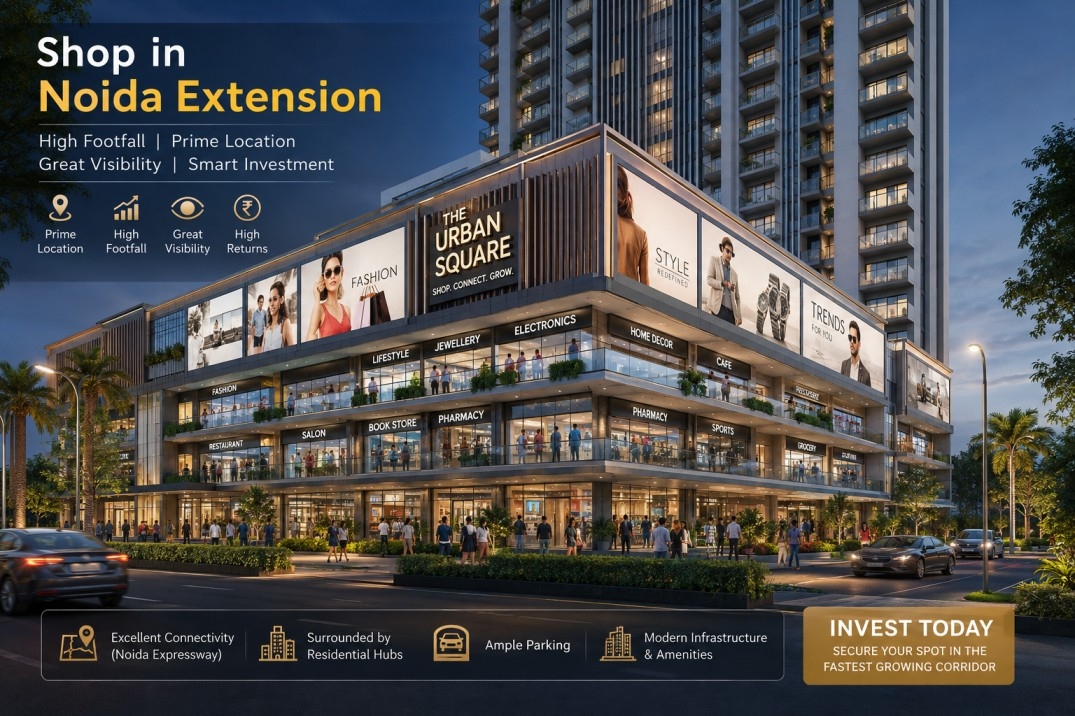
Commercial real estate investment is changing as buyers pay closer attention to how people shop, where they live, and what services they need every day. While shopping malls have traditionally attracted investors with their large retail spaces and branded outlets, neighborhood commercial markets are gaining importance for a different reason: convenience. Residential growth, increasing daily activity, and demand for accessible services are creating opportunities for retail businesses in developing urban areas.
Noida Extension, also known as Greater Noida West, is one such location attracting attention from commercial property buyers. Its expanding residential landscape and growing demand for everyday services have made retail property an interesting segment for investors and business owners.
Understanding the Growing Retail Potential of Noida Extension
The development of a residential area brings more than housing opportunities. As families move into apartments and residential societies, their need for nearby shops, grocery stores, pharmacies, restaurants, salons, clinics, and other essential services also increases.
This connection between residential development and commercial demand is particularly relevant in Noida Extension. The area has established residential communities as well as ongoing housing developments. As the local population grows, the need for organized neighborhood shopping facilities becomes increasingly important.
For commercial property investors, this creates an opportunity to evaluate retail spaces positioned around residential catchments. A well-located shop can serve customers who prefer convenient access to everyday products and services rather than traveling to distant shopping destinations.
Why Retail Shops Can Offer an Alternative to Shopping Mall Investments
Shopping malls and independent retail shops serve different customer requirements. Malls generally attract visitors interested in entertainment, branded shopping, dining, and leisure activities. Neighborhood retail spaces, on the other hand, often cater to routine purchases and local service requirements.
This distinction can influence investment decisions.
Mall investments may involve higher entry costs, maintenance charges, operational restrictions, and competition among multiple retailers. Their performance can also depend on the overall positioning, tenant mix, management, and visitor activity of the mall.
A neighborhood retail shop may offer a different ownership and business model. Depending on its location and layout, the owner can focus on a specific customer segment, develop a regular customer base, and serve nearby residential communities.
Investors comparing these options should evaluate the total acquisition cost, recurring expenses, rental potential, visibility, accessibility, and expected customer demand rather than judging a property only by its appearance.
Residential Catchment Plays an Important Role in Retail Success
One of the most important considerations when evaluating commercial property is its surrounding population. A retail business needs customers, and residential neighborhoods can provide a consistent source of local demand.
Established communities such as Nirala Estate and developing residential projects such as Nirala Trio reflect the residential growth discussed in the local commercial market.
As residential occupancy increases, everyday requirements can support several types of retail businesses, including:
Grocery stores and convenience outlets
Pharmacies and healthcare-related retail
Cafes, bakeries, and food outlets
Beauty salons and personal care services
Stationery stores and other neighborhood retailers
Specialty shops catering to household requirements
However, residential development alone does not guarantee commercial success. Investors should also examine actual occupancy, competing shops, purchasing patterns, and the availability of suitable retail spaces in the surrounding area.
Location and Visibility: Two Factors Buyers Should Evaluate
The location of a commercial shop can significantly influence its business potential. Even a well-designed retail space may struggle if customers cannot easily access it or notice its storefront.
When evaluating a commercial property, buyers should consider its frontage, road connectivity, pedestrian movement, parking arrangements, signage opportunities, and proximity to residential entrances.
Ground-floor retail spaces with convenient access may appeal to businesses that depend on walk-in customers. Corner shops or units facing active internal roads may also benefit from better visibility, depending on the surrounding layout.
Accessibility matters for both customers and business operators. A retail property should be convenient to reach, easy to identify, and suitable for the intended business activity.
What Makes Nirala Diadem and Nirala Gateway Relevant?
Commercial developments such as Nirala Diadem and Nirala Gateway by Nirala World are relevant to discussions about organized retail opportunities in Noida Extension.
These projects are presented around the concept of commercial spaces serving the surrounding residential ecosystem. Their positioning reflects an important consideration for retail investors: commercial development should connect with the everyday requirements of the people living nearby.
Anyone evaluating a Shop in Noida Extension can also review the commercial property perspective explained in the reference article. It discusses why some investors are considering neighborhood retail spaces instead of relying entirely on traditional mall-based investments.
The commercial retail opportunities in Noida Extension can be assessed by comparing project location, unit configuration, surrounding residential developments, accessibility, and the suitability of available spaces for different business categories.
Before making a purchase, buyers should obtain current project information, verify approvals, review applicable RERA details, and understand the terms of ownership.
Important Factors to Check Before Investing in a Retail Shop
A commercial property purchase requires careful evaluation. Investors should consider the following aspects before making a financial commitment.
1. Total Investment Cost: Compare the base property price with additional charges, taxes, maintenance expenses, and other applicable costs.
2. Rental Potential: Study comparable commercial properties in the locality and understand realistic rental expectations. Avoid relying solely on projected returns.
3. Customer Accessibility: Examine road access, parking, pedestrian movement, and the convenience of reaching the retail unit.
4. Competition: Identify existing shops and upcoming commercial developments that may serve the same customer segment.
5. Property Documentation: Review ownership documents, approvals, sanctioned plans, applicable RERA registration, and sale agreements with appropriate professional assistance.
6. Business Suitability: Check whether the unit's size, layout, visibility, and permitted usage match the requirements of the intended business.
These checks help investors make decisions based on practical property fundamentals rather than promotional claims.
The Future of Neighborhood Retail in Greater Noida West
The commercial real estate outlook of Noida Extension is closely connected to its residential development. As more households establish themselves in the area, demand for convenient shopping and essential services may create opportunities for organized neighborhood retail.
For business owners, accessible commercial spaces can provide a way to serve local customers. For investors, retail property offers an opportunity to participate in the area's evolving commercial landscape. However, actual performance will depend on factors such as occupancy, purchasing power, competition, infrastructure, and the quality of the selected location.
The growing relevance of neighborhood retail also highlights how consumer preferences influence commercial real estate. Convenience, accessibility, and proximity to everyday activities remain important considerations when selecting a retail location.
Conclusion
Noida Extension is developing into an important residential and commercial destination in Greater Noida West. Its expanding housing communities and demand for everyday services make neighborhood retail worth evaluating alongside traditional mall investments.
A carefully selected commercial shop can provide opportunities for business operations and potential rental income, although outcomes depend on property-specific factors and market conditions. By examining residential catchment, visibility, accessibility, pricing, and legal documentation, buyers can make more informed investment decisions.
As the area's commercial infrastructure continues to evolve, projects such as Nirala Diadem and Nirala Gateway offer relevant options for those researching organized retail spaces in Noida Extension.