Pregnancy is a journey filled with excitement, preparation, and many questions about labour and delivery. One question many expecting mothers have is whether yoga can help them have a normal vaginal delivery. Pregnancy yoga classes are often recommended as a gentle way to stay active, improve body awareness, practise breathing, and prepare mentally for childbirth. However, it is important to understand what prenatal yoga can realistically offer and what it cannot guarantee.
Yoga can be a valuable part of a healthy pregnancy routine when it is adapted to pregnancy and practised with appropriate guidance. At the same time, no exercise programme can promise a particular type of delivery because childbirth depends on many factors beyond physical fitness.
How Pregnancy Yoga Can Support Your Body
Pregnancy changes your posture, balance, flexibility, strength, and energy levels. As your baby grows, everyday movements can feel different, and some women experience stiffness or discomfort in areas such as the lower back, hips, and shoulders.
Pregnancy yoga focuses on gentle movements, stretching, breathing, relaxation, and pregnancy-appropriate strengthening. Regular physical activity during pregnancy can support overall health and help women remain active as their bodies change. NHS guidance recommends that healthy pregnant women remain physically active, while adjusting activity according to their comfort and individual circumstances.
The purpose of prenatal yoga is not to push your body harder. Instead, it is about maintaining comfortable movement and developing greater awareness of how your body feels.
Can Yoga Help Prepare You for Vaginal Delivery?
It is important to separate preparation from guaranteeing an outcome.
Pregnancy yoga may help you prepare physically and mentally for labour. Gentle mobility exercises can encourage comfortable movement, while breathing and relaxation practices can give you techniques to use during contractions. Learning how to relax your body and remain aware of your breathing can also be useful during childbirth preparation.
Some prenatal yoga practices may focus on the hips, pelvis, legs, and pelvic floor, depending on the individual's stage of pregnancy and medical needs. However, these exercises should be taught and modified appropriately rather than treated as a formula for achieving a normal delivery.
A vaginal delivery depends on factors such as the baby's position, labour progression, maternal and fetal health, medical history, and circumstances that may not be predictable before labour begins.
What Pregnancy Yoga Can Do
Support Strength and Mobility
Pregnancy-specific yoga can help you maintain mobility and gentle muscular strength. This can make everyday activities more comfortable and help you stay physically active during pregnancy.
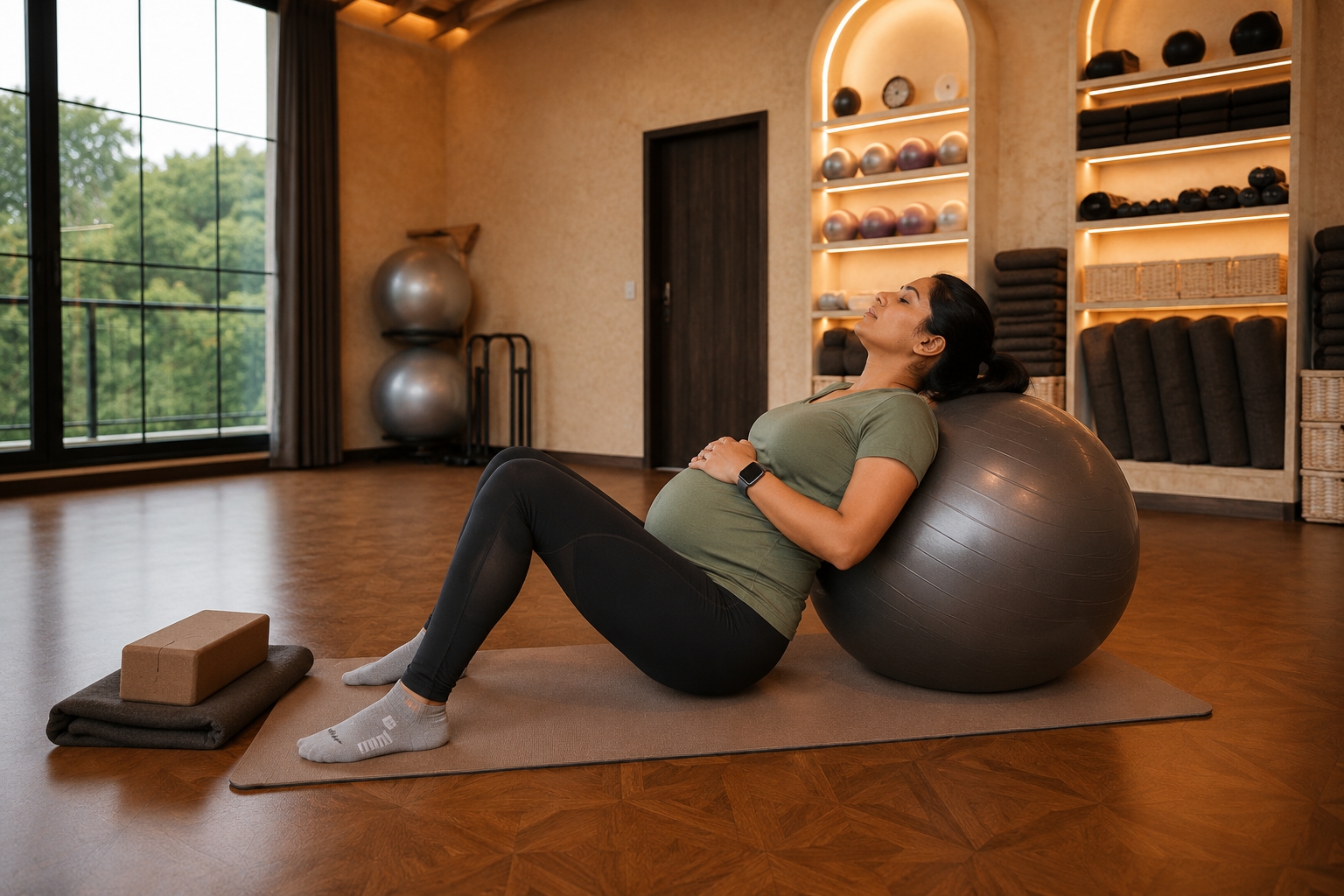
A well-structured class may include modified standing poses, supported stretches, gentle strengthening movements, and mobility exercises appropriate for pregnancy.
Encourage Better Body Awareness
As pregnancy progresses, your body gives you different signals. Learning to notice tension, fatigue, balance, and discomfort can help you make better decisions about movement.
Pregnancy yoga encourages mindful movement rather than simply completing a set number of repetitions. This awareness can be especially useful as you learn which positions feel comfortable and which need modification.
Practise Breathing and Relaxation
Breathing is an important part of many prenatal yoga programmes. Slow, comfortable breathing can encourage relaxation and help you develop a calming routine.
Breathing techniques are also commonly included in antenatal preparation for labour. Practising them during pregnancy means you may already be familiar with them when you need to focus during childbirth.
Support Mental Wellbeing
Pregnancy can bring excitement as well as uncertainty. Making time for mindful movement and relaxation can provide a valuable break from everyday responsibilities.
A calm class environment may also help you feel more connected to your pregnancy and more confident about listening to your body.
What Pregnancy Yoga Cannot Do
While there are potential benefits to staying active during pregnancy, it is important not to make unrealistic promises about prenatal yoga.
It Cannot Guarantee a Normal Delivery
This is perhaps the most important point. Pregnancy yoga classes cannot guarantee a vaginal delivery.
Even if you maintain excellent fitness and practise yoga regularly, labour may develop differently from what you expected. Your healthcare team may recommend a different approach if circumstances make it safer for you or your baby.
Having a caesarean birth is not a failure of your pregnancy preparation. The priority should always be the health and safety of both mother and baby.
It Cannot Change Every Pregnancy Outcome
Yoga cannot control factors such as fetal position, placenta-related complications, certain medical conditions, or unexpected developments during labour.
It can support your preparation, but it cannot control the entire childbirth process.
It Cannot Replace Medical Care
Prenatal yoga should complement—not replace—regular antenatal care. Your doctor, obstetrician, or midwife can assess your individual pregnancy and advise you about exercise, labour preparation, and any precautions you may need.
If you have been advised to restrict physical activity or have a pregnancy complication, speak with your healthcare professional before beginning or continuing yoga.
What Should You Look for in Pregnancy Yoga Classes?
If you are considering Pregnancy Yoga Classes, choose a programme specifically designed for expectant mothers rather than assuming that a regular yoga class will be suitable.
An experienced prenatal instructor should understand how pregnancy affects movement and should be able to offer modifications based on your trimester, comfort, and ability.
A good class may combine gentle yoga poses, mobility work, breathing exercises, relaxation, posture awareness, and appropriate strengthening. The atmosphere should feel supportive rather than competitive.
It is also important to tell the instructor that you are pregnant and how far along you are. Pregnancy exercise guidance recommends making sure your instructor is properly qualified and aware of your pregnancy.
How Often Should You Practise?
There is no universal number of yoga classes that every pregnant woman needs. For many women, attending a prenatal yoga session a few times a week can be a practical way to stay consistent, while gentle activities such as walking can complement the routine.
If you were not exercising regularly before pregnancy, start gradually rather than immediately adopting an intense schedule. Your energy and comfort can also change from one trimester to another, so your routine should be flexible.
Some days may call for an active session, while other days may be better suited to gentle stretching, breathing, or rest.
Pregnancy Yoga and Birth Preparation
Preparing for childbirth involves more than physical exercise. Learning about labour, understanding your options, practising relaxation, and discussing your individual birth plan with your maternity team can all be valuable.
Pregnancy yoga can form one part of this preparation by helping you practise comfortable movement and breathing while becoming more aware of your body.
The focus should be on feeling prepared and confident rather than trying to control exactly how your labour will happen.
Safety Should Always Come First
Pregnancy exercise should feel comfortable and controlled. Stay hydrated, avoid overheating, warm up and cool down, and modify movements as your pregnancy progresses.
Avoid activities that carry a significant risk of falling or abdominal impact. Certain positions may also need modification later in pregnancy, including prolonged exercise while lying flat on your back.
Stop exercising and seek medical advice if you experience concerning symptoms such as vaginal bleeding, significant abdominal or pelvic pain, dizziness, chest pain, painful regular contractions, fluid leakage, or unusual shortness of breath.
If you have any pregnancy-related medical concerns, consult your healthcare professional before starting or changing your exercise routine.
A Balanced Approach to Pregnancy Yoga
The best way to think about prenatal yoga is as a tool for preparation, not prediction. It can help you stay active, maintain mobility, practise breathing, develop body awareness, and create moments of relaxation during pregnancy.
However, it cannot promise a normal delivery or determine how labour will progress.
At Birth and Beyond, pregnancy-focused programmes can help expecting mothers explore gentle movement, breathing, relaxation, and pregnancy-appropriate yoga in a supportive environment. If you are looking for Pregnancy Yoga Classes, choose a programme that prioritises your comfort, individual needs, and safety rather than making unrealistic promises about delivery.
You can explore the Birth and Beyond Pregnancy & Parenting programme to learn more about pregnancy-focused classes and support.
Final Thoughts
Pregnancy yoga can be a meaningful addition to your pregnancy routine. It can help you move mindfully, stay active, practise relaxation, and prepare your body and mind for the experience of childbirth.
But no yoga pose, exercise, or class can guarantee a particular delivery method. Every pregnancy is different, and the safest birth is the one that meets the needs of you and your baby.
Approach Pregnancy Yoga Classes with realistic expectations: use them to support your wellbeing and preparation, while trusting your healthcare team to guide you through the medical aspects of pregnancy and birth.
Disclaimer: This article is for general educational purposes and does not replace personalised medical advice. Always consult your doctor, obstetrician, or midwife before starting or changing an exercise programme during pregnancy.