NEET Counsellor Near Me is a commonly used search phrase among medical aspirants looking for admission guidance and support with college selection. However, choosing the right MBBS institution requires more than comparing entrance examination ranks, fees, and admission cutoffs. Students should also understand how medical education is evolving to address complex healthcare challenges.
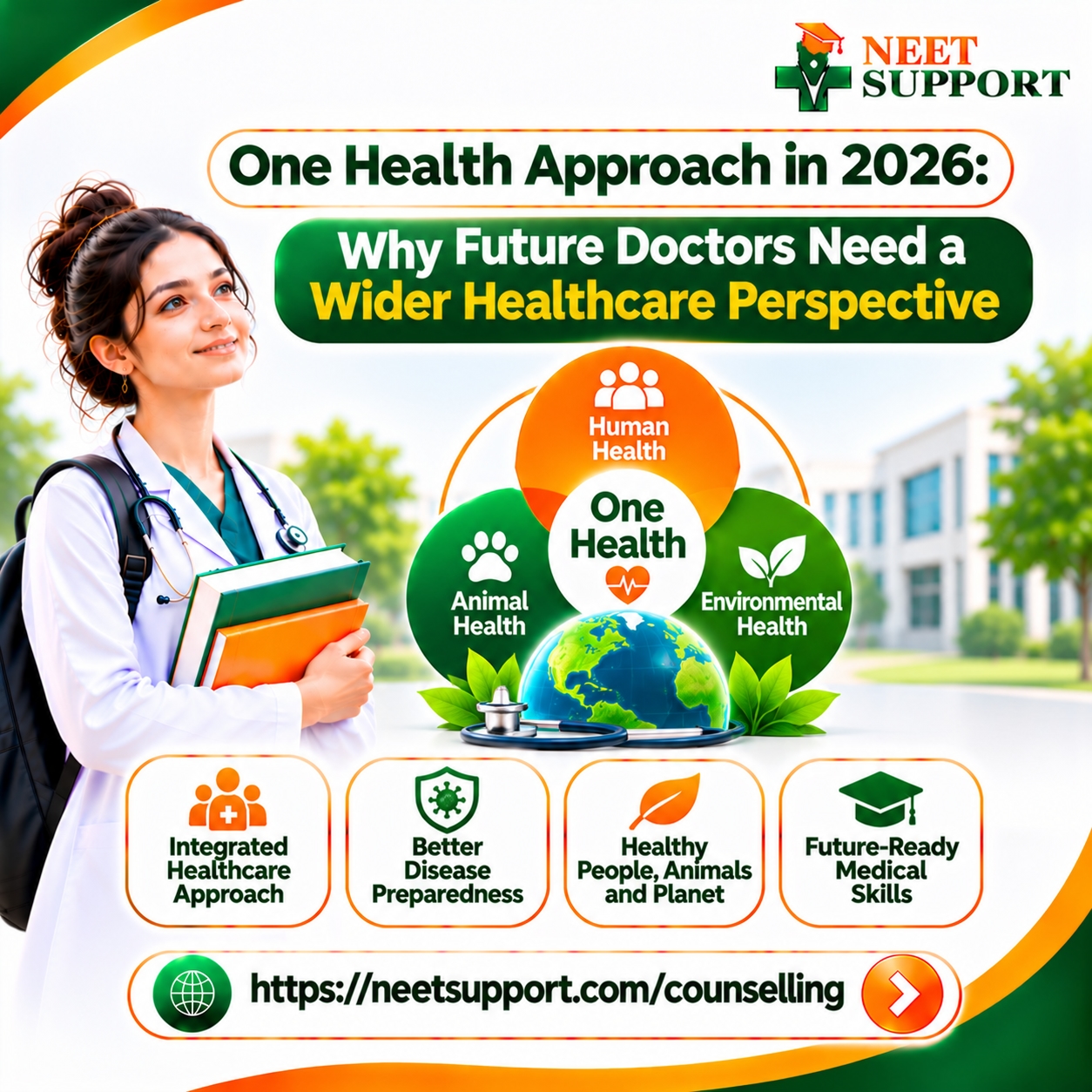
One important concept gaining attention in global healthcare is the One Health approach. It recognises that human health, animal health, and environmental health are closely connected. Changes in one area can influence the others, sometimes creating serious public health concerns.
From emerging infectious diseases to food safety and environmental pollution, future doctors need a broader understanding of health beyond individual patient treatment. Learning about this approach can help medical students appreciate the importance of prevention, collaboration, and responsible healthcare practices.
What Is the One Health Approach?
The One Health approach is an integrated way of understanding health challenges that affect humans, animals, and the environment.
It encourages professionals from different disciplines to work together to prevent, identify, and manage health risks. These professionals may include doctors, veterinarians, microbiologists, environmental scientists, public health specialists, and researchers.
For example, an infectious disease affecting animals may sometimes spread to humans. Environmental changes can influence the distribution of disease-carrying insects. Contaminated water and food can also create health risks for entire communities.
The One Health approach helps explain why healthcare challenges cannot always be addressed through hospitals and clinical treatment alone.
Its important areas include:
Human health: Prevention, diagnosis, and treatment of diseases affecting people.
Animal health: Monitoring animal diseases and understanding infections that may spread between animals and humans.
Environmental health: Studying how pollution, climate conditions, water quality, and ecosystems influence health.
Food safety: Understanding contamination, foodborne infections, and safe food production.
Public health surveillance: Identifying potential disease threats through coordinated monitoring and investigation.
Why One Health Is Becoming Important in Modern Healthcare
Healthcare systems increasingly face challenges that require cooperation between multiple scientific and professional fields.
The One Health approach is particularly relevant in the following areas.
1. Zoonotic Diseases
Zoonotic diseases are infections that can spread between animals and humans. Examples include rabies, certain forms of influenza, and diseases caused by specific bacteria and parasites.
Understanding how these infections spread helps healthcare professionals recognise risks, support prevention programmes, and coordinate with veterinary and public health authorities.
Medical students should understand the importance of infection prevention, early diagnosis, vaccination where applicable, and public awareness.
2. Antimicrobial Resistance
Antimicrobial resistance is a major healthcare challenge involving microorganisms that become less responsive to medicines.
The misuse and overuse of antimicrobial medicines in human healthcare, animal health, and other settings can contribute to resistance.
The One Health approach encourages responsible antimicrobial use across these connected areas.
For future doctors, this reinforces the importance of antibiotic stewardship, microbiology knowledge, and evidence-based prescribing.
3. Climate Change and Human Health
Changing environmental conditions can influence the spread of infectious diseases, heat-related illnesses, respiratory problems, and other health concerns.
For example, temperature and rainfall patterns may affect the geographical distribution of mosquitoes and other disease-carrying organisms.
Medical professionals need awareness of these connections to support disease prevention and community health planning.
4. Food and Water Safety
Unsafe food and contaminated water can contribute to outbreaks of infectious diseases.
The One Health approach encourages coordination between healthcare professionals, food safety authorities, environmental specialists, and agricultural experts.
This connection highlights the importance of sanitation, hygiene, safe food handling, and public health education.
How the One Health Approach Connects with MBBS Education
An MBBS programme provides students with a foundation in human anatomy, physiology, biochemistry, pathology, pharmacology, microbiology, and clinical medicine.
The One Health approach can connect several of these subjects with real-world healthcare challenges.
Microbiology: Students learn about microorganisms, infectious diseases, transmission patterns, and laboratory diagnosis.
Community Medicine: This subject introduces disease prevention, epidemiology, environmental health, sanitation, and public health programmes.
Pharmacology: Students understand responsible medicine use, antimicrobial resistance, and the principles of rational prescribing.
Pathology: Students study how diseases affect the body and how laboratory investigations support diagnosis.
Clinical Medicine: Students learn to assess patients, identify possible infections, and apply clinical knowledge in patient care.
By connecting these subjects, students can understand how individual clinical decisions relate to wider public health outcomes.
Important Skills Future Doctors Can Develop Through One Health Learning
Medical education should prepare students to work in healthcare environments where different professionals contribute to patient and community wellbeing.
The One Health approach encourages several useful skills.
Interdisciplinary Communication
Doctors may need to coordinate with microbiologists, veterinarians, laboratory professionals, and public health teams.
Clear communication helps professionals exchange information and respond to shared health concerns.
Epidemiological Thinking
Understanding disease patterns, risk factors, and transmission routes helps medical students recognise how infections affect communities.
Environmental Health Awareness
Doctors should understand how air quality, water safety, sanitation, and environmental conditions may influence disease patterns.
Evidence-Based Decision-Making
Healthcare decisions should be informed by reliable scientific evidence, appropriate investigations, and patient-specific clinical assessment.
Community Health Awareness
Future doctors need to understand that prevention, vaccination, sanitation, and public education are important parts of healthcare.
How Medical Colleges Can Support One Health Learning
When selecting an MBBS institution, students can consider whether its academic environment provides opportunities to understand public health and interdisciplinary healthcare challenges.
The following factors may help during college comparison.
Community Medicine Teaching
Students should review how the institution teaches epidemiology, environmental health, disease prevention, and community-based healthcare.
Microbiology Facilities
Microbiology education helps students understand infectious organisms, diagnostic methods, and infection control principles.
Hospital and Clinical Exposure
Students can examine the clinical training arrangements available through associated teaching hospitals and their exposure to infectious disease management.
Public Health Activities
Some institutions may offer community health activities, awareness programmes, field visits, or academic discussions related to disease prevention.
Research Opportunities
Students may explore whether the institution provides opportunities to participate in public health research, infectious disease studies, or environmental health projects.
The availability and scope of these opportunities differ between institutions. Aspirants should verify information directly through official institutional documents and admission information.
How NEET Aspirants Can Evaluate Medical Colleges More Effectively
The academic environment is only one part of a medical college decision. Students should also examine important admission and institutional factors.
Consider the following points before finalising your preferences:
Recognition status: Verify the institution's current regulatory recognition and approved MBBS intake.
Teaching hospital: Examine the clinical training arrangements and available patient-care facilities.
Academic infrastructure: Review laboratories, classrooms, and other learning facilities.
Faculty availability: Consider the academic departments and teaching support.
Fee structure: Understand tuition fees, hostel charges, deposits, and additional expenses.
Location and accessibility: Evaluate travel requirements and accommodation arrangements.
Clinical exposure: Understand the practical learning opportunities available during the MBBS programme.
Students should avoid choosing a college solely because of promotional claims or unverified admission promises.
How NEET Support Helps With Medical College Selection
Medical college counselling involves several decisions, including understanding rank-based possibilities, comparing institutions, reviewing fees, and preparing a realistic preference strategy.
NEET Support provides practical NEET Counselling Guidance to help aspirants understand important aspects of the admission process.
Students can seek guidance on:
Understanding NEET rank and category-based admission possibilities.
Comparing government and private medical colleges.
Reviewing institutional recognition and approved seat intake.
Understanding tuition fees and additional expenses.
Evaluating academic facilities and clinical training arrangements.
Planning college preferences according to available admission information.
A well-informed decision should consider academic suitability, financial planning, institutional details, and the student's long-term educational goals.
Future Scope of the One Health Approach in Medical Careers
The One Health approach has relevance across several areas of healthcare and scientific research.
Future medical professionals may encounter opportunities connected with infectious disease management, epidemiology, public health, environmental medicine, research, and preventive healthcare.
It also highlights the importance of cooperation between healthcare systems and other scientific disciplines.
For MBBS students, understanding this approach can provide a broader perspective on disease prevention and the responsibilities of modern medical professionals.
Although not every medical graduate will work directly in One Health-related research or programmes, its principles can strengthen awareness of the wider factors that influence patient and community health.
Conclusion
The One Health approach highlights the connection between human health, animal health, and environmental conditions. As healthcare challenges become increasingly interconnected, future doctors need scientific awareness, preventive healthcare knowledge, and the ability to work with professionals from different disciplines. Medical aspirants should consider academic quality, clinical exposure, public health education, institutional recognition, and affordability when comparing MBBS colleges. NEET Support helps students understand these important admission factors through practical guidance and informed college selection. With careful planning and reliable NEET Counselling Guidance, aspirants searching for NEET Counsellor Near Me can make more confident decisions about their medical education journey.
Frequently Asked Questions
1. What does the One Health approach mean?
The One Health approach recognises that human health, animal health, and environmental health are interconnected. It encourages professionals from different disciplines to cooperate in addressing shared health challenges.
2. Why is One Health important for medical students?
It helps students understand zoonotic diseases, antimicrobial resistance, environmental health, food safety, and disease prevention. These topics provide a broader perspective on modern healthcare.
3. What are examples of zoonotic diseases?
Examples include rabies, certain influenza infections, leptospirosis, and some diseases caused by bacteria and parasites that can spread between animals and humans.
4. How is One Health connected with Community Medicine?
Community Medicine covers epidemiology, sanitation, environmental health, disease prevention, and public health programmes. These subjects connect closely with the principles of One Health.
5. Does One Health only focus on infectious diseases?
No. It also considers environmental pollution, food safety, antimicrobial resistance, ecosystem changes, and other factors that influence human and animal health.
6. What should students check when selecting an MBBS college?
Students should review recognition status, approved seat intake, teaching facilities, hospital exposure, faculty availability, fee structure, and academic opportunities.
7. How can NEET Support help with MBBS admission planning?
NEET Support provides practical admission guidance, college comparison assistance, and information to help aspirants understand counselling considerations and plan their preferences.
8. Can One Health knowledge help future doctors?
Yes. It can improve awareness of disease prevention, environmental influences, infection control, and interdisciplinary healthcare collaboration, supporting more informed clinical and public health decisions.