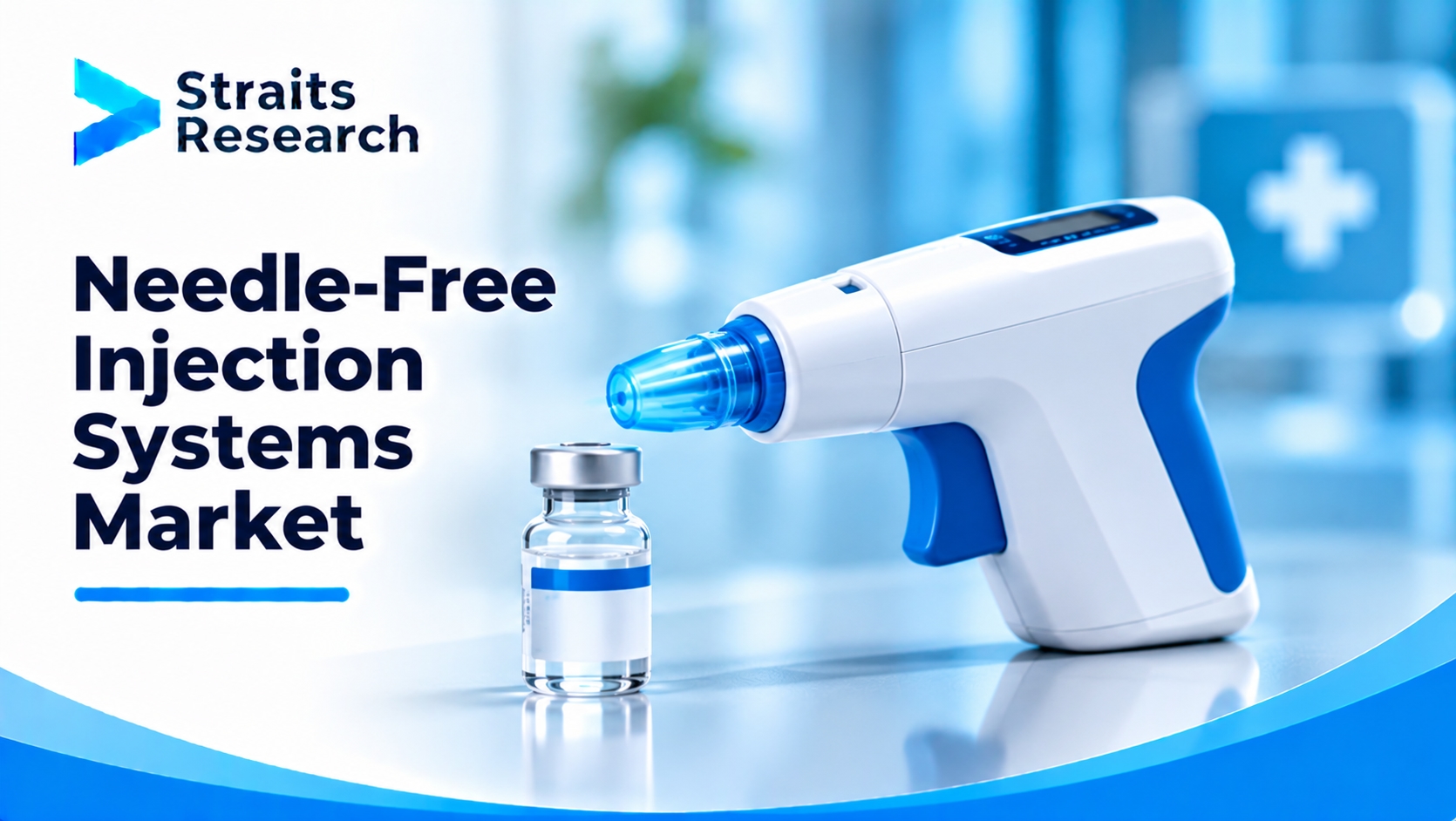
According to Straits Research, the global needle-free injection systems market size was valued at USD 29.5 billion in 2025 and is projected to grow from USD 34.22 billion in 2026 to USD 112.19 billion by 2034, registering a CAGR of 16% during the forecast period. North America held the largest regional share at 38.5% in 2025, while Europe is expected to record the fastest growth at a CAGR of 15.1%. Wider use of alternative drug-delivery methods, public immunization programs, and advances in injection technology are expected to support market growth.
Market Size 2025: USD 29.5 billion
Market Size 2026: USD 34.22 billion
CAGR (Forecast Period): 16%
Forecast Year: 2034
Projected Market Size: USD 112.19 billion
Dominant Region: North America – 38.5% share in 2025
Fastest Growing Region: Europe – 15.1% CAGR
Market Overview
Needle-free injection systems deliver vaccines, medicines, and other therapeutic substances through the skin without conventional hypodermic needles. These devices use high-pressure liquid streams, spring-powered mechanisms, or gas propulsion to administer controlled doses. Their use can reduce needle-stick injuries, sharps waste, and injection-related discomfort. Hospitals, clinics, public health agencies, and homecare users represent key customer groups, with applications across vaccination, insulin delivery, pain management, and other treatments.
Growth Drivers
Public Immunization Programs: Large-scale vaccination campaigns require devices that can support efficient administration across hospitals, clinics, and community health centers. Needle-free systems offer an alternative to conventional syringes and can reduce sharps waste and accidental needle injuries.
Preference for Less Painful Drug Delivery: Patients who experience needle anxiety may delay or avoid injections. Needle-free devices can improve treatment acceptance among children and people who require repeated injections for chronic conditions.
Need to Reduce Needle-Stick Injuries: Healthcare workers face occupational risks from accidental needle injuries during routine procedures. Needle-free technologies can reduce exposure to conventional needles and support safer injection practices.
Market Challenges
High Device and Consumable Costs: Precision components, specialized cartridges, and proprietary drug containers can raise the cost of needle-free systems. These expenses may limit adoption in healthcare facilities with tight procurement budgets.
Drug Compatibility Requirements: Not all medicines and formulations are suitable for needle-free delivery. Manufacturers must validate dose accuracy, viscosity, tissue penetration, and product stability for each intended application.
Need for Consistent Delivery Performance: Differences in skin thickness, injection site, and patient characteristics can affect drug penetration. Device developers must maintain reliable pressure and dose control across patient groups.
Market Opportunities
Home-Based Chronic Disease Care: Patients who require regular injections for conditions such as diabetes can benefit from easy-to-use devices designed for self-administration. Manufacturers can create revenue through homecare device sales, refill components, and partnerships with pharmaceutical companies.
Large-Scale Vaccine Delivery: Government health agencies and vaccine providers can adopt needle-free platforms for suitable immunization programs. Device companies can expand through public procurement contracts, clinical partnerships, and regional distribution agreements.
Segment Analysis
By application, vaccine needle-free delivery held a market share of 32.7% in 2025. Its use across immunization programs and the ability to reduce needle-related injuries support its position among major applications.
Oncology needle-free delivery is expected to grow at a CAGR of 15.4% during the forecast period. Research into alternative routes for cancer medicines and specialized delivery technologies may broaden the use of these systems in oncology care.
By site of delivery, subcutaneous injectors held a market share of 39.5% in 2025. Their compatibility with insulin and several biologic therapies supports their use across chronic disease treatment and routine medication delivery.
Regional Analysis
North America held the largest market share in 2025, supported by established healthcare infrastructure, public immunization programs, and the presence of specialized device manufacturers. Hospitals and public health agencies in the region provide an established customer base for needle-free injection technologies.
Europe is expected to record the fastest growth at a CAGR of 15.1%. Public vaccination priorities, established medical device regulation, and wider interest in alternative drug-delivery technologies are expected to support regional adoption. Asia Pacific also offers growth opportunities due to large immunization programs and wider access to healthcare services, while Latin America and the Middle East and Africa may gain from broader vaccine delivery initiatives.
Competitive Landscape
The market is moderately fragmented, with medical device manufacturers and drug-delivery technology developers competing through injection accuracy, device reliability, patient safety, and compatibility with different medicines. Key participants include PharmaJet, Antares Pharma, Crossject, Bioject Medical Technologies, and Medical International Technology. Established players focus on regulatory compliance and reliable delivery platforms, while specialized developers seek to improve ease of use and expand the range of suitable therapies.
Recent Developments
May 2026: PharmaJet announced that its WHO-prequalified Tropis needle-free injection system was selected to deliver approximately 1.4 million fractional inactivated polio vaccine doses in Nigeria. The program is being carried out with the African Field Epidemiology Network.
March 2026: PharmaJet partnered with Brazil's Tuberculosis Research Network to evaluate its Tropis intradermal needle-free device for tuberculin skin-test delivery. The study is intended to assess accuracy, workflow efficiency, safety, and patient acceptance.
January 2026: PharmaJet reported updated Phase 2 data from Scancell's SCOPE study, in which its Stratis system delivered the iSCIB1+ DNA immunotherapy to patients with advanced melanoma.
Click to Read the Complete Insights & Report: https://straitsresearch.com/report/needle-free-injection-systems-market
Future Outlook
The market is expected to benefit from broader use of needle-free technologies in vaccination and chronic disease care. Advances in prefilled devices, disposable components, and alternative delivery methods may improve convenience and clinical suitability. Partnerships between device manufacturers and pharmaceutical companies are likely to play an important role in the development of new drug-device combinations.
About Straits Research
Straits Research is a market intelligence and consulting firm that provides industry insights, market forecasts, and strategic research across a broad range of sectors. The company helps organizations understand market trends, assess competitive environments, and identify opportunities for business growth.