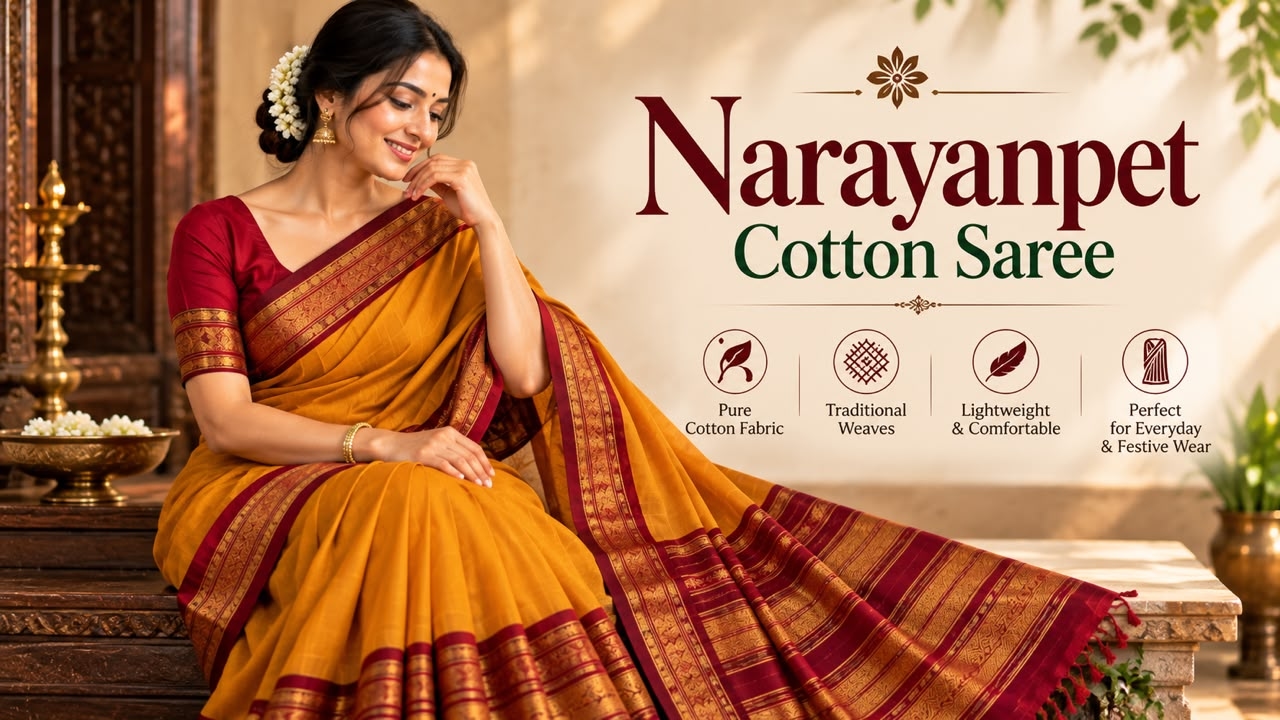
Narayanpet cotton sarees are appreciated for their traditional appearance, comfortable fabric, and distinctive woven designs. Originating from Narayanpet in Telangana, these sarees offer an appealing combination of regional weaving heritage and practical everyday wear. For buyers who value comfort as much as appearance, understanding the fabric's texture and feel is an important part of choosing the right saree.
The Narayanpet cotton saree texture can influence how the fabric feels against the skin, how it drapes, and how comfortable it is during extended wear. However, the exact feel may vary depending on the cotton yarn, weaving technique, finishing, and individual product.
Whether you are shopping for office wear, everyday use, festivals, or family occasions, learning about cotton texture, fabric feel, and weave details can help you make a more informed purchase.
What Is the Texture of a Narayanpet Cotton Saree?
Narayanpet cotton sarees are generally associated with the feel of woven cotton, traditional borders, and balanced designs. Depending on the particular saree, the fabric may feel crisp, firm, soft, or slightly textured.
There is no single texture that describes every Narayanpet cotton saree. Differences in yarn quality, weave density, finishing, and washing can influence the final result.
Key Texture Characteristics
Natural cotton feel: Cotton fabric generally feels breathable and comfortable, making it suitable for regular wear in warm weather.
Visible weave structure: Depending on the weave and finishing, you may notice a subtle texture across the fabric surface. This is not automatically a sign of poor quality.
Structured appearance: Some cotton sarees hold their shape well, helping pleats look neat when properly draped.
Traditional woven details: Borders and pallu designs add visual interest and may have a different texture from the main body of the saree.
When buying online, avoid assuming that all Narayanpet sarees will have the same softness or thickness. Check the product description and ask the seller about the specific fabric if comfort is a priority.
1. Understanding the Cotton Texture
Cotton texture refers to how the fabric surface feels when touched and how its yarns form the finished textile. A cotton saree may feel smooth, slightly grainy, crisp, or soft, depending on how it is made and finished.
For buyers, the most important question is whether the fabric feels comfortable and suits the intended use.
Smooth Versus Crisp Cotton
A smoother cotton saree may feel comfortable against the skin and work well for people who prefer a softer finish. A crisper fabric may hold pleats more firmly and create a structured drape.
Neither texture is automatically better. Your choice depends on whether you prefer a relaxed drape or a more defined shape.
Why Texture Can Vary
Several factors influence cotton texture:
· Yarn quality: The characteristics of the cotton yarn affect the surface and feel of the fabric.
· Weaving technique: The arrangement of the yarns influences the fabric's structure.
· Fabric density: A more tightly woven textile may feel different from a lighter, more open weave.
· Finishing: Washing, pressing, and other finishing processes can change the fabric's initial feel.
These differences explain why two cotton sarees may look similar but feel different when worn.
2. How Does a Narayanpet Cotton Saree Feel When Worn?
The fabric feel of a saree affects comfort throughout the day. A suitable cotton saree should work with your preferences, the climate, and the length of time you expect to wear it.
Cotton is generally valued for its breathability and moisture absorption. However, the comfort of an individual saree also depends on its weight, weave, fit, and finishing.
Comfort in Warm Weather
Cotton is often a practical choice for warm conditions because it allows air to circulate through the fabric. This can make it suitable for everyday activities, work, and daytime gatherings.
However, cotton absorbs moisture, so a heavier or densely woven fabric may feel different in humid weather. If you tend to feel uncomfortable in thick fabrics, ask the seller about the saree's weight and thickness before ordering.
Comfort During Long Hours
If you plan to wear a saree for an entire working day or a long event, consider how easily it drapes and whether its weight feels manageable.
A fabric that is too stiff for your preference may feel less comfortable around the waist or shoulder. On the other hand, a saree with some structure may help maintain pleats throughout the day.
When possible, handle the fabric before purchasing. If shopping online, use product specifications, customer reviews, and seller guidance to understand the likely feel.
3. Weave Details That Influence Texture
The weave is the structure created by the interlacing of yarns. It affects the appearance, flexibility, and feel of a cotton saree.
Narayanpet sarees are associated with regional weaving traditions, but specific construction details can differ between products. Buyers should therefore examine the actual saree rather than relying on its name alone.
Check the Fabric Surface
Look closely at the saree body for an even, consistent appearance. A visible weave pattern can be a normal characteristic of a traditional textile.
However, obvious holes, broken threads, or unexpected irregular patches may indicate a defect. Minor variations can occur in handwoven fabrics, so distinguish normal handcrafted characteristics from problems that affect usability.
Examine the Border and Pallu
The border and pallu may feel different from the main body because of their construction, yarn arrangement, or decorative elements.
Run your fingers gently across these sections if you are shopping in person. Check whether the edges feel secure and whether the finishing meets your expectations.
For online purchases, look for close-up photographs of the border and pallu. These images can reveal more about the design and finish than a photograph showing only the full saree.
Ask About the Weaving Method
If you prefer a handloom saree, confirm the production method with the seller. A traditional design or visible texture does not, by itself, prove that a saree was handwoven.
Clear product information about the weaving method, origin, and material composition helps you understand what you are buying.
4. How Texture Affects Saree Draping
Fabric texture influences how a saree falls around the body, forms pleats, and sits on the shoulder.
A saree with a firmer feel may hold pleats in place more easily, while a softer fabric may create a more relaxed drape. The final result also depends on the saree's weight, length, and how it is styled.
For Neat Pleats
If you prefer clearly defined pleats, look for a fabric that has enough structure to maintain its shape. A slightly crisp cotton saree may suit this preference.
Make sure the fabric is not uncomfortably stiff, particularly if you plan to wear it for several hours.
For a Relaxed Drape
If you prefer a softer, more fluid appearance, look for a saree described by the seller as soft or easy to drape. Customer reviews may provide useful information about how the fabric behaves after washing and regular use.
Keep in mind that the words “soft” and “lightweight” can be subjective. Ask for exact measurements or additional details when necessary.
5. How to Check Narayanpet Cotton Saree Texture Before Buying
A few simple checks can help you judge whether a saree is suitable for your needs.
If You Are Shopping in Person
· Touch the fabric: Check whether the surface feels comfortable against your skin.
· Observe the weave: Look for consistency across the body and examine any visible defects.
· Check the weight: Lift the saree to understand whether it feels manageable for your intended use.
· Inspect the edges: Examine the selvedges, border, and pallu for loose threads or poor finishing.
· Check flexibility: Gently handle the fabric to see how easily it folds and drapes.
Avoid judging quality solely by softness. A crisp cotton saree can be well made, while an extremely soft fabric is not necessarily more durable.
If You Are Shopping Online
Review the product description for fabric composition, dimensions, weaving method, and care instructions. Look for close-up photographs and customer reviews that discuss comfort, thickness, and draping.
If the listing does not explain whether the saree is pure cotton or a blend, contact the seller before ordering. Also review the return policy in case the actual fabric feel differs from your expectations.
6. Does Washing Change Cotton Saree Texture?
Yes, washing and regular use can change how a cotton saree feels. Depending on the yarn, finishing, dyes, and washing method, the fabric may become softer, shrink slightly, or change its surface feel over time.
This does not necessarily mean that the saree is defective. Natural fibres can respond differently to cleaning and handling.
How to Maintain the Fabric Feel
· Follow the care instructions provided by the seller.
· Avoid harsh detergents and aggressive scrubbing.
· Check colour stability before washing, particularly with contrasting shades.
· Use a suitable ironing temperature for cotton.
· Store the saree only when it is completely dry.
If the saree has special finishing or uncertain colour stability, ask the seller whether professional cleaning is recommended.
Proper care can help maintain the fabric's appearance and make the saree more enjoyable to wear over time.
7. Choosing the Right Texture for Your Needs
The best Narayanpet cotton saree is one that matches your comfort preferences and intended use.
For daily wear, look for breathable fabric that feels manageable during regular activities. For office wear, consider a texture that allows neat pleats without feeling too stiff. For festivals and family occasions, choose a fabric and border combination that suits your preferred style while remaining comfortable.
Before making a final decision, consider these factors:
· Fabric softness and thickness
· Overall weight and draping behaviour
· Border and pallu construction
· Fabric composition and weaving method
· Care requirements and seller reliability
Balancing these details helps you choose a saree for its actual qualities rather than appearance alone.
Conclusion
The texture and feel of a Narayanpet cotton saree depend on its yarn, weave, finishing, and overall construction. Understanding these details helps buyers evaluate comfort, draping behaviour, and fabric quality before making a purchase.
When comparing sarees, pay attention to cotton texture, inspect the weave, and check the border and pallu carefully. Ask sellers clear questions about material composition, weight, and care requirements, especially when shopping online.
By choosing a saree that suits your comfort preferences and lifestyle, you can enjoy the traditional appeal of Narayanpet cotton while making a more confident buying decision.