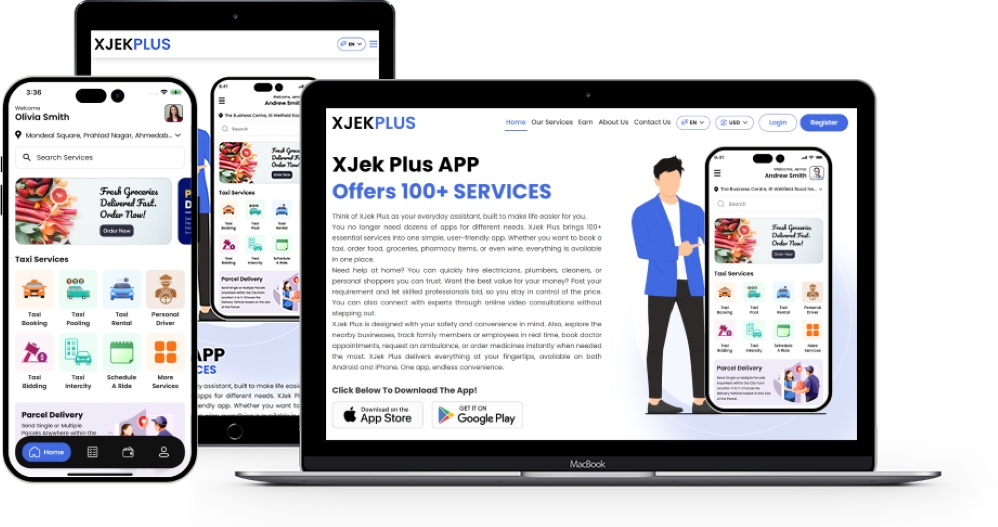
Tanzania's growing urban population, expanding digital economy, and increasing smartphone usage are creating opportunities for app-based transportation businesses. Entrepreneurs can use ride-hailing platforms to connect passengers with drivers, simplify bookings, manage payments, and build scalable mobility services.
A Motisha Clone App provides a ready-made foundation for launching a branded ride-hailing business in Tanzania. Instead of developing every component from scratch, entrepreneurs can customize an existing platform with their own branding, pricing, service areas, payment options, and business rules.
This guide explains how Motisha Clone App Development can work for the Tanzanian market, including features, development steps, monetization, localization, costs, and frequently asked questions.
What Is a Motisha Clone App?
A Motisha Clone App is a pre-built or customizable ride-hailing solution based on the general workflow of modern taxi-booking platforms.
A complete solution typically includes three major components:
Passenger App
Driver App
Admin Panel
The passenger app allows customers to request rides, select destinations, view fares, track drivers, and complete payments.
The driver app allows drivers to register, manage availability, accept ride requests, navigate to passengers, complete trips, and monitor earnings.
The admin panel provides centralized management of drivers, passengers, bookings, pricing, payments, reports, and other business operations.
The objective is not to copy another company's proprietary software, branding, or intellectual property. Instead, a clone solution uses similar business concepts and common ride-hailing functionality to help entrepreneurs build their own transportation brand.
Why Launch a Motisha Clone App in Tanzania?
Tanzania provides opportunities for digital transportation services, particularly in urban markets where customers need convenient ways to arrange local transportation.
A customized ride-hailing platform can help entrepreneurs create a technology-driven transportation business.
1. Faster Market Entry
Developing a complete ride-hailing platform from the ground up can require significant time.
A ready-made solution provides an existing foundation containing many standard components, potentially reducing initial development work.
2. Build Your Own Brand
A business can customize the platform with:
Company name
Logo
Brand colors
App icon
User interface
Domain
Notifications
Pricing model
This allows the entrepreneur to establish an independent transportation brand.
3. Expand to Multiple Locations
A scalable platform can initially serve a selected city or service area and expand to additional locations as the business grows.
4. Manage Operations Digitally
A centralized admin panel can provide visibility into:
Drivers
Customers
Bookings
Revenue
Payments
Service areas
Complaints
Reports
This can make day-to-day management more organized.
How Does a Motisha Clone App Work?
The basic ride-hailing workflow connects passengers and drivers through a centralized platform.
Passenger Workflow
Register → Select Pickup → Enter Destination → Choose Vehicle → View Fare → Request Ride → Track Driver → Complete Trip → Pay → Rate Driver
Driver Workflow
Register → Submit Details → Get Approved → Go Online → Receive Request → Accept Ride → Reach Pickup → Start Trip → Complete Trip → Receive Earnings
Admin Workflow
Manage Users → Approve Drivers → Monitor Bookings → Configure Pricing → Manage Payments → Track Revenue → Handle Support → Generate Reports
This three-sided ecosystem forms the foundation of a ride-hailing business.
Essential Features of a Motisha Clone App
A successful ride-hailing platform needs separate functionality for passengers, drivers, and administrators.
Passenger App Features
User Registration
Passengers can create accounts using the registration methods supported by the platform.
GPS-Based Location Detection
The application can identify pickup locations and display available drivers around the customer.
Ride Booking
Customers can enter pickup and destination details and request transportation.
Fare Estimation
Passengers can view an estimated fare before confirming their booking.
Vehicle Selection
Businesses can provide different ride categories according to their service model.
For example:
Economy
Standard
Premium
Larger vehicles
Real-Time Driver Tracking
Passengers can track the driver's location after a booking is accepted.
Ride Scheduling
Customers can schedule transportation for a future date and time if this functionality is included.
Digital Payments
The app can support available payment methods based on the business requirements and selected payment providers.
Ride History
Passengers can view previous rides and transaction information.
Ratings and Reviews
Customers can rate drivers and provide feedback after completing a trip.
Push Notifications
Notifications can be used for:
Booking confirmations
Driver acceptance
Driver arrival
Ride updates
Payment confirmation
Cancellation
Driver App Features
The driver application helps transportation providers manage their daily activities.
Driver Registration
Drivers can submit their personal, vehicle, and professional information.
Document Upload
The platform can allow drivers to submit documents required by the business for verification.
Online and Offline Status
Drivers can control whether they are available for new bookings.
Ride Requests
Drivers receive ride requests and can accept or reject them.
Navigation
Map integration can help drivers reach pickup and destination locations.
Earnings Management
Drivers can monitor completed rides, earnings, commissions, and other relevant financial information.
Trip History
Drivers can access records of previous trips.
Driver Ratings
Drivers can view customer ratings where the platform provides this functionality.
Admin Panel Features
The admin panel gives business owners centralized control over the platform.
Dashboard
A dashboard can display important business information, including:
Active rides
Completed rides
Drivers
Customers
Revenue
Cancellations
Driver Management
Administrators can manage driver registrations, documents, approval status, vehicles, and activity.
Customer Management
The system can provide controls for customer accounts and booking histories.
Booking Management
Administrators can monitor active, scheduled, completed, and cancelled rides.
Pricing Management
Business owners can configure pricing rules according to their commercial strategy.
Commission Management
The platform can calculate commissions between drivers and the business.
Reports and Analytics
Reports can help monitor:
Ride volume
Revenue
Driver performance
Customer activity
Cancellation rates
Payment activity
Support Management
The admin system can provide tools for handling customer and driver complaints.
Localization for the Tanzanian Market
Localization is important when developing a transportation platform for Tanzania.
Language Support
A business should identify the languages required by its target customers and drivers.
Swahili and English are particularly relevant for many Tanzanian digital services.
The application can be designed to support multiple languages so users can select their preferred interface language.
Currency Support
A Tanzania-focused application may need pricing and reporting in Tanzanian Shilling (TZS).
Before launch, the business should confirm currency formatting and payment processing requirements with its selected technology and payment providers.
Location and Maps
Location functionality is essential to ride-hailing.
The platform can use mapping and geolocation services for:
Pickup detection
Destination selection
Driver tracking
Route calculation
Distance calculation
Estimated arrival times
Navigation
The selected mapping provider should be evaluated for coverage and API capabilities in the target Tanzanian service areas.
Payment Integration
Payment flexibility can improve the customer experience.
Depending on the business model and available providers, the application may support:
Mobile money
Bank-related payment options
Debit or credit cards
Cash
Other supported digital payment methods
For Tanzania, mobile money can be particularly relevant to a local ride-hailing strategy.
Before integrating a payment provider, businesses should evaluate:
API availability
Transaction charges
Settlement process
Currency support
Refund functionality
Failed transactions
Security
Compliance requirements
Cash Payments
A business may also choose to support cash payments.
If cash is enabled, the admin panel should be capable of tracking cash-based trips and calculating driver commissions accurately.
Pricing and Fare Management
A flexible pricing system allows the business to adapt its ride-hailing model.
Base Fare
A fixed starting charge can be configured for a particular vehicle category.
Distance-Based Pricing
The fare can increase based on the distance travelled.
Time-Based Pricing
Trip duration can be included in the fare calculation.
Minimum Fare
A minimum charge can be configured for specific ride categories.
Dynamic Pricing
Businesses can potentially use demand-based pricing during periods of high demand.
Pricing policies should be clearly communicated to customers and configured in accordance with applicable local requirements.
AI Features for a Modern Motisha Clone
AI and data-driven technologies can add additional capabilities to a ride-hailing platform.
AI-Based Driver Matching
Matching algorithms can consider:
Driver location
Passenger location
Estimated arrival time
Driver availability
Trip requirements
This can help improve booking allocation.
Demand Forecasting
Historical trip data can be analyzed to identify demand patterns.
For example, the business can identify periods when additional drivers may be required.
Fraud Detection
Automated systems can identify unusual account, booking, or payment activity for additional review.
AI Customer Support
AI-powered assistants can answer common questions and route more complex issues to support agents.
Route Optimization
Data-driven routing can help improve estimated travel times and operational efficiency.
AI should be introduced where it provides measurable business value rather than simply being added as a marketing feature.
How to Develop a Motisha Clone App in Tanzania
Launching a ride-hailing platform involves several stages.
Step 1: Define the Business Model
Before development begins, determine:
Target customers
Service area
Vehicle categories
Pricing strategy
Driver model
Revenue model
Payment methods
Expansion plans
A clear business model helps determine which features are required.
Step 2: Select the Service Area
A startup can begin with a focused market rather than launching across the entire country.
For example, the initial operation could target Dar es Salaam and later expand to other cities.
Other potential markets may include:
Arusha
Mwanza
Dodoma
Zanzibar
The appropriate launch location depends on customer demand, driver availability, competition, operating costs, and applicable requirements.
Step 3: Choose a Development Approach
Entrepreneurs generally have three options:
Ready-made solution
Customized ready-made solution
Fully custom development
A ready-made platform can reduce initial development work, while custom development provides greater flexibility.
Step 4: Customize the Application
Customization can include:
Branding
UI/UX
Languages
Currency
Vehicle categories
Pricing
Payment methods
Service areas
Commission rules
Notifications
Step 5: Integrate APIs and Services
A ride-hailing application may require integrations for:
Maps
Payments
SMS
Push notifications
Analytics
Customer support
Each integration should be tested before launch.
Step 6: Test the Platform
Testing should cover the entire ride lifecycle.
Important scenarios include:
Registration
Login
Location detection
Ride booking
Driver matching
Ride acceptance
Navigation
Cancellation
Payment
Refunds
Notifications
Ratings
Network interruptions
Testing should be performed across supported devices and operating systems.
Step 7: Onboard Drivers
A sufficient driver network is essential.
Create a structured onboarding process for:
Registration
Identity verification
Vehicle information
Document submission
Approval
Training
Application usage
Businesses should confirm applicable Tanzanian transportation and licensing requirements before activating drivers.
Step 8: Launch and Monitor
After deployment, monitor important metrics such as:
Ride requests
Completed trips
Driver acceptance
Cancellation rate
Customer retention
Revenue
Payment failures
Customer complaints
These metrics can help improve the service over time.
Motisha Clone Business Model
A ride-hailing startup can use several revenue models.
Commission Per Ride
The platform can retain a percentage of each completed ride.
Booking or Service Fee
A fixed or variable service fee can be applied to eligible bookings.
Driver Subscription
Depending on the business model, drivers can pay a recurring platform subscription.
Corporate Transportation
Businesses can provide transportation accounts for organizations and employees.
Premium Services
Premium vehicle categories can generate additional revenue from customers looking for higher-end transportation.
A hybrid revenue model can also combine several of these approaches.
Benefits of a Ready-Made Motisha Clone
A ready-made platform can offer several advantages for startups.
Reduced Initial Development Work
Core ride-hailing functionality is already available.
Faster Customization
The business can focus on branding and market-specific requirements.
Established Feature Structure
Common components such as booking, tracking, notifications, and administration may already be implemented.
Easier Expansion
A scalable architecture can support additional service areas and vehicle categories.
Lower Development Complexity
The startup does not need to design every system component from the beginning.
However, businesses should carefully review the platform's technology, source-code access, customization rights, security, scalability, and licensing terms.
Motisha Clone vs Custom Development
Factor | Ready-Made Motisha Clone | Custom Development |
|---|---|---|
Development foundation | Pre-built | Built from scratch |
Initial workload | Lower | Higher |
Launch timeline | Potentially shorter | Usually longer |
Customization | Depends on provider | Highly flexible |
Core features | Usually available | Developed individually |
Technology control | Depends on agreement | Greater |
Maintenance | Provider/shared | Business/development team |
Scalability | Depends on architecture | Designed to requirements |
The best option depends on the startup's budget, technical requirements, customization needs, and long-term objectives.
How Much Does Motisha Clone App Development Cost in Tanzania?
There is no universal price for developing a Motisha Clone.
The total investment can depend on:
Passenger app features
Driver app features
Admin panel
UI/UX customization
Number of platforms
Payment integrations
Map APIs
Language support
AI features
Third-party integrations
Cloud infrastructure
Security requirements
Source-code ownership
Maintenance
Technical support
A ready-made solution may require less initial development work than a completely custom application. However, businesses should consider the complete cost of ownership, including hosting, APIs, maintenance, upgrades, and support.
Security and Data Protection
A ride-hailing platform manages customer accounts, driver information, locations, bookings, and payment-related information.
Security should therefore be considered from the beginning.
Important measures may include:
Secure authentication
Role-based access
Encrypted communication
Secure APIs
Database protection
Payment security
Access logging
Backups
Monitoring
Vulnerability testing
Regular security updates
Businesses should review the privacy and data-protection obligations applicable to their specific Tanzanian operations and obtain professional legal advice where necessary.
What to Check Before Buying a Motisha Clone?
Before selecting a development provider, entrepreneurs should evaluate several areas.
Source Code
Determine whether complete source code is provided and what rights the business receives.
Customization
Ask which features can be modified and whether additional development is available.
Technology Stack
Review the mobile framework, backend technology, database, APIs, and infrastructure.
Localization
Confirm support for Swahili, English, TZS, and other market-specific requirements.
Payment Integrations
Verify compatibility with the payment methods needed for the Tanzanian market.
Scalability
Ask how the platform handles increasing drivers, customers, bookings, and real-time location requests.
Security
Review authentication, encryption, access control, backups, and security testing.
Technical Support
Understand the provider's:
Maintenance policy
Support process
Upgrade policy
Bug-fixing process
Response times
Post-launch support
Licensing
Understand whether the platform is licensed, hosted, leased, or delivered with ownership rights.
Conclusion
Motisha Clone App Development in Tanzania can provide entrepreneurs with a practical foundation for launching a branded ride-hailing business. A complete platform can connect passengers and drivers while providing businesses with tools for bookings, tracking, payments, pricing, driver management, and analytics.
A ready-made solution can reduce the initial development workload, while customization allows the platform to match the startup's branding and local business requirements.
For Tanzania, businesses should pay particular attention to Swahili and English language support, Tanzanian Shilling pricing, mobile money and other payment options, mapping coverage, driver onboarding, security, scalability, and applicable transportation requirements.
Starting with a focused service area can also allow entrepreneurs to test their business model, build a driver network, collect customer feedback, and improve operations before expanding into additional cities.
The right technology provider should be evaluated based on its customization capabilities, source-code and licensing terms, security, scalability, integrations, support, and total cost of ownership.
Frequently Asked Questions
1. What is a Motisha Clone App?
A Motisha Clone App is a pre-built or customizable ride-hailing platform that provides features for passengers, drivers, and administrators.
2. Can I launch a Motisha Clone business in Tanzania?
A business can develop a ride-hailing platform in Tanzania, subject to applicable transportation, licensing, business, privacy, payment, and other requirements.
3. Can the app support Swahili?
Yes. A multilingual application can be configured to support Swahili when localization is supported by the platform.
4. Can the app also support English?
Yes. English can be included alongside Swahili to provide customers with language options.
5. Can I use Tanzanian Shilling in the application?
Yes. The platform can be configured to display and process prices in Tanzanian Shilling, subject to the capabilities of the selected payment and financial infrastructure.
6. Can I integrate mobile money?
Mobile-money integration can be implemented when the selected provider and application architecture support the required APIs and transaction workflows.
7. Does a Motisha Clone include a driver app?
A complete ride-hailing solution generally includes a driver app for registration, availability, ride requests, navigation, trip management, and earnings.
8. Does it include an admin panel?
Yes. A complete platform generally includes an admin panel for managing drivers, customers, bookings, pricing, payments, reports, and support.
9. How does a Motisha Clone make money?
Common revenue models include ride commissions, booking fees, driver subscriptions, corporate transportation, and premium services.
10. How much does Motisha Clone App Development cost?
The cost depends on features, customization, integrations, platforms, payment systems, infrastructure, security, and ongoing support.
11. How long does it take to develop a Motisha Clone?
The development timeline depends on whether the business chooses a ready-made, customized, or fully custom solution and how many features and integrations are required.
12. Can I launch in Dar es Salaam first?
Yes. A startup can choose a focused initial service area such as Dar es Salaam and expand after establishing its operations, subject to applicable requirements.
13. Can I add multiple vehicle categories?
Yes. The platform can support multiple vehicle categories depending on the selected architecture and business model.
14. Can customers schedule rides?
Yes. Scheduled bookings can be included if supported by the platform's booking system.
15. Can AI features be added to the Motisha Clone?
Yes. Depending on the architecture, AI can support areas such as driver matching, demand forecasting, fraud detection, customer support, and analytics.
16. What should I check before purchasing a Motisha Clone?
Check the source-code rights, licensing, customization options, technology stack, scalability, security, payment integrations, localization, maintenance, technical support, and total cost of ownership.