
Modern engineering systems are becoming more complex, making it important for engineers to test and validate designs before building physical prototypes. Model Based Design Using Matlab and Simulink provides an effective approach for developing, simulating, testing, and improving engineering systems in a virtual environment.
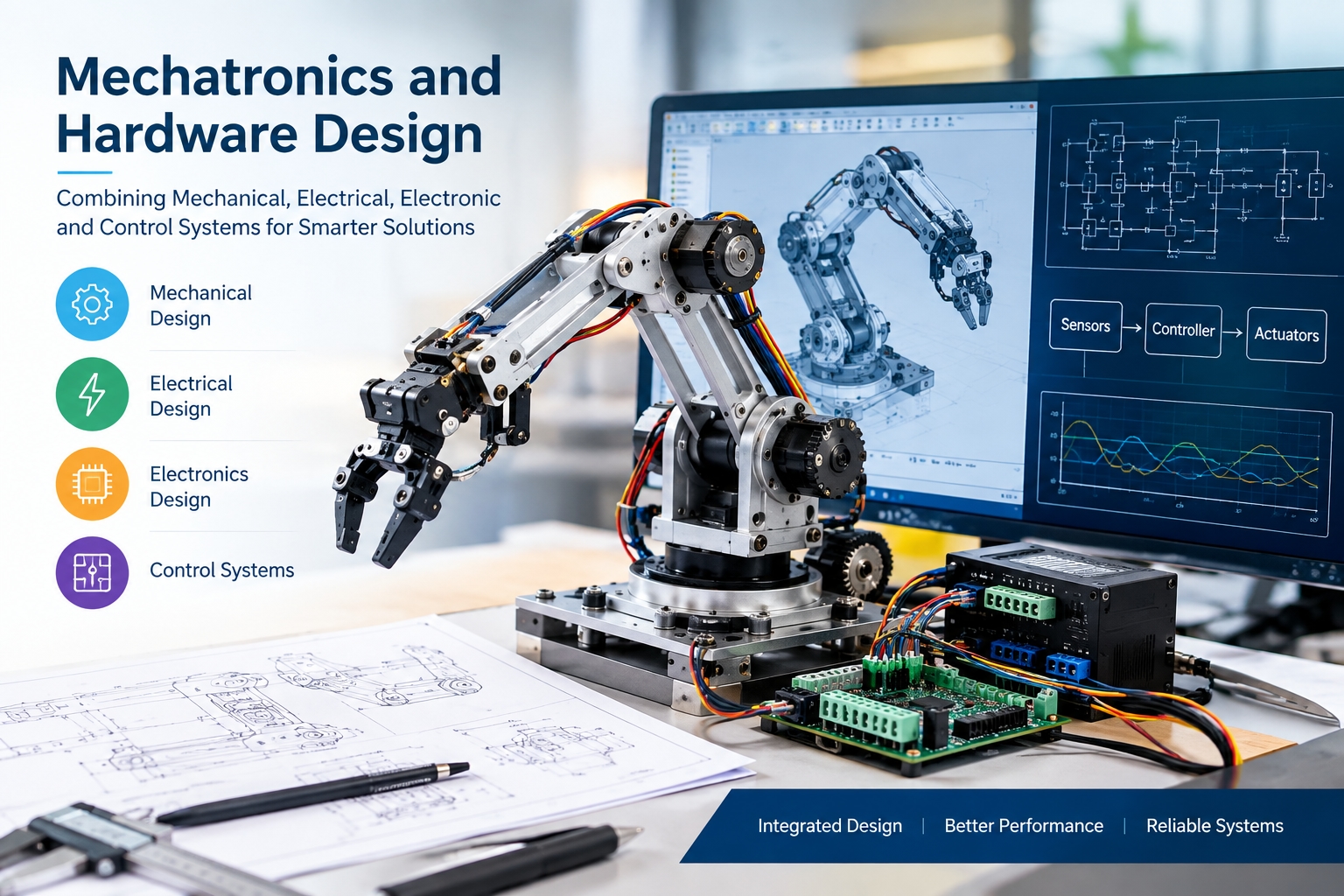
Instead of depending only on physical prototypes, engineers can create mathematical and system models to understand how a design is expected to behave. This approach can be especially useful for control systems, embedded software, industrial automation, robotics, and other engineering applications.
What Is Model Based Design?
Model-based design is an engineering development approach in which a system model is used as an important part of the design and development process.
The model can represent the behavior of a physical system, control algorithm, or complete engineering process. Engineers can modify the model and observe how the system responds under different conditions.
This allows potential problems to be identified earlier in the development cycle.
For complex systems, model-based development can reduce dependence on repeated physical prototypes and provide engineers with a structured way to evaluate different design options.
What Are MATLAB and Simulink?
MathWorks develops MATLAB and Simulink, which are widely used engineering tools for mathematical computing, modeling, simulation, and system development.
MATLAB provides an environment for numerical calculations, data analysis, algorithm development, and visualization. Simulink provides a graphical environment for modeling and simulating dynamic systems.
When used together, these tools can support different stages of engineering development.
How Model Based Design Using Matlab and Simulink Works
The process generally starts with understanding the requirements of the system. Engineers then create a mathematical or functional representation of the system.
Using Simulink, engineers can represent system components using blocks and connect them according to the required system behavior.
MATLAB can be used alongside the model for calculations, data processing, algorithm development, and analysis.
The model can then be simulated under different conditions to evaluate the expected behavior.
This process can be repeated as the design is improved.
Benefits of Model Based Design
One of the main advantages of model-based design is that engineers can test ideas before implementing them on physical hardware.
Some common benefits include:
Early identification of design problems
Faster development cycles
Reduced dependence on physical prototypes
Easier testing of different scenarios
Improved understanding of system behavior
Better collaboration between engineering teams
Support for control algorithm development
The actual benefits depend on the complexity of the project and how effectively the modeling process is implemented.
Model Based Design for Control Systems
Control systems are an important area where model-based design can be particularly useful.
Engineers can create models representing motors, mechanical systems, sensors, controllers, and other components. They can then evaluate how the control system responds to different inputs and operating conditions.
For example, an engineer developing a motor control system can simulate changes in speed, load, or other operating conditions before implementing the control algorithm on an actual machine.
This provides an opportunity to improve the control strategy during the development stage.
Simulation Before Hardware Testing
Physical testing can require equipment, prototypes, engineering time, and other resources. While physical testing remains important, simulation can provide an additional layer of validation before hardware is available.
Engineers can use simulations to investigate different operating conditions and identify unexpected behavior.
For example, a model can be used to evaluate how a system responds to changes in input signals, loads, or control parameters.
Once the model produces satisfactory results, the design can move toward hardware implementation and physical testing.
Model Based Design for Embedded Systems
Embedded systems often require software to interact closely with physical hardware. Developing and testing control logic before deployment can help engineers identify problems earlier.
Model-based development can support the creation and testing of algorithms that may later be implemented in embedded control software.
This can be useful in applications involving machine control, robotics, industrial automation, mobile equipment, and other embedded systems.
The model can provide a controlled environment for testing system behavior before the software is deployed to the target hardware.
Testing Different Operating Conditions
Real-world machines may operate under many different conditions. Testing every possible situation with physical hardware can be time-consuming.
Simulation allows engineers to create different test scenarios and observe how the system responds.
For example, engineers can change input values, system loads, sensor signals, or operating parameters to evaluate system behavior.
This can help identify weaknesses in the design and provide opportunities to improve the control strategy.
Improving Engineering Collaboration
Large engineering projects often involve mechanical, electrical, controls, and software engineers. A shared system model can help different teams understand how their components interact.
For example, a controls engineer can use a model to evaluate control logic while a mechanical engineer can review the expected behavior of the mechanical system.
This shared approach can improve communication and reduce misunderstandings between engineering disciplines.
Challenges of Model Based Design
Although model-based design provides many benefits, it also requires careful implementation.
The accuracy of simulation depends on the quality of the model. If important physical characteristics are missing or incorrect, simulation results may not accurately represent real-world behavior.
Engineers therefore need a good understanding of the system being modeled.
Physical testing is also still necessary. A simulation cannot always reproduce every real-world factor, such as manufacturing variations, unexpected environmental conditions, component tolerances, or hardware limitations.
For this reason, simulation and physical validation should generally complement each other.
Applications of Model Based Design
Model-based design can be used across many engineering fields, including:
Industrial automation
Embedded control systems
Robotics
Automotive engineering
Mobile machinery
Mechatronics
Motor control
Process control
System simulation
Hardware and software development
The specific modeling and simulation approach depends on the requirements of each application.
Conclusion
Model Based Design Using Matlab and Simulink provides engineers with a structured way to model, simulate, test, and improve complex engineering systems before full physical implementation.
By combining mathematical modeling, simulation, control development, and testing, engineers can gain a better understanding of system behavior and identify potential problems earlier in the development process.
While physical testing remains an essential part of engineering validation, model-based design can complement traditional development methods and help teams build more reliable and efficient control systems.
As engineering systems continue to become more complex, simulation and model-based development are likely to remain valuable tools for modern engineering teams.


