This shift has encouraged businesses of all sizes to explore mobile applications. However, developing a successful app involves much more than writing code or creating an attractive interface. It requires a clear understanding of customer needs, thoughtful planning, and a development team that knows how to turn an idea into a practical solution.
Working with the right mobile app development company can help businesses make that transition with greater confidence.
Why Mobile Apps Matter for Modern Businesses
A mobile application can make everyday activities more convenient for both customers and employees. Instead of relying entirely on phone calls, emails, or manual processes, businesses can provide important services through a single platform.
For example, a retail business might use an app to display products, manage orders, and send delivery updates. A healthcare provider could offer appointment booking and reminders, while an educational organization might use an application to share learning materials and communicate with students.
Some important advantages of mobile app development include:
Convenient customer access: Customers can explore products and services directly from their smartphones.
Improved communication: Notifications can help businesses share useful updates and announcements.
Simplified operations: Apps can reduce repetitive tasks through automated processes.
Better customer engagement: Personalized features can create a more relevant user experience.
Business expansion: A well-planned application can support new services and customer groups as the business grows.
Of course, an app is not automatically the right choice for every business. The best starting point is identifying a genuine problem that a mobile application can solve.
What Makes a Mobile Application Successful?
An application does not become successful simply because it has many features. In fact, too many unnecessary features can make an app confusing and difficult to use.
A successful application usually begins with a simple question: what should users be able to accomplish, and how can the app make that process easier?
A few elements deserve particular attention.
User-friendly design: Navigation should feel natural, important information should be easy to find, and common tasks should require as few steps as practical.
Reliable performance: Users expect applications to open quickly and work consistently. Frequent crashes or slow loading can damage their confidence in a brand.
Security and privacy: Appropriate safeguards are essential when an app handles personal information, payments, or business data.
Device compatibility: The application should be tested on the devices and operating system versions relevant to its intended audience.
Room for improvement: Customer feedback and usage patterns can help developers identify problems and prioritize future updates.
These details may seem small during planning, but together they can make a significant difference in how people experience an application.
Choosing the Right Mobile App Development Company
Selecting a development partner is an important decision, particularly for businesses investing in their first application. A good partner should understand the business objective before recommending technologies or discussing advanced features.
Start by reviewing the company's previous projects, development approach, and experience with applications similar to yours. Ask how it handles project planning, interface design, testing, data security, and post-launch support.
Communication is equally important. You should know what will be delivered, how progress will be reviewed, and how changes to the original requirements may affect the timeline or budget.
It is also worth discussing whether the project requires a native Android app, an iOS application, or a cross-platform solution. Each approach has different considerations relating to development cost, performance, maintenance, and the intended audience.
Rather than choosing a company based only on the lowest quotation, look for a team that can explain its recommendations clearly and connect technical decisions with your actual business needs.
Understanding the Mobile App Development Process
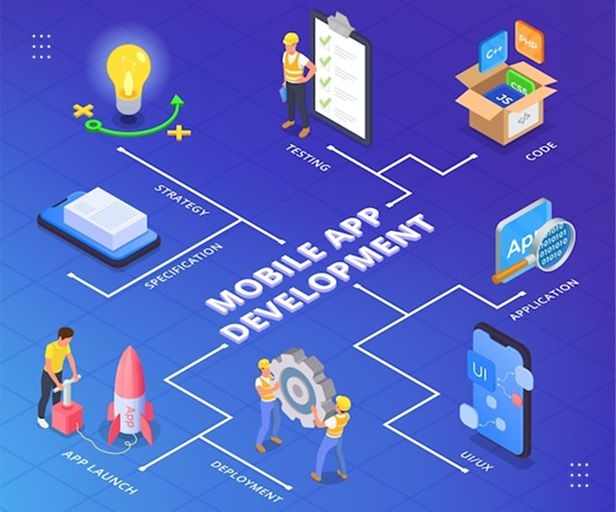
Building an application is easier to manage when the work follows a structured process.
1. Requirement analysis
The first stage involves understanding the target audience, business goals, essential features, and problems the application needs to solve.
2. Planning and UI/UX design
Developers and designers establish the application structure, user journeys, and screen layouts. A prototype can help identify usability issues before development begins.
3. Application development
The team builds the required functionality, connects databases or external services, and implements the planned features.
4. Testing and quality checks
Testing helps uncover technical errors, usability problems, security weaknesses, and compatibility issues before the application reaches users.
5. Launch and deployment
Once the application is ready, the team prepares it for release through the relevant app distribution platform or deployment environment.
6. Maintenance and updates
After launch, applications may need bug fixes, security updates, performance improvements, and additional features based on user feedback.
Following these stages helps businesses make informed decisions and reduces the likelihood of expensive changes late in the project.
How Much Does Mobile App Development Cost?
There is no single price for developing a mobile application. The cost depends on the project's complexity, required features, design requirements, integrations, security needs, and development approach.
A basic application with a limited number of features will generally require less investment than a platform involving real-time tracking, multiple user roles, payment processing, or complex backend systems.
Businesses should also consider ongoing expenses, including hosting, maintenance, third-party services, and future improvements.
One practical approach is to begin with a minimum viable product (MVP). This version includes the essential features needed to solve the main problem. Once users provide feedback, the business can decide which additional features are worth developing.
This approach helps control initial investment while allowing the product to evolve according to real-world needs.
Why Businesses Should Think Beyond the Launch
Launching an app is an important milestone, but it is not the end of the journey. Even a well-designed application needs regular attention to remain useful and reliable.
Businesses should monitor user feedback, identify technical issues, review performance, and keep software dependencies updated. Improvements should be based on genuine user needs rather than adding features simply to make the application appear more advanced.
A long-term development strategy helps businesses maintain a consistent experience while adapting to changing customer expectations.
Quick Infotech: Supporting Businesses with Digital Solutions
Quick Infotech Technology Private Limited provides digital services for businesses looking to strengthen their online presence and adopt technology that supports their goals. Its services include mobile app development, website development, software development, UI/UX design, digital marketing, and website support and maintenance.
For businesses considering a mobile application, the process begins with understanding the idea, identifying the intended users, and deciding which features will provide the greatest value. Clear planning helps establish a realistic development direction and keeps the project focused on its purpose.
Whether a business wants to create a customer-facing application, support an online store, or simplify an internal workflow, choosing an appropriate development approach is essential. The objective is to create a solution that is useful today and can be improved as requirements change.
Final Thoughts
A mobile application can become a valuable part of a business when it addresses a real need and delivers a smooth experience. The key is to focus on usability, reliability, security, and long-term value rather than trying to include every possible feature from the beginning.
Before investing in development, take time to define your goals, understand your audience, and evaluate potential development partners carefully.
With the right planning and technical support, a business idea can grow into a mobile application that makes everyday tasks easier and creates better experiences for customers.
If you are planning your next digital project, start with the problem you want to solve. The right solution becomes much clearer once that goal is defined.




