
Madagascar is a fascinating island destination known for its rare wildlife, beautiful beaches, tropical forests and impressive baobab trees. From exploring the lively streets of Antananarivo to relaxing on the beaches of Nosy Be, there is plenty to enjoy. However, travelling around Madagascar requires some preparation. Understanding local transport, currency, weather conditions and safety precautions can help you enjoy your holiday without unnecessary difficulties.
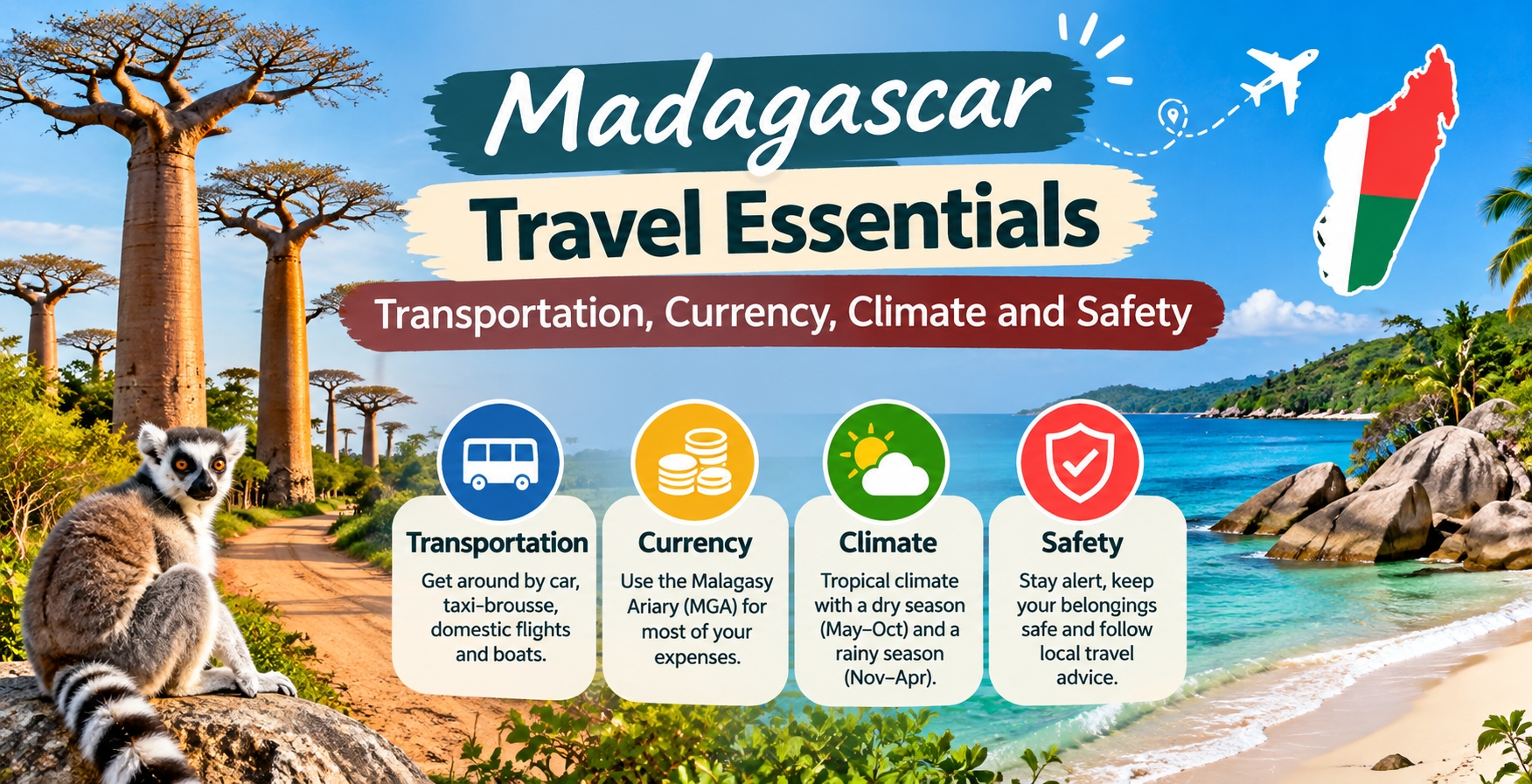
Getting Around Madagascar: Transportation Options
Transportation in Madagascar is quite different from what many international travellers are used to. Road conditions vary considerably, and even short distances can take several hours to cover.
Private Cars: Hiring a car with an experienced local driver is a practical option for exploring remote destinations.
Domestic Flights: Suitable for covering long distances between major cities and tourist destinations.
Taxi-Brousse: These shared minibuses are inexpensive but often crowded and may present safety concerns.
Hotel Transport: Pre-arranged transfers are convenient for airport pickups and local sightseeing.
Boats: Available for reaching certain coastal destinations and nearby islands. Always choose a reputable operator.
Avoid travelling by road after dark and allow extra time for unexpected delays.
Madagascar Currency and Payment Methods
The official currency of Madagascar is the Malagasy Ariary (MGA). Cash remains the preferred payment method, particularly in villages, local markets and small restaurants.
Credit cards are accepted at some larger hotels and established businesses, but their use is limited elsewhere. ATMs are available in major cities, although finding one in remote areas can be difficult.
Exchange money through authorised banks or currency exchange counters. Carry smaller notes for everyday purchases, local transport and market shopping.
Madagascar eVisa and Entry Requirements
Before arranging flights and accommodation, make sure you understand the entry requirements for your nationality. Your passport should generally remain valid for at least six months from your arrival date.
International visitors can check the Madagascar eVisa eligibility requirements before preparing their travel documents.
Using a professional eVisa assistance service can simplify application preparation through document checks, mobile-friendly forms and customer support. The service advertises expedited processing within 4–7 working days, although actual processing times and approval depend on immigration authorities.
Keep digital and printed copies of your travel documents accessible throughout your journey.
Climate and Best Time to Visit Madagascar
Madagascar experiences two main seasons, although weather conditions differ across the island.
Dry Season (May to October): Generally the best time for wildlife watching, hiking, sightseeing and exploring national parks. Temperatures are usually comfortable, and road travel is easier.
Rainy Season (November to April): Expect warmer temperatures, higher humidity and frequent rainfall. Tropical cyclones can also affect coastal regions and disrupt transportation.
Pack lightweight clothing, comfortable walking shoes, sunscreen and a waterproof jacket. Bring warmer clothing if you plan to visit the central highlands, where evenings can be cool.
Is Madagascar Safe for Tourists?
Madagascar offers memorable travel experiences, but visitors should remain aware of their surroundings. Petty theft, robbery and road safety concerns exist in certain areas.
Follow these practical safety tips:
Avoid walking alone at night.
Keep expensive belongings out of sight.
Arrange transportation through trusted providers.
Avoid demonstrations and large public gatherings.
Check current travel advisories before departure.
Purchase travel insurance covering medical emergencies and evacuation.
Malaria is also a health concern in Madagascar. Use mosquito repellent, drink safe bottled water and consult a healthcare professional before travelling.
Understanding Local Culture and Customs
Malagasy and French are widely spoken in Madagascar. Learning a few basic greetings can make everyday interactions easier.
Respect local traditions, ask permission before photographing people and follow local advice when visiting sacred places. Madagascar has traditional customs known as fady, which can vary between communities.
Final Thoughts
A successful Madagascar holiday starts with sensible planning. Arrange reliable transportation, carry sufficient local currency, choose a suitable travel season and prepare your eVisa documents in advance. With the right precautions, you can spend less time worrying about travel arrangements and more time discovering the island's extraordinary landscapes, wildlife and welcoming communities.




