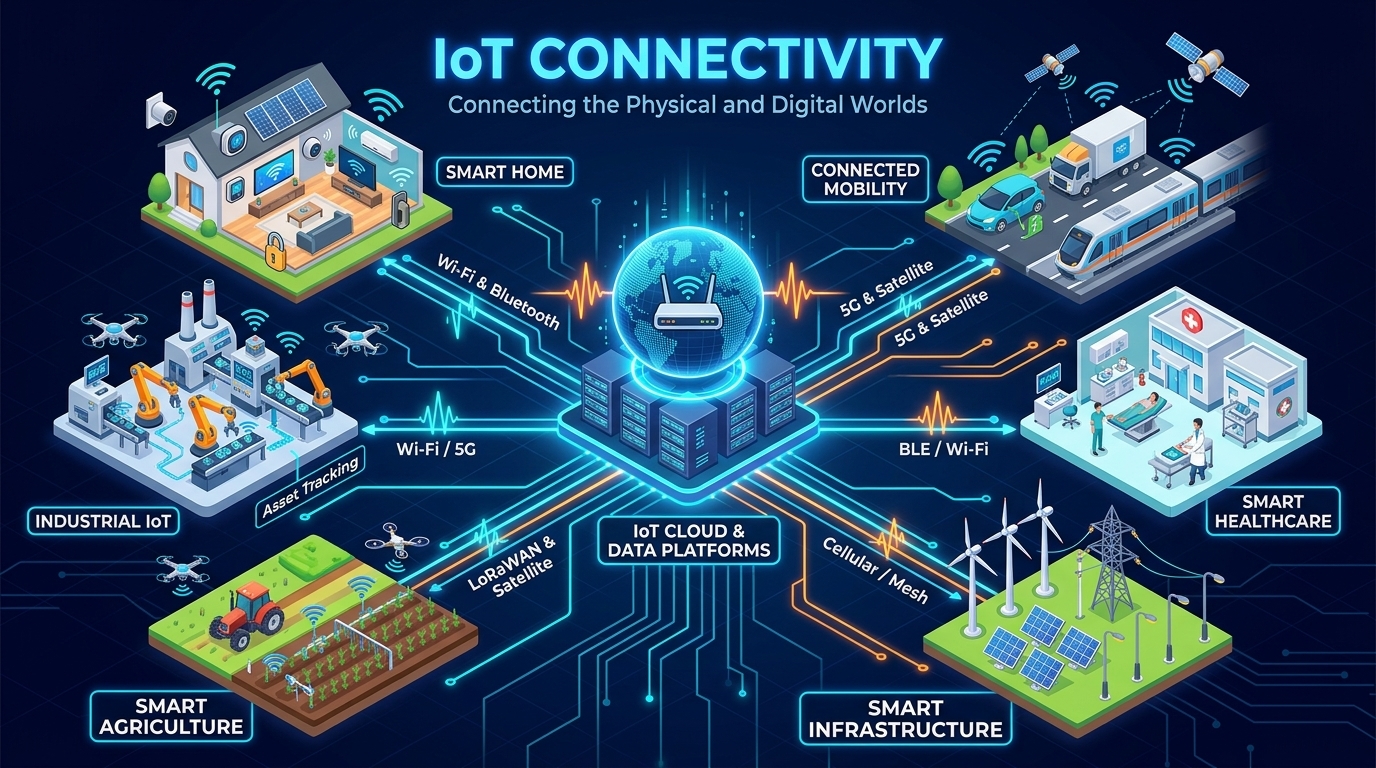
IoT connectivity is changing the way businesses connect devices, collect information, and manage daily operations. The Internet of Things allows physical devices to connect to networks and share data with other systems. These devices can include sensors, machines, medical equipment, vehicles, smart appliances, and industrial tools.
As more devices become connected, businesses can collect useful information and respond to changes faster. IoT connectivity creates a link between physical devices and digital systems. This helps organizations understand what is happening in real time and make better decisions.
The growth of connected technology is also supporting digital transformation across many industries. Healthcare, manufacturing, retail, logistics, agriculture, and other sectors can use connected devices to improve their services and processes.
How IoT Connectivity Works
IoT connectivity allows devices to send and receive data through communication networks. A connected device may collect information through a sensor and send that information to a central system or cloud platform.
The system can then process the data and provide useful information to employees or automated tools. Depending on the use case, communication may happen through Wi-Fi, cellular networks, Bluetooth, satellite connections, or other technologies.
A reliable connection is important because connected devices often need to share information continuously. When devices can communicate properly, businesses can create smoother and more responsive operations.
Role of an IoT Network
An IoT network connects different devices and allows them to exchange information. It can include sensors, gateways, routers, cloud platforms, and business applications.
The design of an IoT network depends on the type of devices being used and the environment where they operate. A small business may connect a limited number of devices, while a large industrial company may manage thousands of connected machines.
A strong network helps ensure that data moves safely and efficiently. It also makes it easier for businesses to monitor connected devices and identify problems.
IoT Connectivity in Healthcare
Healthcare is one of the areas where connected technology can provide major value. Hospitals and healthcare organizations use connected medical equipment, monitoring devices, smart systems, and patient support tools.
IoT devices can collect information from medical equipment and send it to authorized healthcare systems. This can help healthcare teams monitor equipment and access useful information more quickly.
The connection between IoT and digital transformation healthcare is becoming important as healthcare providers move toward more connected digital systems. Connected technology can support better workflows and help healthcare organizations manage resources more effectively.
Supporting Remote Patient Monitoring
IoT connectivity can support remote patient monitoring by connecting health devices to digital platforms. Patients may use connected devices to collect health information that can be shared with authorized healthcare professionals.
This can help healthcare teams monitor patients without requiring every interaction to happen inside a hospital or clinic. It can also help patients stay connected with healthcare providers from their homes.
Remote monitoring systems must be designed with strong privacy and security controls because healthcare information is sensitive.
IoT in Smart Hospitals
Smart hospitals can use connected devices to improve many parts of their operations. Medical equipment, beds, monitoring systems, and building systems can be connected to a central platform.
For example, connected equipment can provide information about its condition and use. Hospital staff can use this information to manage equipment more effectively and respond to maintenance needs.
IoT can also support room management, energy use, and facility monitoring. These systems can help healthcare organizations create more organized and efficient environments.
IoT Connectivity in Manufacturing
Manufacturing companies use connected devices to monitor machines, production lines, and equipment. Sensors can collect information about machine performance, temperature, pressure, speed, and other conditions.
This information can help businesses identify possible equipment problems before they cause major delays. Companies can also use data to understand production performance and improve their processes.
A connected manufacturing environment can make operations more visible and allow managers to respond to changes faster.
Supporting Predictive Maintenance
Predictive maintenance is another important use of IoT connectivity. Traditional maintenance often follows a fixed schedule, even when equipment may not need service.
Connected sensors can provide information about machine conditions. Businesses can study this information to identify signs of possible problems.
Early action can help reduce unexpected equipment failures and improve machine availability. It can also help companies plan maintenance work more effectively.
IoT in Logistics and Transportation
Transportation and logistics companies can use connected devices to track vehicles, shipments, and equipment. GPS devices and sensors can provide information about location, movement, temperature, and other conditions.
This information can help companies monitor deliveries and respond to delays. Businesses can also use connected systems to improve route planning and manage vehicles.
For products that require special conditions, sensors can monitor temperature or other factors during transportation. This can help protect goods and improve delivery quality.
IoT in Retail
Retail businesses can use connected devices to improve store operations and customer experiences. Sensors can help monitor inventory, store conditions, equipment, and customer activity.
Connected inventory systems can provide information about product availability. Employees can use this information to manage stock and reduce the risk of products being unavailable.
IoT can also support smart shelves, connected payment systems, and store monitoring. These technologies can help retailers create more efficient operations.
IoT and Energy Management
Businesses can use connected devices to monitor and manage energy use. Smart meters and sensors can provide information about electricity consumption, heating, cooling, and other systems.
This information can help organizations understand where energy is being used and identify areas where consumption can be reduced.
Smart energy systems can also support automatic controls. For example, connected building systems can adjust lighting or temperature based on usage and conditions.
IoT and Digital Transformation
IoT connectivity is an important part of digital transformation because it connects physical activities with digital systems. Businesses can collect real-time information from machines, devices, vehicles, and other assets.
This information can then be used by analytics platforms, automation tools, and business applications. As a result, companies can create more connected workflows.
The use of IoT in digital transformation healthcare is especially useful because healthcare organizations manage large numbers of devices and complex processes. Connected technology can help bring information together and improve visibility across operations.
Improving Business Decision-Making
Data from connected devices can help managers understand what is happening across their operations. Instead of relying only on manual reports, businesses can receive information from devices in near real time.
This can help managers identify problems, monitor performance, and make informed decisions. Data can also help companies find patterns that may not be easy to see through manual observation.
Better information can lead to better planning and more efficient business processes.
Improving Security in Connected Systems
Security is an important part of any connected environment. Businesses need to protect devices, networks, applications, and the data they collect.
An IoT network should use secure connections, access controls, device authentication, and regular updates. Businesses should also monitor connected devices to identify unusual activity.
As more devices become connected, security planning becomes even more important. Protecting the complete system can help reduce the risk of unauthorized access and data loss.
IoT and Automation
IoT connectivity can work together with automation to reduce manual work. Connected devices can send information to software systems that respond automatically based on predefined rules.
For example, a sensor may detect a change in temperature and trigger an alert or activate a connected system. In manufacturing, a machine may send a warning when its condition changes.
Automation can help businesses respond faster and reduce the need for constant manual monitoring.
The Future of IoT Connectivity
The future of IoT connectivity will involve more connected devices, better networks, and stronger links between physical and digital systems. Businesses will continue to explore ways to use real-time data to improve operations.
Artificial intelligence and data analytics can make connected systems more useful by helping businesses understand large amounts of device data. Cloud platforms can also provide flexible ways to store and process information.
Healthcare, manufacturing, logistics, retail, and other industries are likely to continue using connected technology as part of their digital strategies.
Conclusion
IoT connectivity provides businesses with a practical way to connect devices, collect data, and improve operations. From healthcare and manufacturing to logistics, retail, and energy management, connected technology can support many business needs.
An effective IoT network helps devices communicate and allows organizations to use real-time information for better decisions. At the same time, the connection between IoT and digital transformation healthcare can help healthcare providers create more connected and efficient systems.
As businesses continue their digital transformation, IoT will remain an important technology for connecting the physical world with modern digital platforms. With proper security, planning, and network design, connected devices can create new opportunities for efficiency, automation, and long-term growth.
More Info: Amg Innovative