Urban transportation is becoming increasingly complex. Growing populations, increasing vehicle numbers, changing commuter expectations and operational challenges are putting pressure on public transport systems to become more coordinated and efficient.
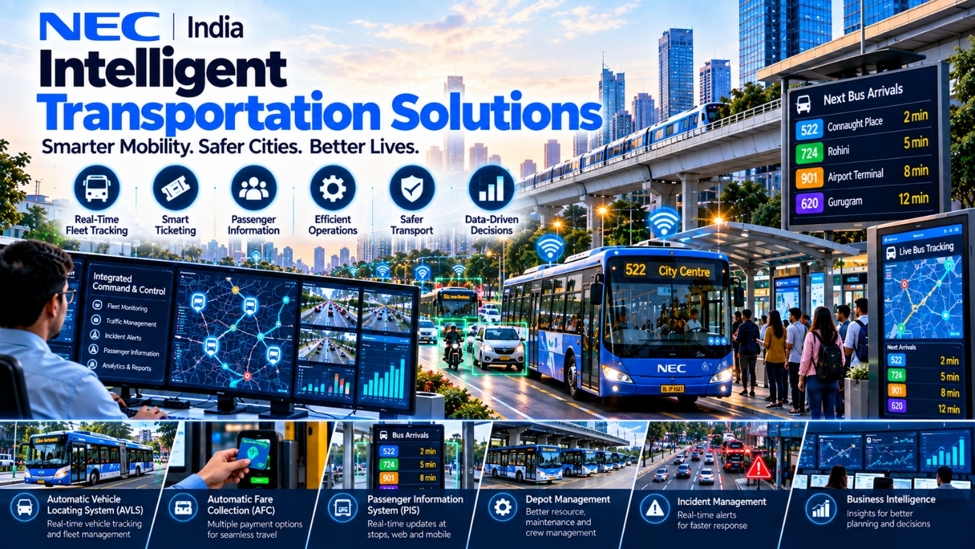
An Intelligent Transportation Solutions approach can connect vehicle tracking, passenger information, automated ticketing, incident management, planning and data analytics into a broader transportation ecosystem. NEC Corporation India offers an Intelligent Transportation System comprising applications for different transport modes and traffic-management requirements.
What Are Intelligent Transportation Solutions?
Intelligent transportation solutions use information and communication technologies to improve the way transportation networks are monitored, managed and used.
NEC describes its Intelligent Transportation System (ITS) as an advanced suite of applications designed to provide services across different modes of transport and traffic management. The objective is to help users make safer, more coordinated and smarter use of transportation networks.
Rather than treating ticketing, fleet management, passenger information and incidents as completely separate functions, an intelligent transportation ecosystem can connect operational information across these areas.
Real-Time Fleet Visibility
Knowing where vehicles are and how they are operating is fundamental to public transportation management.
NEC's Automatic Vehicle Locating System (AVLS) gathers real-time information about buses travelling along their routes. Operators can use this information to monitor fleet location, supervise operations, assess service performance and support fleet planning.
Real-time visibility can also provide the foundation for passenger-facing information services.
Passenger Information Systems
Passengers need accurate and timely information to plan their journeys.
NEC's Passenger Information System can provide route and timing information through displays at bus stops, displays inside buses, websites and mobile applications. Journey planners and estimated arrival information can also be delivered through digital channels.
This connects operational information with the passenger experience.
When transport operators have access to real-time vehicle data, passengers can receive information that reflects actual service conditions rather than relying only on predetermined schedules.
Smart and Automated Ticketing
Ticketing is another major component of public transportation.
NEC's Automatic Fare Collection System is designed to support easy and accurate revenue collection while improving the passenger travel experience. Its multimodal approach can support different payment formats, including smart cards, paper tickets and mobile tickets.
The system can also support central clearing-house functionality for transportation environments involving single or multiple operators.
This makes automated fare collection relevant not only to individual bus services but also to broader multimodal transportation environments.
Depot Management
Efficient public transportation also depends on what happens behind the scenes.
NEC's Depot Management System is designed to automate depot operations covering areas such as crew management, inventory, roster management and vehicle maintenance.
The system includes functions related to:
HR and payroll management
Crew performance and training
Stores and inventory
Crew roster management
Vehicle maintenance
Preventive and predictive maintenance scheduling
Connecting these functions can help transport operators maintain better visibility over the resources required to operate a fleet.
Planning, Scheduling and Dispatch
Public transportation depends heavily on effective planning.
NEC's transportation portfolio includes Vehicle Planning, Scheduling and Dispatch capabilities intended to help transport planners perform daily transportation planning tasks more efficiently.
Planning systems can work alongside real-time fleet information to give operators a clearer understanding of scheduled operations and actual service conditions.
Real-Time Incident Management
Unexpected incidents can affect routes, schedules and passenger experience.
NEC's Incident Management System includes real-time incident and alert management capabilities. Its transportation portfolio is designed to help dispatchers respond to events while maintaining an overall view of fleet performance.
This is particularly relevant for large transportation networks where a single incident can affect multiple vehicles or routes.
Business Intelligence for Transportation
Transportation systems generate significant amounts of operational data.
Business Intelligence can help convert this information into reports, performance indicators and analytical insights.
NEC's Smart Transportation portfolio includes a Business Intelligence System alongside fleet tracking, fare collection, incident management, depot management and passenger information capabilities.
This can support data-based decision-making across areas such as revenue, ridership, service performance and fleet operations.
Connecting Transportation Data
The real value of an intelligent transportation ecosystem comes from connecting different operational functions.
Consider a bus journey:
AVLS identifies the vehicle's location.
Passenger Information Systems communicate relevant arrival and route information.
Automatic Fare Collection manages passenger transactions.
Depot systems support vehicles and crews.
Incident Management responds to operational disruptions.
Business Intelligence analyses the resulting operational data.
When these functions operate as part of a connected transportation environment, operators can gain a more comprehensive view of their network.
Smart Transportation in Indian Cities
India's growing cities require transportation systems capable of handling increasing passenger demand while improving operational visibility.
NEC's Ahmedabad intelligent transport project provides a documented example. The system integrates automated fare collection, vehicle location, passenger information and other transport-management capabilities. Data from different services is collected and analysed through a command-and-control centre to support bus operations and operational decision-making.
The case study describes applications including fleet management, bus allocation, route performance and passenger services, demonstrating how transportation data can be used beyond simple vehicle tracking.
Supporting Safer and More Coordinated Mobility
NEC's broader ITS positioning focuses on making transportation networks safer, more coordinated and better informed.
Real-time visibility can help operators understand current conditions, while passenger information systems help commuters access transportation information. Automated fare collection can streamline ticketing, and incident-management capabilities can support responses to operational disruptions.
Together, these technologies form a foundation for more connected public transport management.
Adapting to Growing Urban Demand
As cities expand, transportation systems need to handle more complex operating environments.
Technology alone does not solve every transportation challenge, but connected information can help transport agencies understand their operations more clearly and respond using current data.
NEC's transportation portfolio therefore combines multiple capabilities rather than focusing on a single technology: AVLS, PIS, automatic fare collection, depot management, planning and scheduling, incident management and business intelligence.
The Future of Intelligent Public Transportation
The future of urban mobility is increasingly connected.
Real-time fleet information, digital ticketing, passenger communication, operational analytics and intelligent planning can work together to create a more coordinated transportation environment.
For transport operators, the focus is moving beyond simply knowing where vehicles are. It is about understanding the complete transportation ecosystem—from vehicles and depots to passengers, ticketing, incidents and performance data.
Intelligent transportation technologies can provide the digital foundation needed to support that transition.
Conclusion
Modern public transportation requires visibility, coordination and timely information.
Intelligent transportation systems bring together technologies such as real-time vehicle tracking, passenger information, automated fare collection, depot management, incident management, planning and business intelligence. NEC India's transportation portfolio demonstrates this integrated approach across multiple public-transport functions.
As urban transportation networks continue to evolve, connected technology and data-driven operations can play an important role in helping cities manage mobility requirements and provide more informed, coordinated transportation services.