
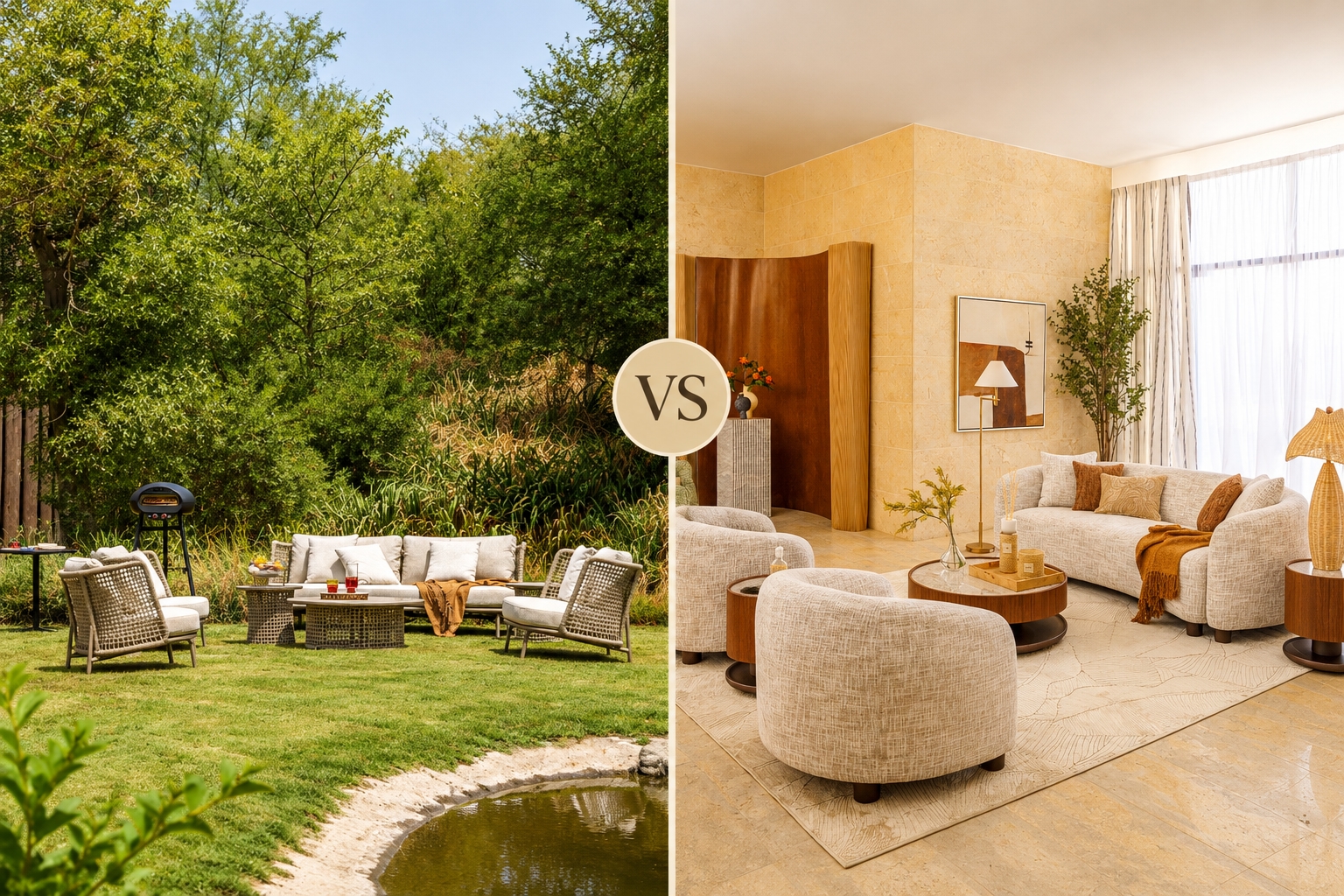
When selecting your furniture, you should look at more than just the piece itself. It should be right for its environment and offer comfort while it lasts through daily use. Indoor furniture is made to be used within the home environment where it is not exposed to the harsher conditions of the outdoors.
This knowledge of the difference between indoor and outdoor furniture allows you to purchase items more suitable for all areas of your home. Especially in the UAE, where the sun and dusty environment on your balcony, patio, veranda, or garden will impact furniture, it is important to compare material, build, comfort, and upkeep.
What Is the Difference Between Indoor and Outdoor Furniture?
Indoor furniture is furniture that is used in a living room, bedroom, dining room, or home office. Indoor furniture tends to put emphasis on comfort, style, soft furnishings, and practicality within a controlled indoor environment.
Outdoor furniture is made for use on patios, balconies, gardens, and terraces. It might be made with weatherproof materials, have a protective coat, use outdoor-safe fabrics, and have structures ready to handle exposure to moisture and sunlight.
When you compare outdoor vs indoor furniture, don't be swayed just by looks. A beautiful chair on the terrace will look out of place on an interior table, but it will not stand up to outdoor use if it is not constructed to do so.
This section compares indoor and outdoor furniture in terms of material suitability, comfort and everyday use, weather resistance, space requirements and maintenance needs. It also tells if indoor furniture can be used outdoors, and what to consider before deciding to do so.
1. Compare Furniture Materials
Materials affect quality of life in many ways, like how well furniture lasts, feels, looks, and how easy it is to take care of and use.
Wood
The right wood furniture can be made up of items suitable for different purposes. Wood furniture fits beautifully into your indoor space, adding comfort and texture to the couch area, bedrooms, and dining spaces.
Some types of wood, such as teak, are popular for outdoor use because of their inherent durability. But outdoor wood is still wood, and it needs to be maintained, and it will age.
Metal
The selection of metal furniture is as diverse as the types of furniture, ranging from modern dining chairs to ornamental side tables.
Metal furniture for indoors can focus more on aesthetics and stability. For outdoor furniture, aluminium is often used as the metal is lightweight and most aluminium furniture is usually rust-resistant. Steel furniture can also be used if the furniture has suitable protective coatings and the furniture is looked after.
Identify whether the piece is waterproof by checking for a finish and the manufacturer's instructions before flooding it with water.
Rattan and Synthetic Woven Materials
Natural rattan is most often used for indoor furniture and occasional seating. It might not be ideal to leave outside in the rain or sun unless made and treated to withstand it.
Most of the garden sofas, loungers and patio furniture sets will be made of synthetic outdoor rattan or wicker. Check that you have all the relevant details about suitability for UV, moisture and frame construction.
Upholstery and Fabrics
Because upholstery is normally used indoors, chairs have a tendency to be softer in colour and texture. Chairs that are intended to be used outdoors will generally have some degree of protection from sunlight, water, and fading. Some outdoor fabrics are water resistant but not completely waterproof.
Confirm the fabric specifications of the upholstery, seams, cushion stuffing, and covers before buying.
2. How to Consider Comfort and Everyday Use
Comfort is important for both indoor and outdoor furniture, but the purpose of activity may be different.
Indoor sofas and armchairs can be used for prolonged periods of time in a sedentary manner for reading, watching TV, etc. Comfort factors include upholstery, cushioning, seat depth, back support, etc.
It should also be comfortable to sit on outside and then constructed from materials that are appropriate for where it is situated. Cushions that can be taken away for cleaning purposes or quick-drying outdoor fabric may be an option if the furniture is placed in a damp area.
When comparing indoor vs outdoor furniture, consider how often each piece will be used and who will use it. A balcony reading chair may have different requirements from a large outdoor seating arrangement intended for family gatherings.
3. Understand Weather Resistance
Every person has to consider the weather resistance before purchasing outdoor furniture in the UAE.
Sunlight & UV Exposure
Extended exposure to sunlight may fade fabrics and damage certain finishes. If your furniture will be left outdoors, check for fabric and finish UV resistance.
Heat
Hot weather can make some surfaces uncomfortable, and it is not recommended for you to use any materials that are not meant for outdoor use. Think about where you're placing your furniture, available shade, and guidance regarding temperature from the manufacturer.
Dust and Sand
It may build up on tables and cushions, in woven areas. Furniture with more wipeable surfaces can be easier to maintain.
Humidity and Rain
Rain can also damage unprotected metal, certain fabrics, and the wrong wood. Go for furniture that is weather-resistant and follow the guidance on product usage and protection.
Some products are more suitable for outdoors than others, so don't assume each product you see on the market as outdoor furniture is impermeable.
4. Tips on Choosing Furniture According to Your Space
The intended location should guide your purchase.
Living Rooms: Select sofas, armchairs, coffee tables, and storage furniture that can be left outdoors without harm.
Bedrooms: Beds, wardrobes, bedside tables and dressers should work for the size of your bedroom, as well as providing all the storage and comfort you require.
Dining areas: Choose tables and chairs that fit the room size and function.
Balconies: Add small outdoor seating, bistro tables and low-maintenance materials.
Patios and gardens: Shop for outdoor seating, tables, lounge chairs and dining sets rated for outdoor conditions.
For covered terraces, some of the conditions are likely to be less severe than for completely exposed patios. However, dust blow is likely even in covered areas.
5. Compare Maintenance Requirements
Indoor furniture usually needs to be dusted and cleaned regularly and maintained from time to time. The material of the furniture will determine how the furniture should be cared for. Chairs or other upholstered furniture might need a vacuum, for example.
Cleaning patio furniture: Patio furniture may require regular cleaning due to dust, sand, and environmental elements.
Outdoor cushions: Cushions may have to be brought in during extreme weather or sun, depending on cushion specifications.
Some good maintenance practices are:
Removing dust and debris regularly.
Cleaning spills promptly.
Following manufacturer-recommended cleaning instructions.
Using suitable protective covers when necessary.
Keeping cushions in a dry, well-ventilated area when possible.
Inspecting frames, joints, and finishes for wear.
Easy-care materials can also save time on maintenance, especially in high-traffic outdoor areas.
6. Does indoor furniture work outdoors?
Don't assume indoor furniture is suitable for outdoor use. Finishes, adhesives, and upholstery intended for indoor furniture are often not suitable for sun, moisture, or changing temperatures.
Certain indoor items may be used in a protected, covered area. This is determined by the product specifications and the exposure conditions.
In a similar manner, some outdoor furniture can be used outdoors if it looks and is comfortable for the room. It may not, however, have the right type of cushioning, strength, and style to work indoors.
If you decide to move your furniture to a new location, ensure with the manufacturer that it is right for this new space before doing so.
Conclusion
Knowing the distinction between outdoor and indoor furniture allows you to make selections that are comfortable, look great, and last the test of time. While interior furniture normally emphasises interior comfort and style, outdoor furniture should also consider sunlight, dirt, moisture, as well as climate variations.
Once you decide to purchase a piece of furniture, take into account the specific material, how it is constructed, the level of care needed, and where you will place it. Selecting furniture for its purpose can help ensure it lasts longer and is more functional.




