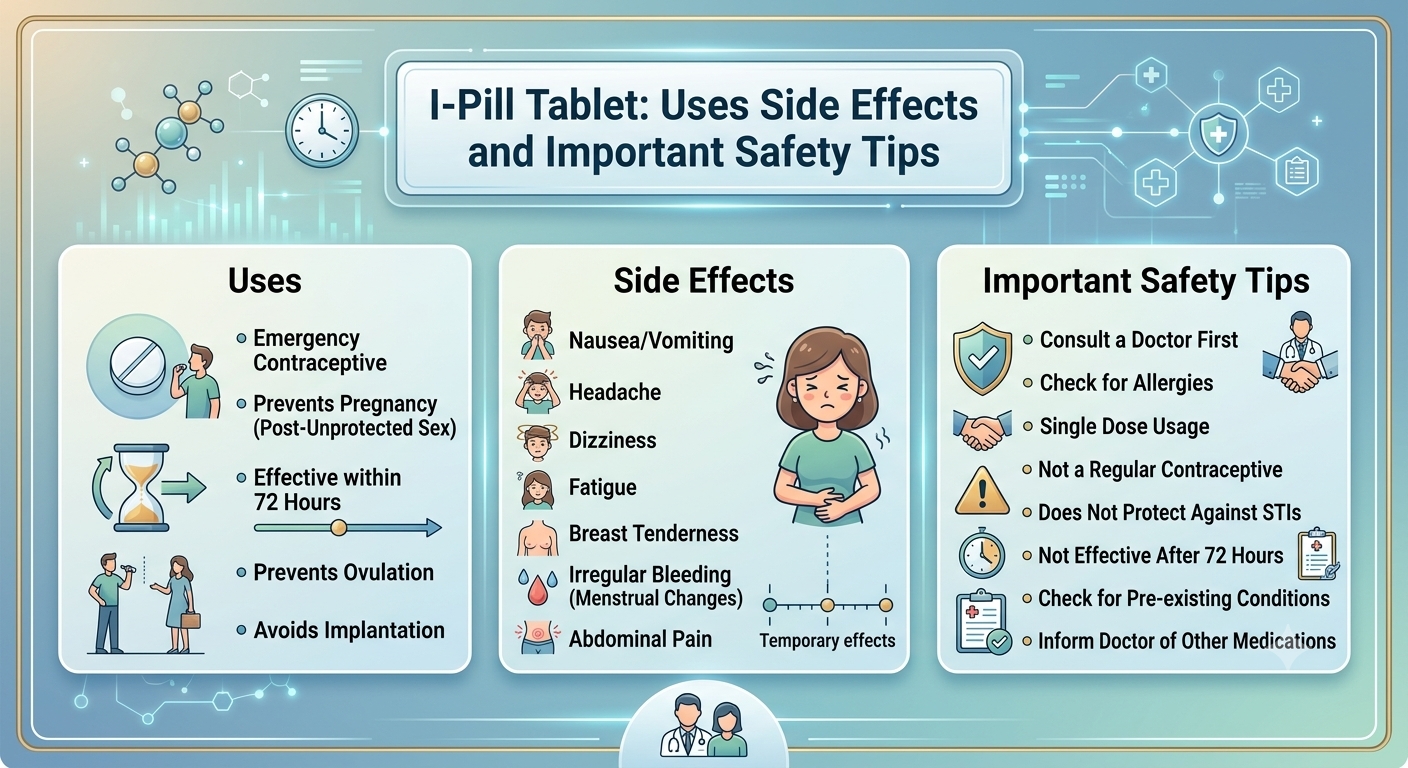
Emergency contraception can be useful when regular contraception has not been used or has failed. It is designed to help reduce the possibility of pregnancy following unprotected sexual intercourse or contraceptive failure. Understanding emergency contraception, its appropriate use, effectiveness, and precautions can help people make informed decisions about their reproductive health.
I-Pill Tablet is an emergency contraceptive containing levonorgestrel, a hormone that primarily works by delaying or preventing ovulation. It is intended for emergency situations and should not be used as a regular method of contraception. It is most effective when taken as soon as possible after unprotected intercourse, according to the product instructions.
What Is Emergency Contraception?
Emergency contraception refers to methods that can help prevent pregnancy after unprotected sex or when contraception has failed. It is different from abortion medication because emergency contraception is intended to prevent pregnancy before it occurs. It does not terminate an established pregnancy.
Emergency contraceptive tablets containing levonorgestrel mainly work by delaying ovulation. Their effectiveness can vary depending on when they are taken and whether ovulation has already occurred.
When Is I-Pill Used?
Emergency contraception may be considered in situations such as unprotected intercourse, a broken or slipped condom, or contraceptive failure. Taking the tablet as soon as possible after the contraceptive failure is generally recommended.
It is important to follow the instructions provided with the medicine. If there is uncertainty about whether emergency contraception is appropriate, speaking with a doctor or pharmacist can provide more personalized guidance.
How Does It Work?
Levonorgestrel primarily works by delaying or preventing ovulation. If ovulation has not occurred, this action can reduce the chance of pregnancy. It does not provide protection against sexually transmitted infections.
Emergency contraception also does not provide ongoing protection from pregnancy. After using it, appropriate regular contraception should be considered if pregnancy prevention is needed in the future.
Possible Side Effects
Some people may experience temporary side effects after taking levonorgestrel emergency contraception. Common effects can include nausea, headache, dizziness, tiredness, abdominal discomfort, breast tenderness, or changes in the menstrual cycle.
The next period may occur earlier or later than expected. Menstrual changes can vary from person to person and are usually temporary. If the period is significantly delayed or pregnancy symptoms develop, a pregnancy test may be appropriate.
Important Precautions
Emergency contraceptive tablets should not be used as a replacement for regular contraception. Frequent reliance on emergency contraception may cause menstrual irregularities and does not provide continuous pregnancy protection.
Some medicines can affect the effectiveness of levonorgestrel. Therefore, people taking prescription medicines, over-the-counter medicines, or supplements should discuss them with a healthcare professional or pharmacist when seeking advice about emergency contraception.
Emergency contraception does not protect against sexually transmitted infections. Condoms can help reduce the risk of many sexually transmitted infections while also providing contraception.
What If the Period Is Delayed?
A change in the timing of the next menstrual period can occur after emergency contraception. If the period is considerably later than expected, unusually light, or pregnancy symptoms occur, taking a pregnancy test can help determine whether pregnancy has occurred.
Severe abdominal pain, fainting, or other unusual symptoms require prompt medical attention because they may need medical evaluation.
Choosing Regular Contraception
People who frequently need emergency contraception may benefit from discussing regular contraceptive options with a qualified healthcare professional. Options can include barrier methods, hormonal contraception, intrauterine devices, and other methods depending on individual circumstances.
A healthcare professional can explain the advantages, limitations, possible side effects, and suitability of different contraceptive methods.
Conclusion
Understanding I-Pill Tablet uses can help people learn about emergency contraception, its appropriate timing, possible side effects, and important precautions. It is intended for emergency situations rather than routine pregnancy prevention. For personalized advice, especially when periods are delayed, medicines are being taken, or unusual symptoms occur, consult a qualified healthcare professional.