
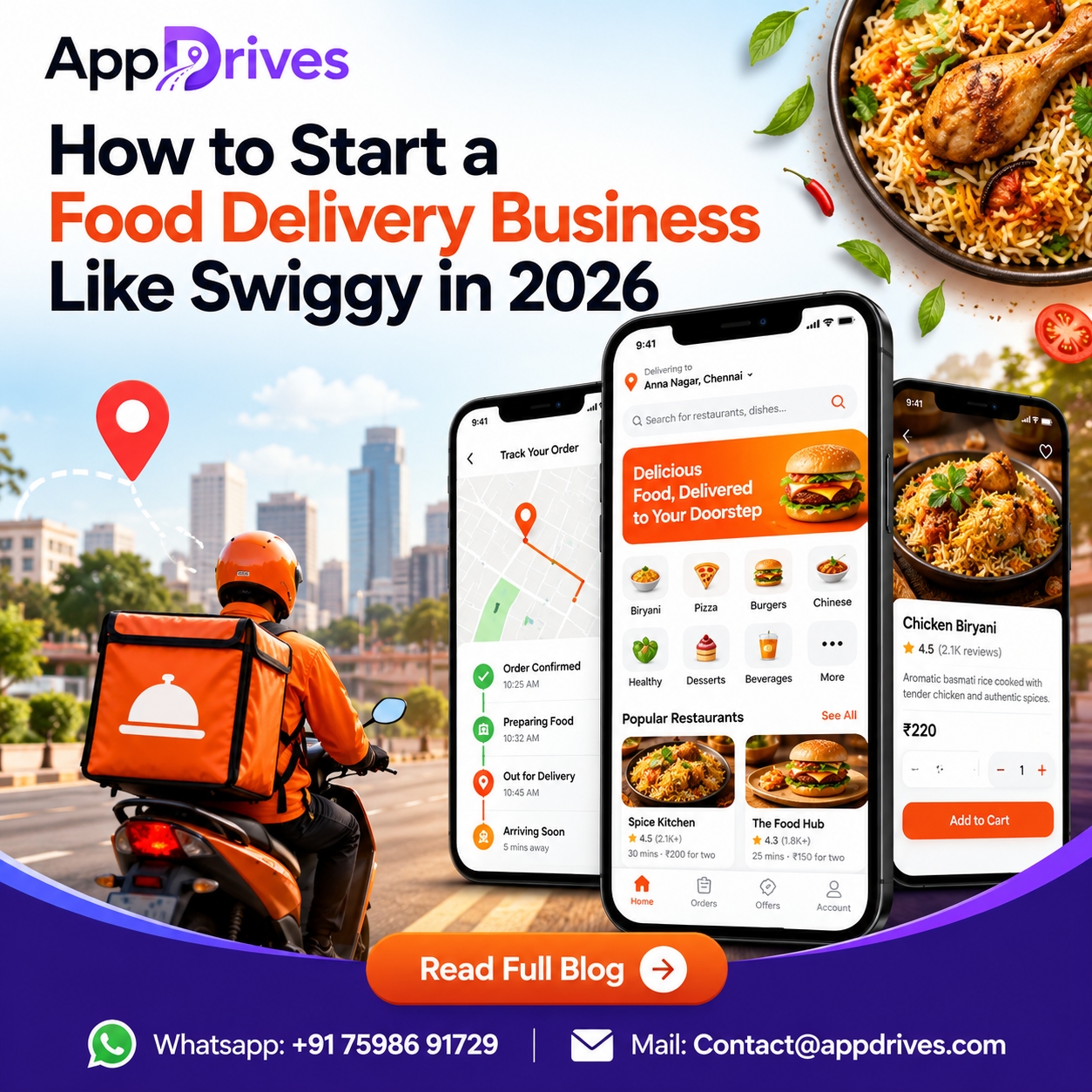
The food delivery industry has become one of the most competitive digital marketplaces in 2026. Customers now expect more than simple online ordering. They want quick restaurant discovery, secure payments, accurate delivery tracking, personalized recommendations, and convenient customer support. This growing demand has created opportunities for entrepreneurs who want to launch their own food delivery platforms.
However, starting a business like Swiggy requires more than developing an attractive application. Entrepreneurs need a clear business model, reliable technology, restaurant partnerships, delivery operations, and a strategy for acquiring and retaining customers.
Define Your Food Delivery Business Model
Before starting development, determine how your platform will make money. A multi-restaurant marketplace can generate revenue through restaurant commissions, delivery charges, customer fees, advertising, featured listings, and subscription plans.
You can also choose a specific niche instead of targeting every type of customer. For example, your platform could focus on a particular city, regional cuisine, healthy meals, corporate food delivery, cloud kitchens, or late-night orders.
Starting with a focused market can make it easier to build restaurant partnerships and understand customer requirements before expanding into additional locations.
Understand the Required App Ecosystem
A successful food delivery platform usually consists of several connected systems rather than a single application.
The customer app should allow users to search restaurants, explore menus, customize items, place orders, make payments, apply coupons, track deliveries, and submit reviews.
The restaurant panel enables restaurants to manage menus, prices, availability, incoming orders, preparation times, and business information.
The delivery partner app should support order assignments, navigation, delivery status updates, availability management, and earnings tracking.
An admin panel is also essential for managing customers, restaurants, delivery partners, commissions, payments, promotions, reports, and platform settings.
Understanding these components early helps you create a realistic development roadmap and avoid adding unnecessary features.
Plan the Development Process
Once the business model and platform requirements are clear, the next step is technology planning. Your development strategy should consider the mobile platforms, backend architecture, database, cloud infrastructure, payment gateway, map integration, push notifications, and security requirements.
If you are unfamiliar with the development process, learning how to build a Swiggy clone app can help you understand the major stages involved, including feature planning, technology selection, development, testing, and deployment.
A well-planned architecture is especially important because food delivery platforms handle multiple real-time activities simultaneously. Orders, restaurant acceptance, preparation, delivery assignment, GPS tracking, and customer notifications must work together smoothly.
Consider a Ready-Made Food Delivery Solution
Building every component from scratch can take considerable development time and resources. Entrepreneurs who want to enter the market faster can consider a customizable ready-made solution.
A Swiggy clone script can provide the basic foundation required for launching a multi-restaurant food delivery marketplace. Depending on the solution, businesses can customize branding, features, payment methods, workflows, and other components to match their specific requirements.
However, the goal should not be to simply duplicate an existing platform. Your business should have its own identity, pricing strategy, target audience, user experience, and competitive advantages.
Focus on User Experience
User experience can strongly influence whether customers return to your platform. The ordering process should be simple, fast, and transparent.
Features such as restaurant filters, personalized recommendations, saved addresses, favorite restaurants, reorder options, multiple payment methods, discount coupons, order tracking, and ratings can improve convenience.
The experience of restaurant owners and delivery partners is equally important. Restaurants need an efficient way to manage orders, while delivery partners require clear assignments, navigation, earnings information, and status updates.
Launch Locally and Scale Gradually
You don't need to launch your platform across multiple cities immediately. Starting with a specific location can help you understand customer behavior, restaurant demand, delivery costs, and operational challenges.
After establishing consistent order volume, you can expand into additional areas. Your technology should be scalable enough to support multiple cities, restaurants, delivery partners, payment methods, and increasing order volumes.
Marketing should also work alongside technology. Social media campaigns, referral programs, restaurant promotions, local partnerships, and customer loyalty programs can help attract the first users.
Build for Long-Term Growth
Launching a food delivery business like Swiggy requires a combination of technology, operations, marketing, and customer service. The application is only one part of the overall business.
Choosing an experienced mobile app development company can help you evaluate your technical requirements, integrations, customization needs, and long-term development strategy.
Rather than trying to compete with established platforms on everything, identify a specific market opportunity and build a better experience around it. With the right business model, technology foundation, restaurant network, and growth strategy, a focused food delivery platform can gradually develop into a scalable digital marketplace.



