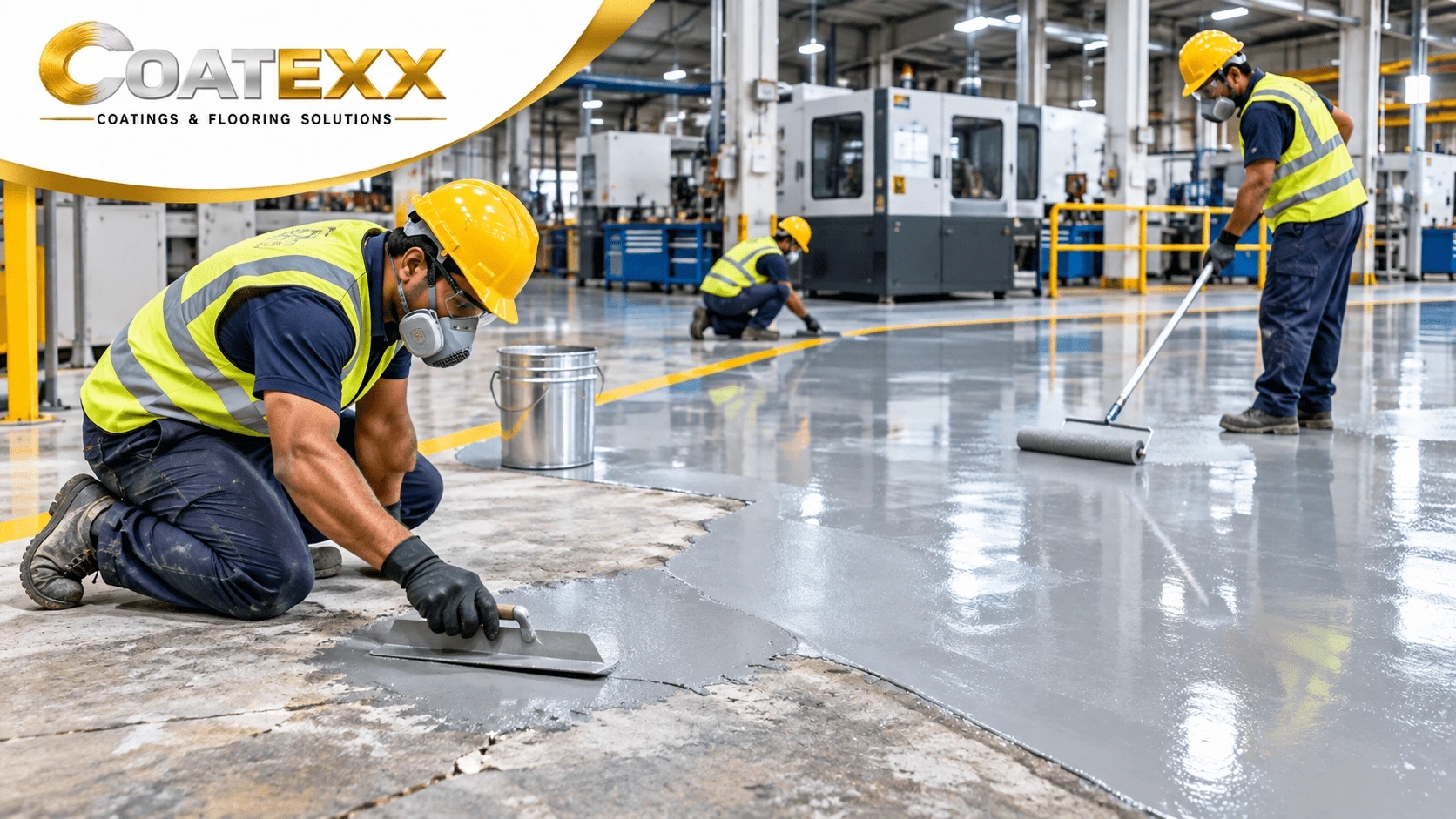
Industrial facilities frequently handle chemicals, lubricants, oils, solvents, and cleaning agents during daily operations. Accidental spills and prolonged chemical exposure can gradually damage protective floor coatings and underlying concrete.
Discolouration, surface softening, peeling, and cracks are some of the visible signs of chemical-related flooring damage. If left untreated, these problems may increase maintenance expenses and affect workplace conditions.
Professional Floor Repair & Recoating Services help industries address damaged surfaces and restore suitable protective finishes. However, identifying the type of chemical exposure is essential before selecting any repair system.
How Do Chemical Spills Damage Industrial Floors?
Industrial floor coatings provide protection against specific environmental and operational conditions. However, no flooring material offers unlimited resistance to every chemical.
Chemical-related damage depends on several factors:
Type and concentration of chemicals
Duration of chemical exposure
Operating temperature
Existing coating thickness
Frequency of spills
Condition of the concrete substrate
Repeated exposure to incompatible chemicals may weaken protective coatings and allow contaminants to penetrate the underlying concrete.
Prompt spill management and regular floor inspections can help limit further deterioration.
What Are the Signs of Chemical Damage on Industrial Floors?
Facility managers should monitor changes in floor appearance and surface condition.
Type of Damage | Possible Cause |
|---|---|
Surface discolouration | Chemical exposure or staining |
Coating peeling | Loss of adhesion or contamination |
Surface softening | Exposure to incompatible chemicals |
Blistering | Moisture or contamination beneath coatings |
Concrete erosion | Exposure to aggressive chemicals |
Surface roughness | Gradual coating or substrate deterioration |
These symptoms may also have other causes. A professional inspection helps determine the actual problem before repairs begin.
How to Repair Industrial Floors After Chemical Damage?
A successful Industrial Floor Repair project requires proper assessment, contamination removal, substrate preparation, and compatible protective materials.
1. Identify the Source of Chemical Exposure
Before starting repairs, determine which chemicals caused the damage and how frequently the floor encounters them.
Review chemical safety data sheets, operating conditions, and cleaning procedures. This information helps contractors evaluate suitable repair materials and protective coatings.
2. Assess the Extent of Floor Damage
Inspect whether deterioration is limited to the coating or extends into the concrete substrate.
Superficial damage may require localized recoating, while deeper deterioration may need concrete repairs.
Severe structural damage should be assessed by a qualified specialist.
3. Remove Contamination and Damaged Coatings
Chemical residues, loose coatings, and weakened concrete must be addressed before applying new materials.
Trained personnel should manage hazardous residues using appropriate safety procedures. Once the area is safe, mechanical surface preparation may be required.
4. Repair Damaged Concrete Surfaces
Cracks, holes, and deteriorated areas may require compatible repair compounds or industrial repair mortars.
The selected material should match the repair depth, substrate condition, and expected operational loads.
5. Apply a Suitable Protective Coating
After surface preparation and repairs, a compatible protective flooring system can be installed.
The proposed coating should meet the facility's chemical exposure, temperature, traffic, and maintenance requirements.
Which Flooring Systems Are Suitable for Chemical Exposure?
Different industrial flooring systems offer different levels of chemical resistance.
Epoxy Flooring Systems
Suitable epoxy formulations provide protective finishes for manufacturing facilities, workshops, and selected processing environments.
Their chemical resistance depends on the product formulation and actual exposure conditions.
Polyurethane Flooring Systems
Specialized PU Flooring Solutions may be suitable for facilities experiencing frequent washdowns, temperature variations, and exposure to selected chemicals.
Heavy-Duty Repair Systems
Industrial repair mortars and thicker flooring systems may be considered where chemical exposure occurs alongside mechanical wear or impact damage.
Always review product-specific chemical resistance data before selecting a flooring material.
How Can Industries Prevent Future Chemical Floor Damage?
Preventive maintenance helps protect existing flooring systems and reduce repeated repair requirements.
Industrial facilities should:
Follow appropriate chemical spill management procedures.
Inspect high-exposure areas regularly.
Use compatible floor-cleaning products.
Address damaged protective coatings promptly.
Provide suitable secondary containment where required.
Maintain records of chemical exposure and floor repairs.
Factories should also review their flooring specifications whenever production chemicals or operating processes change.
What Factors Affect Chemical-Damaged Floor Repair Costs?
Repair costs vary depending on the extent of contamination, damaged floor area, surface preparation, repair depth, and selected coating system.
Businesses evaluating industrial floor repair services in India should provide contractors with floor photographs, chemical exposure details, existing coating specifications, and operational requirements.
A detailed site assessment helps establish a realistic repair scope, quotation, and completion schedule.
Why Choose CoatEXX for Industrial Floor Repair and Recoating?
CoatEXX Industrial Solutions provides floor restoration services for factories, warehouses, manufacturing plants, and commercial facilities.
Its services include surface assessment, concrete repairs, localized patching, mechanical preparation, and protective recoating.
The company recommends flooring systems based on site conditions and industrial operating requirements.
Conclusion
Chemical spills can gradually damage industrial floor coatings and underlying concrete. Effective restoration requires identifying the contamination source, assessing surface damage, and selecting suitable repair materials.
Regular maintenance and appropriately specified protective coatings can help reduce premature flooring deterioration.
Contact CoatEXX Industrial Solutions today to discuss your industrial floor repair and recoating requirements.
Frequently Asked Questions (FAQs)
1. Can chemical-damaged industrial floors be repaired?
Yes. Suitable repair methods depend on contamination levels, coating condition, and the extent of concrete deterioration.
2. Are epoxy floors resistant to all chemicals?
No. Chemical resistance varies according to the epoxy formulation, chemical concentration, temperature, and exposure duration.
3. When are Floor Repair & Recoating Services required?
These services may be necessary when industrial floors develop peeling, cracks, surface erosion, coating deterioration, or localized damage.
4. Can chemical-resistant coatings be applied over damaged floors?
Damaged material and contamination must be addressed first. The substrate should be properly prepared before applying a compatible coating.
5. How long does chemical-damaged floor repair take?
Project duration depends on contamination, damaged area, preparation requirements, repair materials, and curing conditions.