
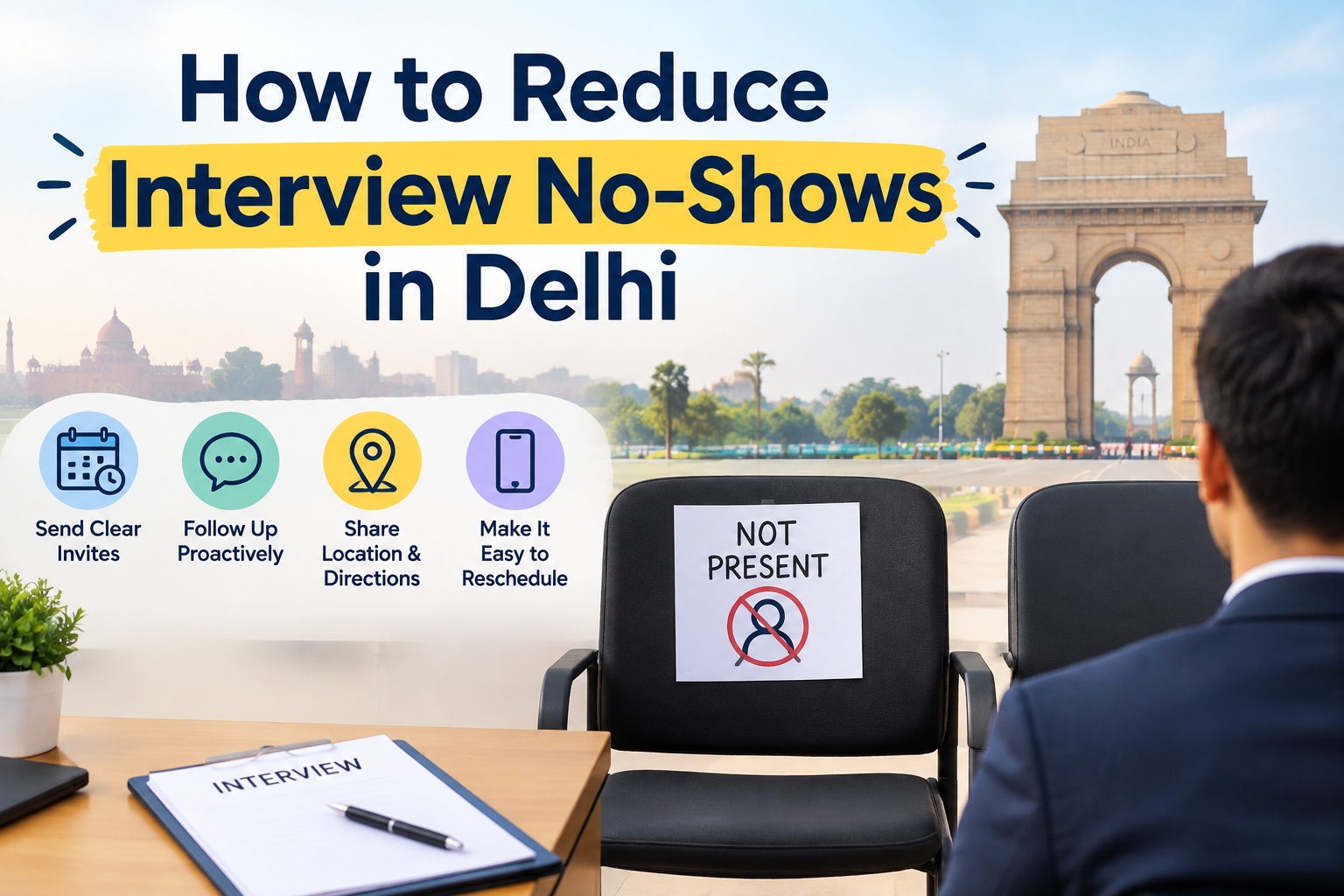
Interview no-shows can disrupt hiring schedules, delay business plans and waste valuable time for recruiters and hiring managers. In Delhi's competitive job market, candidates often have multiple opportunities, changing priorities and long commutes to consider. A candidate who confirms an interview today may not necessarily turn up tomorrow unless the hiring process keeps them engaged.
For employers, reducing interview no-shows is not simply about sending more reminders. It requires a smoother candidate experience, clear communication, realistic scheduling and timely follow-ups. Whether you are hiring for an entry-level position or a senior role, a few practical changes can significantly improve interview attendance.
Why Do Candidates Miss Interviews?
Before solving the problem, employers need to understand why no-shows happen. Not every missed interview indicates a lack of interest.
Common reasons include:
The candidate has accepted another job offer.
The interview details were unclear or forgotten.
The candidate received a better opportunity elsewhere.
The interview time clashes with work or personal commitments.
The candidate is concerned about travelling across Delhi or NCR.
There was a last-minute change in the candidate's circumstances.
The employer took too long to confirm the interview.
The candidate did not receive enough information about the role.
For example, a candidate travelling from Dwarka to an office in Noida may reconsider attending if the interview was arranged at short notice and the job description does not clearly explain the opportunity.
Understanding these practical barriers helps employers design a hiring process that candidates are more likely to follow through with.
1. Share Complete Interview Details
A simple confirmation message can prevent avoidable confusion.
When scheduling an interview, provide:
Date and time
Office address or video meeting link
Interviewer's name and designation
Expected interview duration
Job title
Contact number for assistance
Any documents or preparation required
Instead of sending a message that says, "Your interview is tomorrow at 11 am," provide a complete confirmation.
For instance:
Interview: Sales Executive
Date: 18 September
Time: 11:00 am
Location: Connaught Place, New Delhi
Contact: HR team
Duration: Approximately 45 minutes
This gives the candidate enough information to plan their day and reduces last-minute uncertainty.
2. Confirm the Candidate's Availability
Do not assume that a candidate is available simply because they agreed to an interview earlier.
Before finalising the slot, ask a direct question such as:
"Are you comfortable attending the interview at 11 am on Thursday?"
For online interviews, confirm that the candidate has access to the required device, internet connection and meeting platform.
For in-person interviews, consider travel time. Delhi traffic can make a seemingly convenient appointment difficult to reach, particularly during peak hours.
If the candidate says the proposed time is difficult, offer one or two alternatives rather than immediately dropping the candidate.
3. Keep Candidates Engaged Between Screening and Interview
A long gap between the initial conversation and interview can increase the chances of losing a candidate.
Suppose a recruiter screens a candidate on Monday but schedules the interview for the following Friday without further communication. During those four days, another employer could contact the candidate and make an offer.
A better approach is to maintain light but useful communication.
You could:
Confirm the interview immediately.
Share a brief overview of the next stage.
Send a reminder one day before.
Ask for confirmation on the morning of the interview for important roles.
For organisations that hire regularly, working with a recruitment agency Delhi can also help maintain consistent candidate communication throughout the recruitment process.
4. Use Two-Step Interview Reminders
One reminder is helpful; two well-timed reminders can be more effective.
A practical schedule is:
24 Hours Before
Send a concise confirmation containing the interview time, location or meeting link.
Example:
"Hello Rahul, this is a reminder that your interview for the Business Development Executive position is scheduled for tomorrow at 11 am. Please reply YES to confirm your availability. We look forward to speaking with you."
1–2 Hours Before
For important or hard-to-fill positions, send a shorter reminder.
"Hi Rahul, just a quick reminder about your 11 am interview today. Please let us know if there are any last-minute issues. See you soon."
The purpose is not to repeatedly chase candidates. It is to make attendance easy and give them an opportunity to communicate if something has changed.
5. Make the Interview Process Candidate-Friendly
Candidates are more likely to stay engaged when the hiring process feels organised and respectful.
Avoid:
Unexpectedly changing interview times
Keeping candidates waiting for long periods
Asking candidates to repeat information unnecessarily
Providing vague salary or role information
Scheduling multiple rounds without explaining the process
Instead, explain what the candidate can expect.
For example, tell them whether the first round is an HR discussion, technical assessment or conversation with the hiring manager. If there are three stages, communicate this upfront.
Transparency helps candidates decide whether the opportunity fits their expectations before they commit time to the interview.
6. Offer Flexible Interview Slots
Delhi's workforce includes professionals travelling from different parts of the city and NCR. A rigid interview schedule may eliminate otherwise suitable candidates.
Where possible, offer choices such as:
10:30 am or 12:00 pm
Weekday morning or afternoon
Video interview for the first round
In-person interview after initial screening
For example, a working candidate may not be able to leave their current office at 2 pm but may comfortably attend a video interview at 6 pm.
Flexibility should not mean making the process unstructured. Set defined interview windows and allow candidates to select from available slots.
7. Follow Up Quickly After a Missed Interview
A candidate who misses an interview should not automatically be removed from consideration.
Send a polite follow-up rather than an accusatory message.
For example:
"We noticed that you were unable to attend today's interview. We understand that unexpected situations can occur. If you are still interested in the opportunity, please let us know and we can discuss another suitable slot."
The response can provide useful information. The candidate may have had an emergency, a technical problem or simply accepted another offer.
If they remain interested, rescheduling quickly may save the recruitment team from restarting the search.
8. Track Your No-Show Rate
What gets measured can be improved.
Track interview attendance by:
Job role
Recruitment source
Interview format
Location
Experience level
Recruiter
Notice period between scheduling and interview
For example, if candidates scheduled more than five days in advance have a noticeably higher no-show rate than those interviewed within two days, the recruitment team can investigate whether the longer waiting period is affecting engagement.
Over time, these insights can help employers refine their hiring process instead of relying on assumptions.
9. Set Clear Expectations During Screening
The initial screening call is an opportunity to identify potential drop-off points.
Ask candidates about:
Current employment status
Notice period
Expected salary
Preferred work location
Willingness to work from the office
Availability for interviews
Whether they are actively interviewing elsewhere
This does not guarantee attendance, but it can identify candidates whose expectations do not match the vacancy.
For example, if a candidate expects fully remote work while the role requires five days in an office in South Delhi, clarifying this before scheduling an interview prevents wasted time for both sides.
FAQs About Reducing Interview No-Shows
1. How many interview reminders should employers send?
For most interviews, one reminder around 24 hours beforehand is sufficient. For important positions or candidates who have shown uncertainty, an additional reminder one to two hours before the interview can be useful. Keep reminders concise and professional.
2. Should employers reschedule an interview after a candidate misses it?
It depends on the circumstances. If the candidate communicates promptly and remains genuinely interested, rescheduling can be reasonable. If there are repeated unexplained no-shows, employers may need to reconsider whether continuing with the candidate is an efficient use of recruitment resources.
3. Can recruitment agencies help reduce interview no-shows?
Yes. A recruitment partner can support candidate screening, interview coordination, reminders and follow-ups. This can be particularly useful when internal HR teams are managing multiple vacancies simultaneously. However, the employer's own interview experience, communication and scheduling practices also influence candidate attendance.
Final Thoughts
Reducing interview no-shows in Delhi requires more than sending reminders. Employers should focus on clear communication, convenient scheduling, realistic expectations and consistent candidate engagement.
A structured process makes it easier for candidates to understand the opportunity and attend interviews as planned. At the same time, tracking attendance patterns can help HR teams identify where their recruitment process needs improvement.
The goal is simple: make it easy for the right candidates to stay informed, committed and ready to attend.
Struggling to fill an important position? DigiRecruitx can share the first set of shortlisted profiles within 2 to 3 business days. Contact our recruitment team for a free hiring consultation.