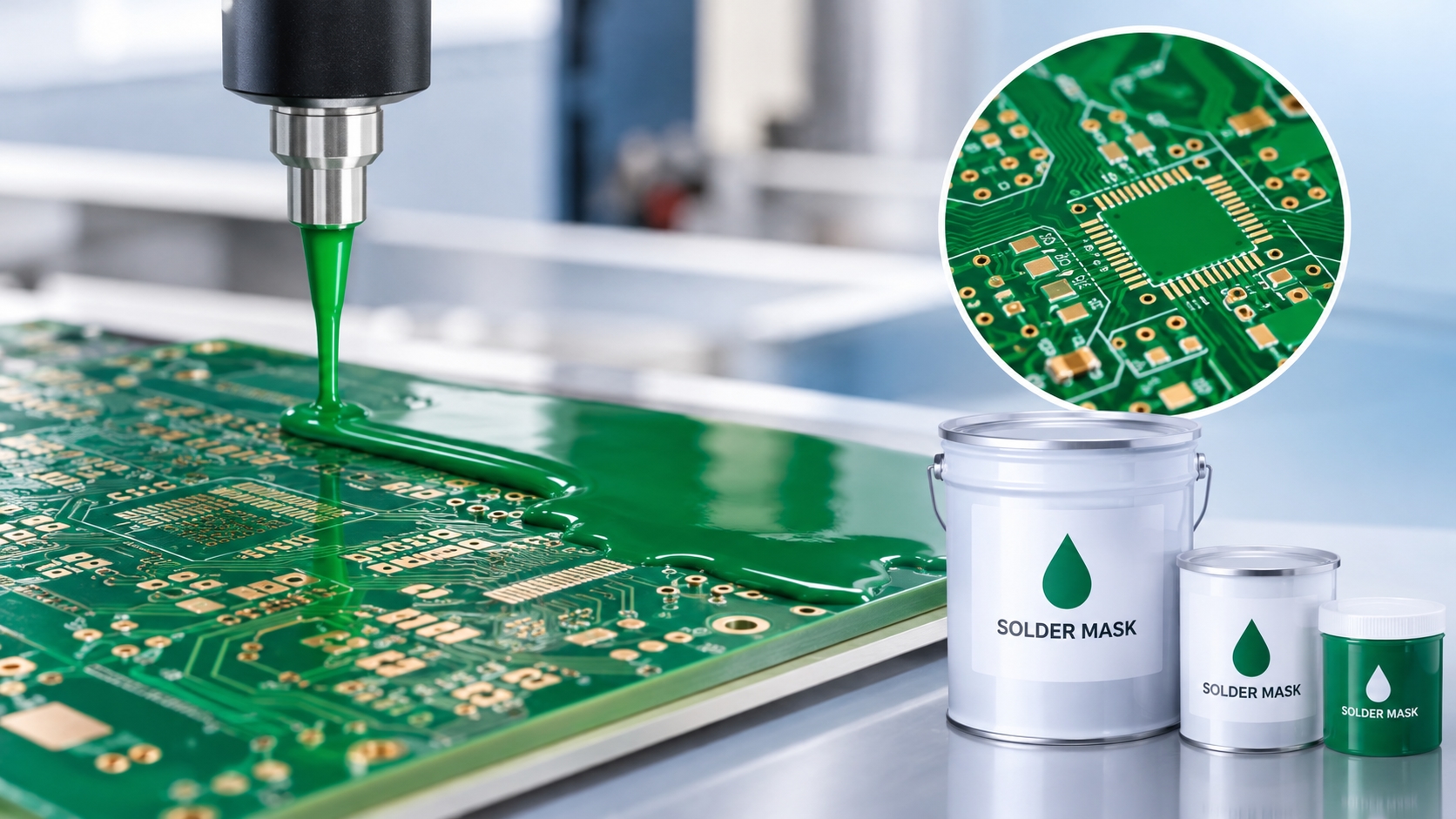
Printed circuit boards (PCBs) contain closely spaced copper traces, soldering pads, and electrical connections that require protection during manufacturing and operation. Without an appropriate protective layer, exposed copper can oxidise, and solder may form unwanted connections between neighbouring pads during assembly. These issues can affect electrical performance, product reliability, and manufacturing costs.
Solder Mask is an essential material in PCB manufacturing because it protects selected areas of the board and helps control where solder adheres during assembly. However, choosing the correct formulation requires more than selecting a colour or comparing prices. PCB design, application method, curing requirements, and operating conditions all influence the final result.
For electronics manufacturers, EMS companies, PCB assembly facilities, and repair professionals, understanding these factors helps improve material selection and production consistency.
What Is Solder Mask and Why Is It Important?
Solder mask, also known as solder resist, is a protective polymer layer applied to a printed circuit board. It typically covers copper traces while leaving designated soldering pads and other required areas exposed.
The most familiar example is the green coating visible on many PCBs. Other colours are also available, depending on the formulation and manufacturing requirements.
The primary functions of solder mask include:
Preventing solder bridges: It helps prevent unwanted solder connections between closely spaced conductive areas.
Protecting copper traces: It reduces exposure to air, moisture, and certain contaminants.
Providing electrical insulation: It separates conductive areas where the design requires insulation.
Supporting manufacturing consistency: Properly applied mask helps maintain defined soldering areas during PCB assembly.
Improving board durability: It provides a protective layer against certain handling and environmental stresses.
That said, solder mask does not replace conformal coating, enclosure protection, or other specialised measures required for demanding operating environments.
Different Types of Solder Mask Used in PCB Manufacturing
Selecting the correct material depends on whether the requirement is permanent PCB protection or temporary masking during a manufacturing process.
1. Liquid Photoimageable Solder Mask
Liquid photoimageable (LPI) solder mask is widely used in modern PCB manufacturing. It is applied as a liquid coating and patterned through a controlled imaging and development process before final curing.
LPI formulations are suitable for many PCB designs, including boards with relatively fine features and closely spaced components. Buyers should verify compatibility with the PCB substrate, imaging process, and curing equipment.
2. Epoxy Liquid Solder Mask
Epoxy-based liquid formulations are used in applications where their processing characteristics and performance meet the requirements of the board. Depending on the product, application may involve screen printing or another specified coating method.
The formulation, coating uniformity, adhesion, and curing process should be evaluated before production use.
3. Dry Film Solder Mask
Dry film solder mask is supplied in sheet form and applied using a controlled lamination process. It can be appropriate for specific PCB manufacturing requirements, particularly where uniform film application is important.
Its suitability depends on the board design, processing equipment, and required pattern definition.
4. Peelable Solder Mask
Peelable solder mask serves a different purpose from permanent solder resist. It is a temporary masking compound used to protect selected PCB areas during operations such as wave soldering, selective soldering, or certain rework processes.
After the operation, the compound is removed according to the product instructions. Buyers should check its thermal resistance, adhesion, removal characteristics, and compatibility with the process.
Explore the Peelable Solder Mask range for more information about temporary PCB masking applications.
How to Choose the Right Solder Mask
When comparing products from Solder Mask Manufacturers, purchasing teams should evaluate the material against actual production requirements.
Consider PCB Design and Pad Spacing
Boards with fine-pitch components require accurate openings around soldering pads. The material and application process must support the required registration accuracy and clearance.
Discuss design requirements with the PCB manufacturer before finalising the formulation.
Check Adhesion and Curing Requirements
Poor adhesion or incomplete curing can affect coating performance. Review the manufacturer's recommended surface preparation, application thickness, exposure conditions, and curing procedure.
A process that works for one formulation may not work for another.
Evaluate Thermal and Chemical Resistance
PCBs may encounter elevated temperatures during soldering and exposure to cleaning agents during production. Check whether the selected material is designed to withstand the relevant conditions.
Do not assume every solder mask offers the same thermal or chemical resistance.
Match the Material to the Application
Permanent solder resist, temporary peelable masking compounds, and other protective coatings serve different functions. Confirm the intended use before placing an order.
This is especially important for repair facilities and assembly lines that use several masking materials for different operations.
Review Technical Documentation
Request the relevant product specifications, storage instructions, shelf life, safety information, and processing recommendations. These details help production teams handle the material correctly and maintain consistent results.
What to Look for in Solder Mask Manufacturers in India
Businesses comparing Solder Mask Manufacturers in India should assess technical suitability alongside commercial considerations.
Important evaluation points include:
Clear product specifications and application guidance.
Compatibility with the intended PCB manufacturing process.
Suitable packaging and storage recommendations.
Information about curing, adhesion, and material handling.
Availability for repeat procurement and production planning.
Responsive assistance with product selection and technical queries.
Most buyers focus heavily on price, but the cheapest material is not always the most economical option. A formulation that requires process adjustments or produces inconsistent results can increase rework, waste, and production delays.
A better approach is to compare the total suitability of the material, including its processing requirements and performance under the intended conditions.
Why Consider Reliable Spares & Consumables?
Reliable Spares & Consumables supplies ESD protection products and industrial electronics tools for electronics manufacturing environments. With 19 years of industry experience, the company understands the importance of selecting materials and equipment according to practical industrial requirements.
PCB assembly companies, EMS providers, electronics manufacturers, and industrial buyers can visit the Solder Mask product page to review the available range and enquire about their requirements.
Before contacting a supplier, identify the masking application, PCB type, production process, and any specific thermal or curing requirements. Sharing these details helps determine which product characteristics matter for your operation.
Frequently Asked Questions
What is solder mask used for?
Solder mask protects selected PCB areas, helps prevent solder bridging, and provides insulation between conductive features where required.
Is peelable solder mask the same as permanent solder resist?
No. Permanent solder resist remains on the finished PCB, while peelable masking compound is intended for temporary protection during selected manufacturing or rework operations.
How do I choose among Solder Mask Manufacturers in India?
Compare product specifications, application compatibility, curing requirements, technical documentation, packaging, availability, and supplier support.
Does solder mask improve PCB reliability?
A suitable, correctly processed solder mask helps protect copper traces and control soldering areas. Overall PCB reliability also depends on design, materials, assembly quality, and operating conditions.
Conclusion
Choosing the right solder mask is an important decision for PCB manufacturing and electronics assembly. The correct material helps protect copper traces, define soldering areas, and support consistent production processes.
Before purchasing, evaluate PCB design requirements, application method, curing conditions, material compatibility, and technical documentation. Working with a supplier that understands the application can help simplify product selection.
Explore the Solder Mask range at Reliable Spares & Consumables to review available options and enquire about suitable materials for your PCB manufacturing requirements.