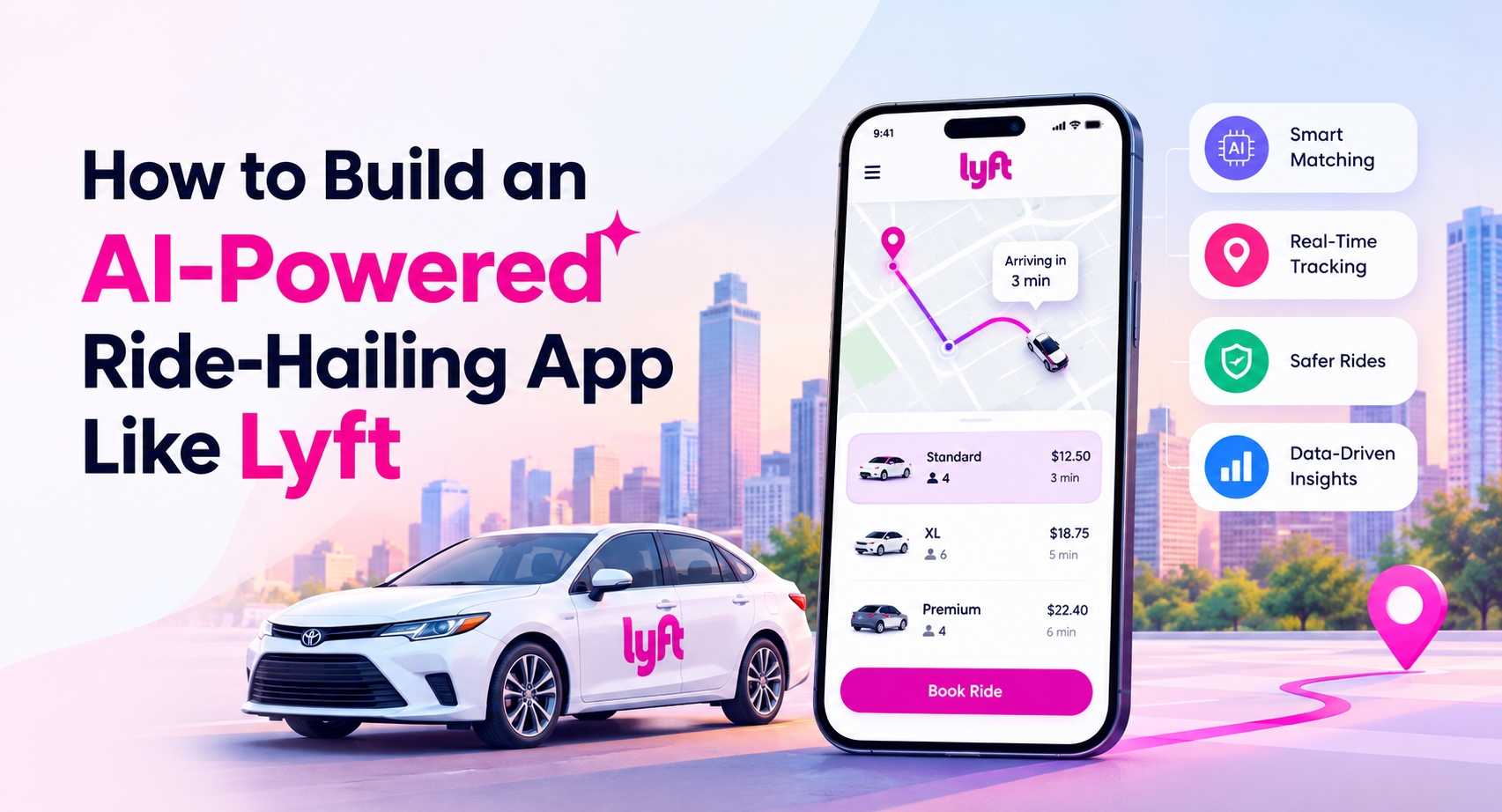
Introduction
Ride-hailing has evolved beyond simple digital taxi booking. Modern platforms increasingly rely on artificial intelligence to optimize dispatching, anticipate demand, personalize experiences, and streamline driver operations. For entrepreneurs, building an AI-powered ride-hailing app like Lyft can create opportunities to establish a differentiated transportation marketplace.
The process involves much more than replicating a familiar interface. It requires a robust technological foundation, intelligent automation, secure payments, real-time location services, and carefully designed marketplace workflows.
Define the Business Model and Target Market
Before development begins, determine the geographic market, customer segments, vehicle categories, pricing strategy, and revenue model.
A platform could generate revenue through ride commissions, driver subscriptions, booking fees, corporate transportation packages, or premium mobility services. Understanding local transportation regulations and customer expectations is equally important.
A clearly defined business model also determines which features should be prioritized during the initial development phase.
Build the Essential Lyft Clone App Ecosystem
An AI-powered ride-hailing platform generally consists of three interconnected components.
Rider App
The passenger application should support account creation, location detection, ride booking, fare estimation, driver tracking, digital payments, trip history, ratings, notifications, and emergency assistance.
Driver App
Drivers need tools for registration, document verification, availability management, ride acceptance, navigation, earnings tracking, trip management, and communication with riders.
Admin Dashboard
The administrative panel acts as the operational command center. It can provide driver management, customer management, trip monitoring, pricing controls, analytics, payment oversight, promotions, and dispute management.
Integrate AI-Powered Capabilities
Artificial intelligence can transform conventional ride-hailing workflows into predictive and adaptive systems.
Intelligent Ride Matching
AI algorithms can evaluate driver proximity, estimated arrival time, vehicle category, traffic conditions, and historical patterns to identify suitable driver-rider matches.
Dynamic Pricing
Demand forecasting models can analyze historical bookings, peak periods, location-based demand, weather patterns, and marketplace activity to support adaptive pricing.
Predictive Demand Forecasting
Machine learning can identify locations where ride requests are likely to increase. This information can help operators and drivers prepare for anticipated demand.
AI-Powered Customer Support
Conversational AI can handle routine questions, booking assistance, payment inquiries, cancellation requests, and basic troubleshooting, reducing manual support workloads.
Select the Technology Stack
A scalable architecture should combine mobile development frameworks, cloud infrastructure, mapping services, payment gateways, databases, APIs, and AI services.
The backend must process large volumes of location and transaction data with low latency. Real-time communication technologies can facilitate driver location updates and ride-status changes, while cloud infrastructure provides elasticity as usage expands.
For an entrepreneur exploring a Lyft clone, the technology should be customized around the intended market rather than treated as a one-size-fits-all product.
Prioritize Safety, Payments, and Security
Trust is fundamental to transportation platforms. Essential safeguards can include driver identity verification, encrypted payment processing, trip-sharing capabilities, SOS functionality, secure authentication, and controlled access to sensitive information.
Payment infrastructure should support relevant local payment methods while maintaining strong transaction security. Data protection should be incorporated into the architecture from the beginning rather than added as an afterthought.
Test, Launch, and Scale
Before public release, test the platform across multiple scenarios, including high-demand periods, failed payments, GPS inaccuracies, driver cancellations, network interruptions, and simultaneous bookings.
A phased launch can help identify operational friction before expansion into additional locations. Analytics should continuously monitor booking conversion, driver acceptance, cancellation rates, customer retention, and marketplace efficiency.
As demand increases, the infrastructure can be expanded through cloud-based scaling, optimized databases, caching, and modular services.
Conclusion
Building an AI-powered ride-hailing app like Lyft requires a combination of intelligent automation, reliable mobility infrastructure, thoughtful user experience, and scalable architecture. Businesses can begin with an MVP and progressively introduce advanced capabilities such as predictive analytics, intelligent dispatch, dynamic pricing, and AI-powered support.
With the right product strategy and technology partner, spotnrides can help businesses transform a ride-hailing concept into a customized digital mobility platform.