What should you eat every day to stay healthy?Build your meals around protein, vegetables, whole grains, fruit and healthy fats. Choose portions that suit your body, keep meals simple and include foods you genuinely enjoy.
Healthy eating doesn't mean skipping rice, avoiding bread or spending hours preparing food. At TheFitNourish, our personalised diet plans consider your health goals, medical history, daily schedule and food preferences so you can eat well without completely changing your lifestyle.
What Should a Healthy Daily Meal Plan Include?
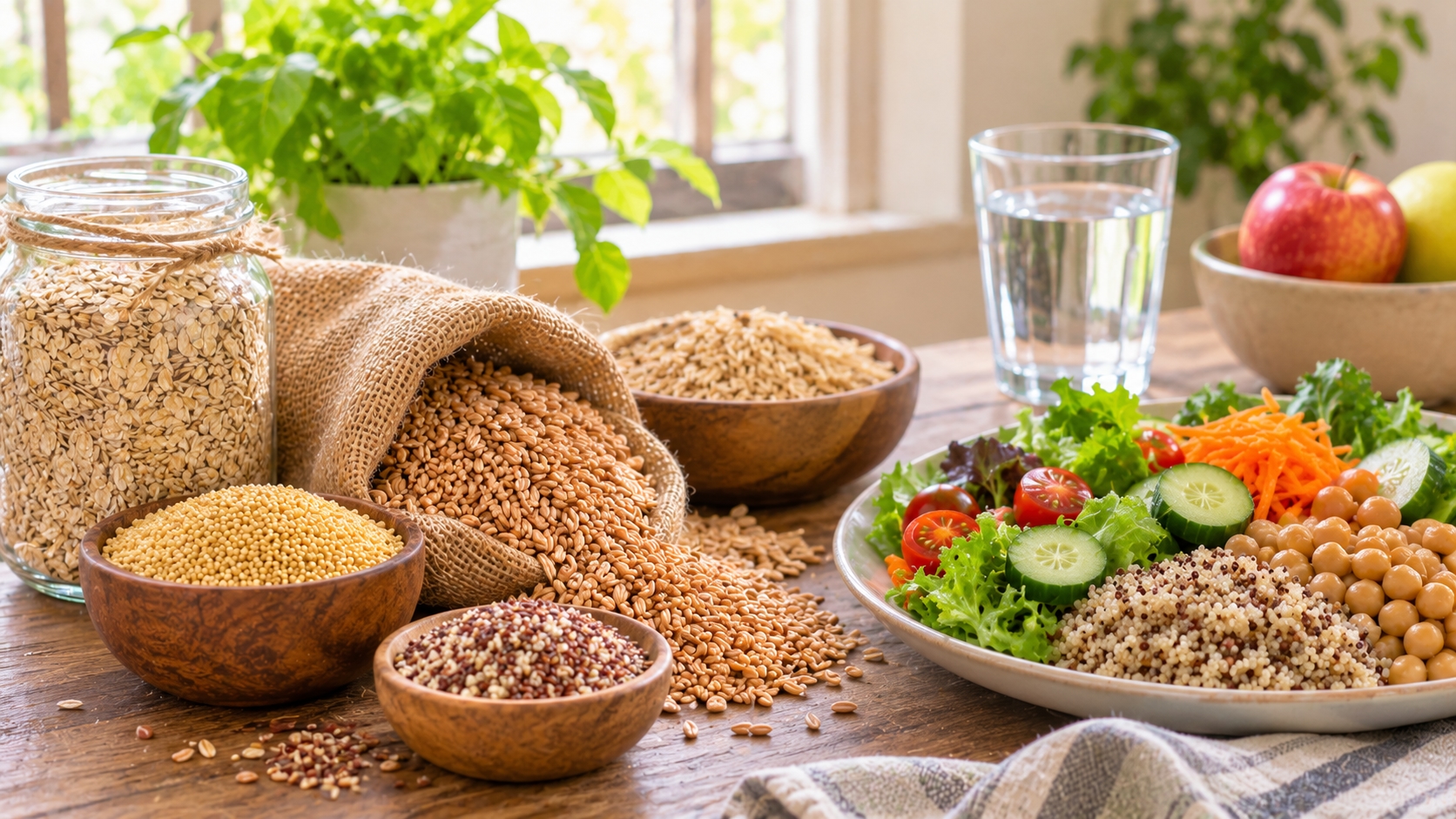
A balanced daily diet should provide enough energy, protein, fibre, vitamins and minerals for your individual needs.
Focus on these everyday foods:
Protein: Eggs, lentils, beans, yogurt, tofu, fish or chicken.
Carbohydrates: Oats, rice, potatoes, whole-grain bread or pasta.
Vegetables: Spinach, broccoli, carrots, tomatoes or seasonal vegetables.
Fruits: Apples, bananas, oranges, berries or locally available fruit.
Healthy fats: Nuts, seeds, avocado or olive oil.
The World Health Organization recommends at least 400 grams of fruits and vegetables daily for adults.
You don't need every food group at every meal. Variety across the day matters.
How Much Food Should You Put on Your Plate?
Try the healthy plate method instead of guessing every portion.
Harvard's Healthy Eating Plate suggests:
½ plate: Vegetables and fruit, mainly vegetables at meals.
¼ plate: Whole grains.
¼ plate: Healthy protein.
Plus: Moderate amounts of healthy fats.
For example, serve grilled chicken or beans with brown rice and vegetables.
Your portions may need adjusting according to age, activity, appetite and health conditions. This method is a starting point, not a universal calorie prescription.
What Is a Simple Healthy Meal Plan for One Day?
You don't need a complicated diet chart to start eating better.
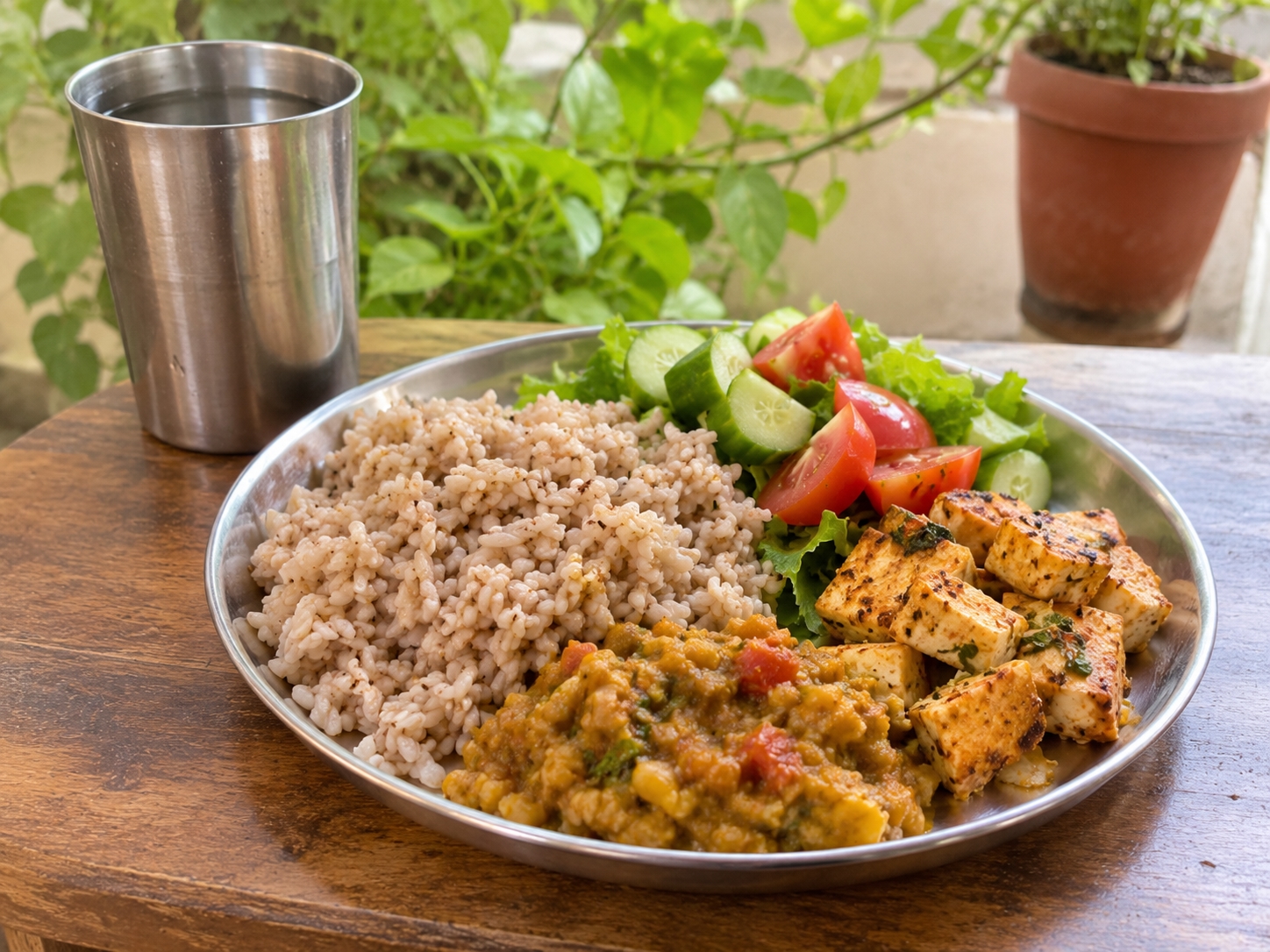
Illustrative sample for a generally healthy adult: Portions, meal timings and snacks depend on individual needs. This is not a prescribed plan.
Meal | Healthy Food Ideas |
Breakfast | Oatmeal with plain yogurt, fruit and nuts |
Lunch | Grilled chicken or chickpeas with rice and vegetables |
Afternoon snack, if hungry | Fruit with yogurt or a small handful of nuts |
Dinner | Baked fish, tofu or beans with potatoes and vegetables |
Easy food swaps: Replace rice with whole-grain bread, potatoes or couscous. Use beans or tofu instead of meat.
Choose water regularly throughout the day.
What Are Easy Healthy Breakfast Ideas for Busy People?
Include protein and fibre to make breakfast more filling.
Try these quick options:
Greek yogurt with fruit and oats.
Scrambled eggs with whole-grain toast.
Overnight oats with milk and nuts.
Tofu scramble with vegetables.
Peanut butter toast with fruit.
If mornings are rushed, prepare your ingredients the night before.
Not hungry immediately after waking? You can adjust breakfast timing to your appetite and schedule unless a medical condition or treatment requires specific meal timing.
What Are the Best Healthy Dinner Ideas for the Whole Family?
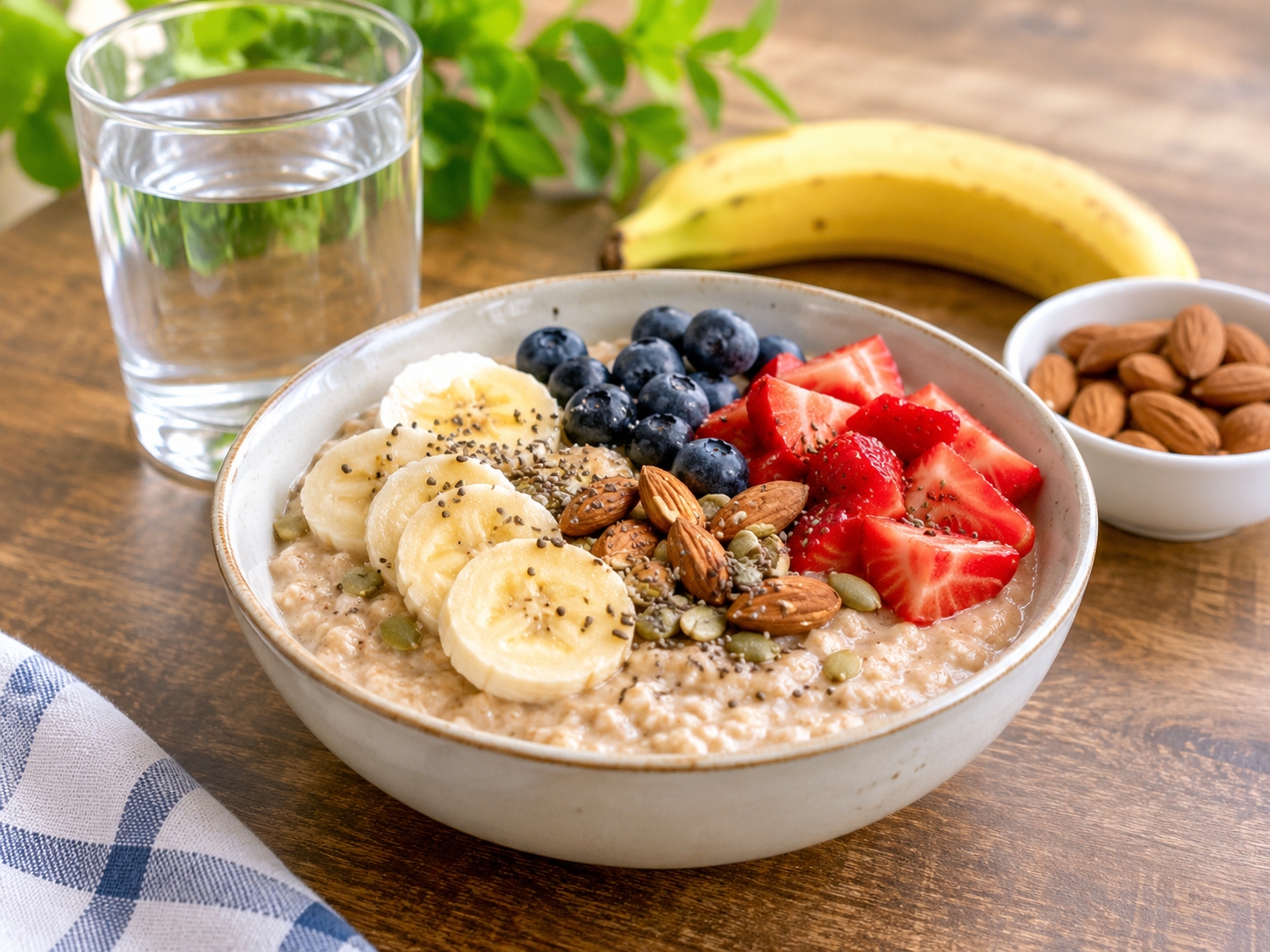
Choose dinners that combine protein, vegetables and a satisfying carbohydrate source.
Five easy combinations include:
Healthy Dinner | Main Ingredients |
Chicken rice bowl | Grilled chicken, rice and vegetables |
Lentil soup | Lentils, carrots, tomatoes and whole-grain bread |
Tofu stir-fry | Tofu, mixed vegetables and noodles |
Baked fish | Fish, potatoes and green beans |
Chickpea curry | Chickpeas, tomatoes, spinach and rice |
For more everyday meal inspiration, explore TheFitNourish healthy dinner recipes and adapt them to your local ingredients and cooking preferences.
Can the whole family eat the same dinner? Often, yes. Family members can share the main dish while adjusting portions or side dishes to suit different needs.
Can You Eat Rice, Bread or Potatoes and Still Lose Weight?
Yes. You don't need to eliminate carbohydrates to lose weight.
Weight management depends on your overall eating pattern, energy balance, activity and individual circumstances.
Instead of avoiding rice, combine it with vegetables and a protein source. Choose fibre-rich whole grains regularly when available.
A healthy weight loss meal plan should help you meet your nutritional needs without extreme restrictions.
If you're trying to gain weight, you may need larger portions, additional snacks and more energy-dense nutritious foods.
How Can You Prepare Healthy Meals for the Entire Week?
Plan a few useful ingredients instead of seven completely different menus.
Start with these simple steps:
Choose proteins: Eggs, beans, lentils, tofu, fish or chicken.
Pick staples: Oats, rice, whole-grain pasta, bread or potatoes.
Buy vegetables: Seasonal or frozen vegetables are practical options.
Prepare ahead: Cook ingredients you can use in several meals.
For example, leftover chicken can become tomorrow's wrap. Cooked beans can be used in a salad, soup or rice bowl.
Store prepared food safely and refrigerate leftovers promptly.
Healthy meal preparation should save time and reduce food waste, not make cooking another stressful task.
Is It Better to Eat Three Meals or Five Small Meals a Day?
There is no single meal schedule that works best for everyone.
Some people feel satisfied with three meals. Others prefer smaller meals with snacks.
If there's a long gap between lunch and dinner, a snack such as yogurt, fruit or whole-grain toast may help.
The right schedule depends on appetite, work hours, physical activity, medications and health conditions.
How Does TheFitNourish Create a Personalised Diet Plan for Your Health Goals?
TheFitNourish starts with your health needs, medical history and everyday eating habits before creating a personalised nutrition plan.
Our brand message, 11K+ Transformations Across 18+ Countries, reflects our commitment to helping people from different backgrounds build healthier routines.
What Happens During Your Nutrition Consultation?
Our approach includes four important stages:
Health and Goal Assessment
A dietitian discusses your weight goals, current eating habits, medical conditions, food preferences, sleep, physical activity and daily schedule.
Medical Reports and Blood Test Review
Existing blood test results may help identify relevant concerns. Depending on your health history, these may include blood sugar, HbA1c, thyroid function, cholesterol or nutrient levels.
New blood tests are not required for everyone. Your healthcare professional can advise whether additional testing is necessary.
Personalised Meal Planning
Your dietitian develops a plan using familiar, locally available foods, suitable portions and realistic meal timings. Your budget, cultural food preferences and dietary restrictions are considered.
Weekly Progress Reviews
Follow-up consultations help identify what works, address difficulties and adjust meals when needed.
Which Health Goals and Conditions Does TheFitNourish Support?
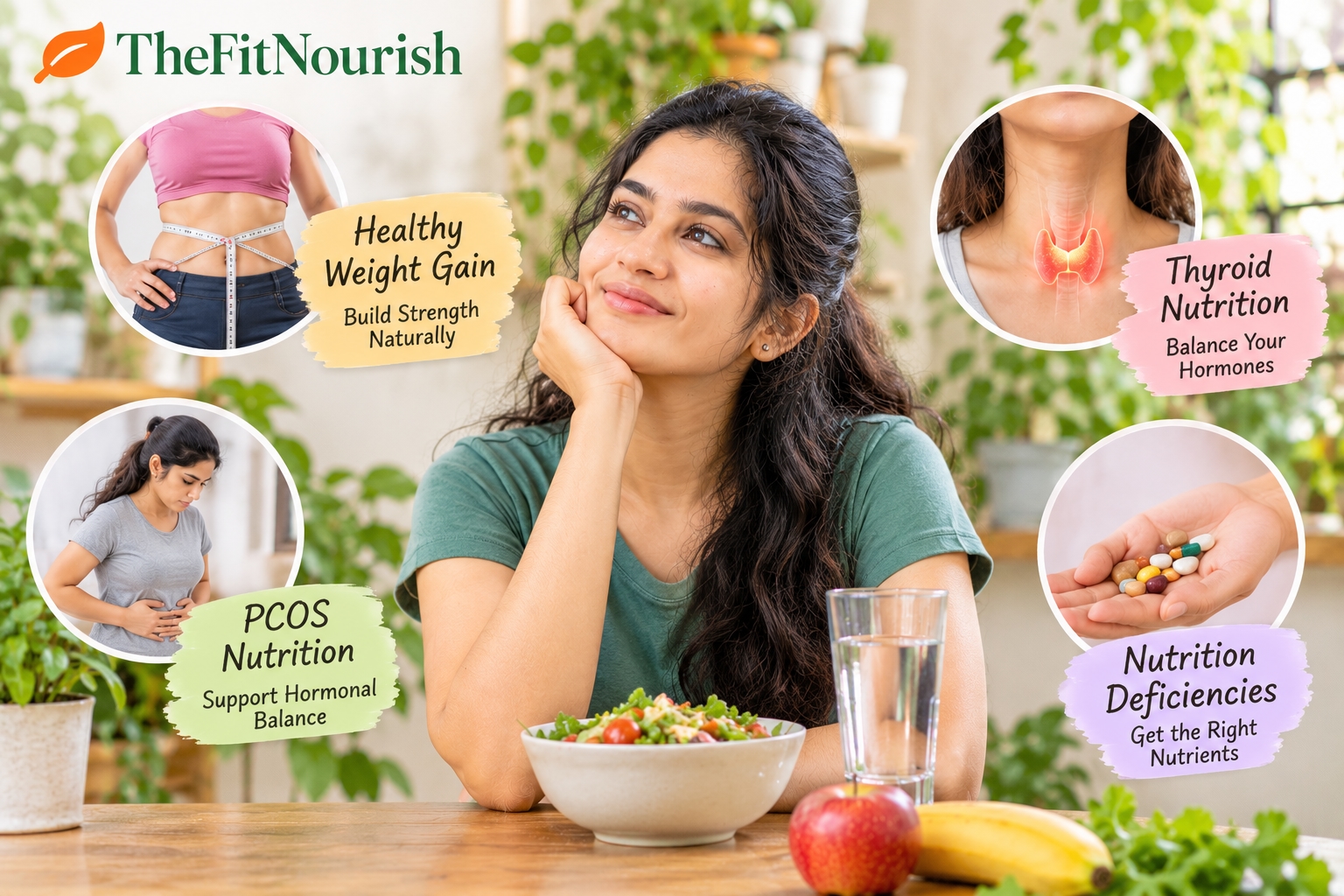
Our nutrition programmes include:
Weight Loss: Sustainable weight management without crash diets.
Weight Gain: Nutrition plans to support healthy weight and muscle gain.
PCOS/PCOD: Individualised eating strategies to support metabolic health and symptom management.
Thyroid Health: Nutrition guidance alongside appropriate medical treatment.
Diabetes: Meal planning to support blood sugar management.
Other Nutrition Needs: Heart health, fatty liver, postpartum recovery, menopause, fitness nutrition and general wellness.
People with medical conditions may need additional guidance from their healthcare team. Nutrition support complements medical care rather than replacing it.
Our goal is to help you understand what to eat, how to balance your meals and how to build habits that work beyond the first week.
What Common Healthy Eating Mistakes Should You Avoid?
Even nutritious foods can be difficult to manage when your routine isn't practical.
Watch for these common mistakes:
Skipping meals regularly: You may become excessively hungry later.
Eating too little protein: Include suitable protein sources throughout the day.
Avoiding entire food groups unnecessarily: Restriction can make balanced eating harder.
Copying someone else's calorie target: Nutritional requirements vary.
Following overly complicated meal plans: Simple meals are often easier to maintain.
Focus on gradual improvements rather than trying to make every meal perfect.
How Can You Start Eating Healthier Tomorrow?
Start with one meal you already enjoy and improve its nutritional balance.
If breakfast is only toast, consider adding eggs, tofu or yogurt. If dinner is pasta, add vegetables and a protein source.
You don't need to change your entire diet overnight.
The best daily meal plan is one that provides appropriate nutrition, respects your food preferences and fits your everyday life.
Tell us one meal you want to keep and one part of your day you'd like help planning.
TheFitNourish
Email: support@thefitnourish.com
Phone & WhatsApp: +91 9315870727