Children often learn more enthusiastically when lessons involve listening, guessing, speaking, and participating. Although books and worksheets remain important teaching tools, adding short audio activities can bring variety to everyday classroom routines. Sound buttons give teachers a simple way to introduce recognizable sounds, create listening challenges, and encourage children to take part in interactive learning games.
From identifying animal sounds to answering vocabulary questions, audio-based activities can turn ordinary lessons into enjoyable classroom experiences.
1. Teach Vocabulary Through Listening Games
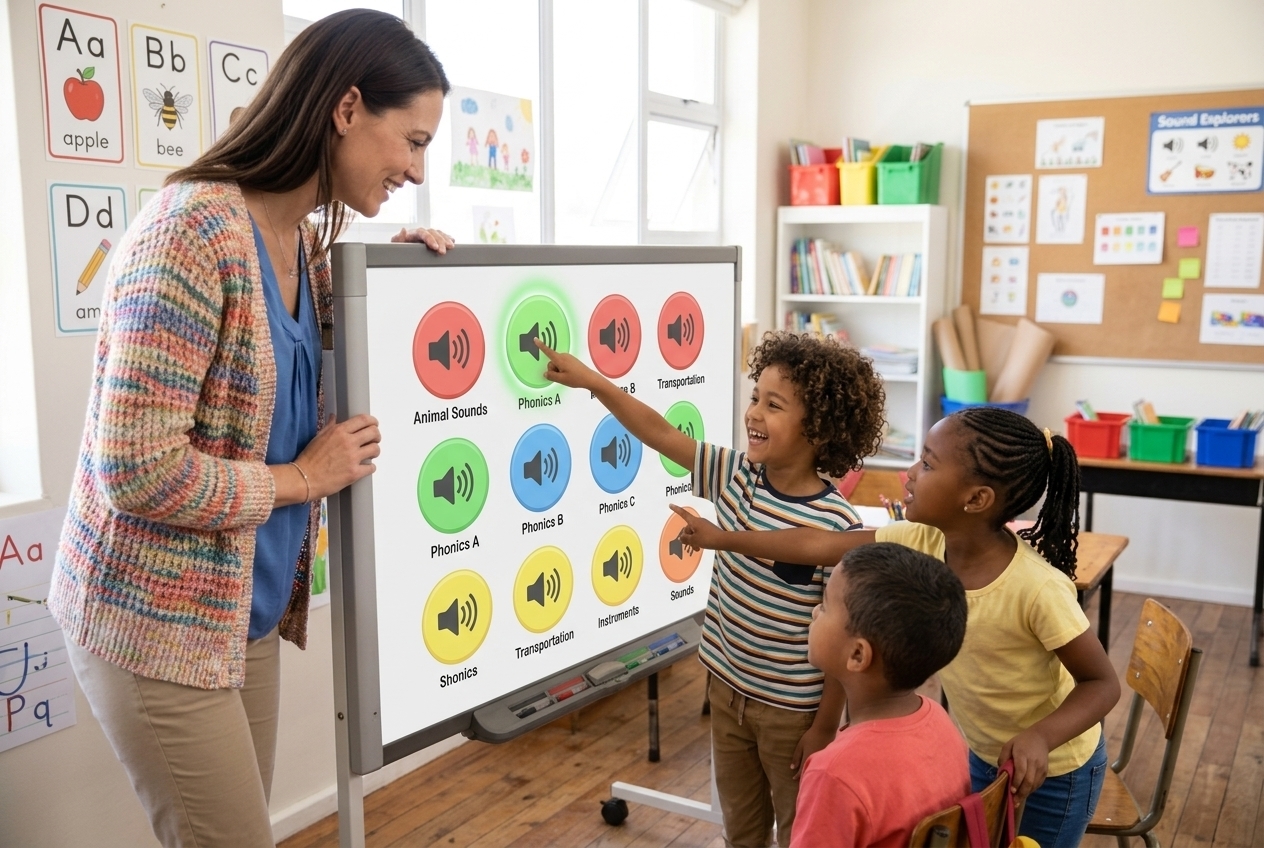
Learning new words becomes more interesting when children can connect them with sounds. Teachers can play an animal noise, musical effect, or familiar everyday sound and ask students to identify what they hear.
For example, students might hear a barking sound and guess the word "dog." The teacher can then introduce related vocabulary, ask children to spell the word, and encourage them to use it in a sentence.
Sound buttons make it possible to introduce different audio prompts without interrupting the flow of the activity.
2. Make Classroom Quizzes More Exciting
A short sound effect can signal the beginning of a quiz round or indicate when students should submit an answer. Teachers can organize spelling challenges, general knowledge questions, and listening quizzes using different audio cues.
For example, divide the class into teams and play a sound for each new question. Students listen carefully, discuss their answers, and take turns responding. This encourages teamwork while keeping everyone involved.
3. Use Audio Cues During Phonics Practice
Early reading lessons involve recognizing letters, understanding speech sounds, and connecting sounds with written words. Teachers can use short audio prompts to introduce phonics exercises.
Children can listen to a sound, identify its beginning letter, and suggest words that start with the same sound. For example, after hearing a buzzing sound, students might suggest words beginning with the letter B.
A consistent sound cue can also signal when students should listen, repeat, or move to the next exercise.
4. Add Sounds to Storytelling Sessions
Storytelling gives children an opportunity to develop imagination and listening comprehension. Teachers can make stories more interactive by including suitable audio effects.
A rain sound can accompany a rainy-day story, while footsteps can suggest that a character is approaching. Teachers can pause the story and ask children to identify the sound, describe what might be happening, or predict what comes next.
This turns listening into an active part of the storytelling experience.
5. Make Classroom Transitions Easier
Teachers regularly move children between reading, writing, group work, and other activities. A familiar audio cue can help students recognize these transitions.
For example, a short bell sound can signal the beginning of a reading session, while another gentle effect can indicate that a group activity has finished. Using consistent cues helps children become familiar with classroom routines.
Finding Suitable Sounds for Classroom Activities
Teachers who want to experiment with different audio prompts can explore soundboard for sound clips and reactions that may inspire interactive listening games. For example, a teacher can select a suitable short effect to introduce a quiz round, create a guessing challenge, or make a classroom activity more memorable.
The important part is choosing audio that supports the learning objective. A funny reaction might work during a lighthearted quiz, while a simple sound effect may be more appropriate for a phonics or listening exercise.
Tips for Using Sound Buttons With Children
Audio activities work best when teachers use them thoughtfully. Keep these practical points in mind:
Choose short sounds that children can recognize easily.
Preview every clip before playing it in class.
Keep the volume comfortable and avoid sudden loud effects.
Connect each sound to a clear question or learning task.
Give children enough time to listen and respond.
Avoid using too many effects during a single lesson.
Provide alternative activities for children who are sensitive to certain sounds.
Teachers should also check the audio usage permissions before including clips in recorded lessons or publicly shared educational content.
Turn Everyday Lessons Into Listening Experiences
Sound buttons can add a useful interactive element to vocabulary practice, phonics, classroom quizzes, storytelling, and daily routines. They encourage children to listen closely, recognize familiar sounds, and participate in activities rather than simply watching or reading.
With carefully selected audio clips and clear instructions, teachers can make ordinary classroom exercises more engaging while keeping learning at the center of every activity.